

Treating Children Differently: The Birth of Paediatric Oncology at Gustave Roussy
« Great advances in oncology » - Episode 4/4. In 1952, Dr Odile Schweisguth established Europe’s first paediatric oncology department at Gustave Roussy, at a time when the specialty was largely overlooked. Until her retirement in 1978, she fought to ensure that childhood tumours received dedicated and appropriate care, both in France and internationally.
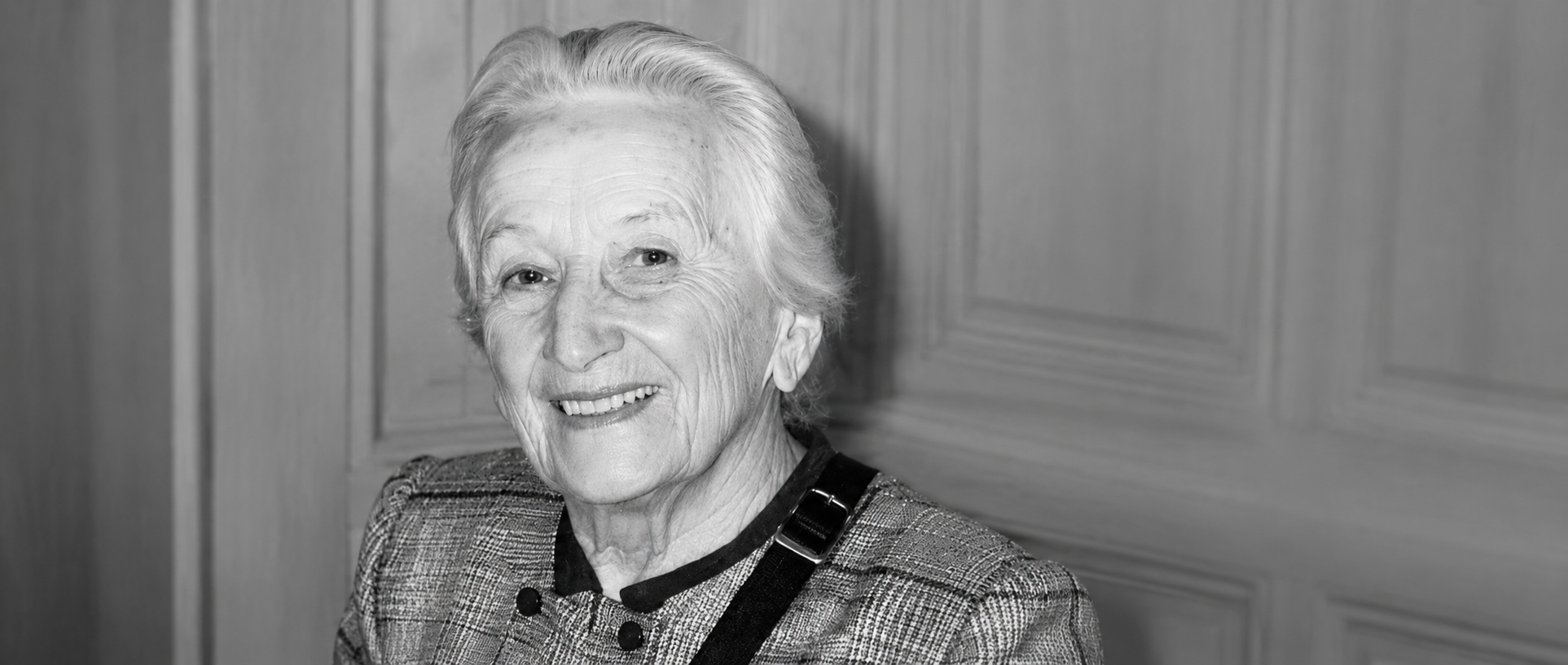
In the end, it was chickenpox that helped her win her case. In the early 1950s, Dr Odile Schweisguth had just been recruited to care for children with cancer at Gustave Roussy. Convinced that her young patients required special attention, she insisted that they should be admitted to a dedicated ward. However, at a time when paediatric oncology remained a largely unexplored field and children with cancer were often regarded as beyond saving, her request was ignored. That changed when an outbreak of chickenpox threatened the immunocompromised adults with whom the children shared hospital rooms.
Dr Schweisguth strongly objected to the way the outbreak was being managed. With the determination for which she became known, she presented the hospital with an ultimatum. Supported by Professor René Huguenin, Director of Gustave Roussy from 1947 to 1956, she eventually succeeded in changing attitudes, and in April 1952 Gustave Roussy opened its paediatric oncology department, the first in Europe, within the Milhit Pavilion.
“When Dr Schweisguth committed herself to the fight against childhood cancers, survival rates remained very low and treating these young patients was an especially demanding task that required considerable courage on the part of healthcare professionals,” wrote[1] Professors Gérard Schaison and Danièle Sommelet, both paediatricians, in 2009. The very first patient Dr Schweisguth saw on her arrival at Gustave Roussy, a young boy with nephroblastoma, was never able to receive treatment. When she explained to his parents that surgery was essential, they were so terrified that they left the hospital with their son. She never saw them again[2].
The First 16 Beds
Born in the Vosges region in 1913, Odile Schweisguth followed her military father and grew up in Germany. At the age of 17, she spent two years studying embroidery and piano. Nevertheless, she managed to enter the Red Cross nursing school and, in 1932, with the support of one of her teachers, began studying medicine in Nancy before completing her training in Paris. In 1946, her doctoral thesis, conducted under Dr Pierre Ameuille, then head of medical oncology at Gustave Roussy, already reflected her interest in cancer care. She subsequently specialised in paediatrics and, in 1947, joined the leading specialist of the time, Professor Robert Debré. Although she initially showed an interest in cardiology, Professor Debré pointed out that paediatric oncology, a field that remained largely unexplored, deserved far greater attention[3].
She eventually joined Gustave Roussy in 1948 at the request of Dr Ameuille and Professor Huguenin, who wished to develop specialised care for children. When the department opened in 1952, it contained 16 beds. At first, the number of children referred to Gustave Roussy remained modest. All suffered from solid tumours, while childhood leukaemias were treated at Saint-Louis Hospital.
“Today, specialised departments for children with cancer seem entirely natural. But in the 1950s it was a truly innovative idea. Dr Schweisguth understood very early on that childhood cancers could not be treated in the same way as adult cancers. In paediatric oncology, everything is a therapeutic emergency. That is precisely the reality that Odile Schweisguth recognised from the outset,” explains Dr Christelle Dufour, Head of the Department of Childhood and Adolescent Oncology at Gustave Roussy.
A Formative Stay in the United States
By the late 1950s, very little scientific data was available, and treatment doses prescribed to children varied widely between practitioners. Dr Schweisguth therefore undertook extensive documentation and record-keeping. Tumours were analysed and classified by pathologists, while patients’ conditions at diagnosis, prescribed treatments, dosages and outcomes were carefully recorded. By 1959, she was able to launch the first specialist training programme dedicated to childhood solid tumours and leukaemias.
That same year, she spent two months in the United States at the Jimmy Fund Children’s Clinic alongside Professor Sydney Farber, regarded as one of the fathers of modern chemotherapy. She returned to Gustave Roussy with renewed optimism: children with cancer could indeed be cured. From Professor Farber, she also adopted the concept of “total care”, an approach that considers all aspects of illness, including the social and psychological consequences affecting both children and their families. Convinced that support should extend beyond medical treatment, she paid particular attention to the distress experienced by relatives and to the challenges faced by healthcare staff confronted daily with illness and death. She later established a psychological and psychiatric support service at Gustave Roussy[4] for patients, families and healthcare professionals alike, a pioneering initiative for its time.
Europe’s Leading Specialist
Gradually, Gustave Roussy’s paediatric oncology department gained an international reputation. Dozens of paediatricians from around the world came to train under Dr Schweisguth. “During consultations, I remember Dr Schweisguth always being surrounded by students who listened to her attentively,” recalls Laurence Saccavino, who was treated by Dr Schweisguth for rhabdomyosarcoma in the late 1960s.
At the same time, Dr Schweisguth remained convinced that the discipline needed formal organisation. On 3 July 1967, she brought together paediatricians, surgeons and pathologists from her professional network. This group initially became the Paediatric Oncology Club before acquiring an international dimension during a meeting in Madrid in 1969. On 6 November of that year, the International Society of Paediatric Oncology (SIOP) was officially founded. Today it is the world’s leading organisation dedicated to childhood cancers.
Those who worked with her describe a determined woman, sometimes unconventional, but always guided by the interests of her patients. “She managed to make herself heard at a time when children like me were considered beyond hope. It was a vital battle for her, and she knew exactly what she was achieving. She told my parents: ‘I saved your daughter,’” remembers Laurence Saccavino. “She also fought for me to be allowed to go on a school skiing trip when I was in primary school. My headteacher did not want to take me because she thought I might be contagious. Dr Schweisguth wrote to her, explaining that such a decision was unacceptable. In the end, I was allowed to go.”
When Odile Schweisguth retired in 1978, the field she had helped create was no longer the preserve of a handful of isolated pioneers. Progress was firmly underway. Perhaps her legacy is best captured by the words she wrote in her 1970 manifesto Should We Let Them Die?[5] : “I would like to convince doctors that no child with cancer should ever be regarded as hopeless from the outset. They are curable more often than people believe, provided they receive appropriate treatment.” This conviction guided her throughout her career and helped transform the fate of children with cancer. She died in 2002 in the Burgundy village where she had retired, although she continued to keep in regular contact with former patients.
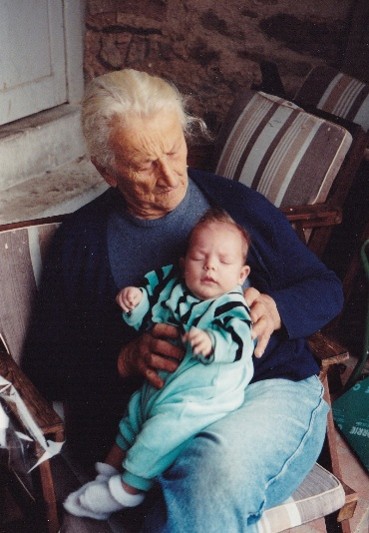 “I always regarded Dr Schweisguth as the person who saved my life. A special bond developed between us over the years. At the age of 16, I went back to see her after my recovery. She was just as kind and attentive as I remembered. Then, when my daughter was born in 1993, I visited her again at her large country house in the Morvan, where she lived alone with a dog she adored, a gift from one of her former patients. It was a very emotional meeting. I wanted to thank her and tell her that, thanks to her, I had become a mother,” recalls Laurence Saccavino.
Dr Christelle Dufour concludes: “When Odile Schweisguth opened her department in the 1950s, only 10 to 20 per cent of children with cancer could hope to survive. Today, around 85 per cent survive their illness thanks to the momentum she set in motion and to advances in research. Yet the journey is not over. Odile Schweisguth’s pioneering spirit remains alive at Gustave Roussy. In 2002, for example, the Institute created France’s first unit dedicated to adolescents and young adults with cancer. We continue to innovate today, particularly through molecular medicine and new therapeutic approaches, with the same goal that inspired her: to give every child the best possible chance of recovery and the highest possible quality of life.”
“Great Advances in Oncology” – Gustave Roussy Summer Series
Throughout the summer, Gustave Roussy is showcasing four major advances developed at the Institute that have had a significant impact on the care of millions of cancer patients worldwide.
Episode 1: The TNM classification.
Episode 2: The discovery of LAG-3.
Episode 3: The foundations of precision medicine.
Episode 4: The birth of modern paediatric oncology.
[1] Schaison, G., et al., “Pediatric Hematology and Oncology in France”, Pediatric Hematology and Oncology, 9 juillet 2009.
[2] Coppes-Zantinga, A. R., et al., “SILHOUETTE Odile Schweisguth, MD, Alma Mater of Pediatric Oncology”, Medical and Pediatric Oncology, 34:59-60 (2000).
[3] Bonnet M. « Le traitement du cancer chez l'enfant : de la parole au choix. Analyse anthropologique à partir d'une étude de terrain de 30 mois (2004-2007) dans un service hospitalier d'oncopédiatrie universitaire à Marseille ». Thèse de doctorat en anthropologie sociale et ethnologie, École des hautes études en sciences sociales (EHESS), 2009.
[4] International Society of Paediatric Oncology (SIOP). Odile Schweisguth. Consulté le 24 juillet 2026. https://siop-online.org/odile-schweisguth/
[5] Schweisguth, O. (1970). Faut-il les laisser mourir? Plaidoyer pour les enfants cancereux. Archives françaises de pédiatrie, 27.