Biography of Eric Deutsch
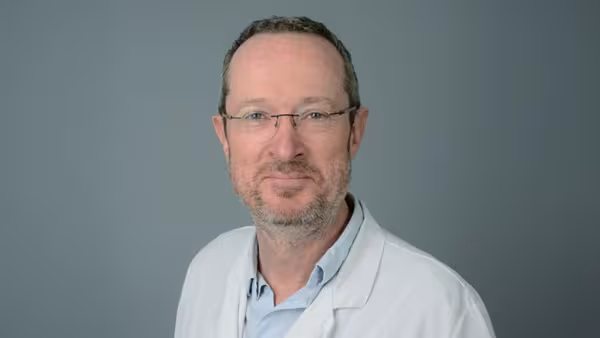
Professor Éric Deutsch is a radiation oncologist at Gustave Roussy, where he has served as medical director since September 2026. He previously headed the Department of Radiation Oncology at Gustave Roussy from 2012 to 2026. A university professor and hospital practitioner at Paris-Saclay University, he also serves as vice dean for research at the Paris-Saclay Faculty of Medicine.
A specialist in radiation therapy and its interactions with the immune system, he has spent many years developing new approaches aimed at making cancer treatments more effective, more precise, and less toxic. His research combines radiation therapy, immunotherapy, artificial intelligence, radiobiology, and new irradiation technologies, notably FLASH radiation therapy, which delivers the dose in a fraction of a second.
He heads the Inserm U1355 RAMO-IT unit, “Molecular Radiotherapy and Therapeutic Innovations,” which brings together researchers, physicians, and scientists around a common goal: to better understand the biological effects of radiotherapy in order to offer treatments that are better tailored to each patient.
In recent years, he has secured and coordinated several national and international research grants totaling more than 20 million euros. This funding has enabled the development of programs combining basic research, technological innovation, and clinical trials. In particular, he coordinates the LySAIRI Regional Health Unit (RHU), which has received 9.9 million euros as part of the France 2030 initiative. This project uses artificial intelligence to design radiation therapies capable of better preserving lymphocytes—essential cells of the immune system—and thereby improving the combination of radiation therapy and immunotherapy.
His recent work also explores the role of the gut microbiota, the immune system, and the tumor microenvironment in the response to radiation therapy. In 2025, a study published in *Cancer Cell* demonstrated that low-dose radiation to the intestine could, in certain patients with metastatic cancers, modify the immune response and restore the efficacy of immunotherapy. These results illustrate a significant shift in the field: radiation therapy is no longer viewed solely as a local treatment for the tumor, but also as a means of influencing the biology and immune response of the entire body.
Professor Deutsch is also the founder of the international ImmunoRad conference, which for several years has brought together international specialists in radiation therapy, immunology, and oncology to develop new therapeutic strategies. Following its 9th edition held in Paris in September 2025, ImmunoRad will also take place in New York in September 2026.
As the author of numerous scientific papers published in leading international journals, he conducts research firmly focused on rapidly translating laboratory discoveries into patient care.
Since September 2026, in his role as Medical Director of Gustave Roussy, he has expanded this approach to encompass the institution’s entire medical strategy, with one goal: to bring care, research, and innovation even closer together to accelerate patients’ access to advances in oncology.