
Welcome to the new Gustave Roussy website
A new website designed to offer you a simpler, clearer, and more intuitive experience. Patients, caregivers, healthcare professionals, and donors: find information, news, and services more easily.
Cancer Treatments
Cancer treatment most often relies on a combination of several therapeutic approaches. Surgery, radiation therapy, chemotherapy, hormone therapy, immunotherapy, and interventional radiology can be used alone or in combination to provide each patient with the most appropriate care.
At Gustave Roussy, each treatment strategy is personalized and developed by a multidisciplinary team bringing together various cancer specialists.
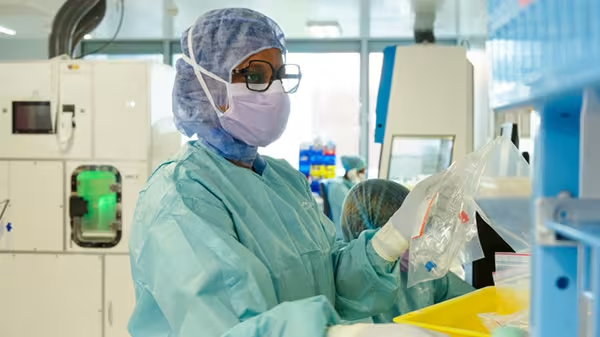
Understanding Your Treatment
The choice of treatment depends on many factors:
- the type of cancer;
- its stage;
- its location;
- the biological characteristics of the tumor;
- the patient’s overall health;
- the patient’s expectations and quality of life.
Key Takeaways
Each case is discussed during a multidisciplinary team meeting (MDT) to determine the most appropriate treatment strategy.
Our Treatments
-
Radiation Therapy
Radiation therapy uses highly precise radiation to destroy cancer cells while sparing as much healthy tissue as possible.
-
Brachytherapy
Brachytherapy involves placing a radioactive source either temporarily or permanently as close as possible to the tumor in order to deliver a high dose of localized radiation.
-
Surgery
Surgery remains one of the main treatments for cancer. The teams at Gustave Roussy perform procedures ranging from the most routine to the most complex surgeries.
-
Chemotherapy
Chemotherapy uses drugs designed to destroy cancer cells or prevent them from multiplying.
-
Hormone Therapy
Hormone therapy targets certain hormones involved in the growth of certain cancers, particularly breast and prostate cancer.
-
Immunotherapy
Immunotherapy stimulates or reactivates the immune system so that it can recognize and fight cancer cells.
-
Liquid biopsy and the FRESH program
Certain innovative molecular analyses make it possible to study the biological characteristics of the tumor and tailor treatments to the most appropriate approaches.
-
Interventional Radiology
Interventional radiology encompasses minimally invasive, image-guided techniques used to diagnose or treat certain tumor lesions.
A multidisciplinary approach
Cancer treatments require the involvement of many professionals: medical oncologists, radiation oncologists, surgeons, radiologists, pathologists, clinical laboratory scientists, nurses, and palliative care specialists.
This collaboration makes it possible to tailor treatments to each individual’s situation and to support patients throughout their care journey.
Innovation for the Benefit of Patients
Access to innovation is one of the cornerstones of patient care at Gustave Roussy. When their condition warrants it, patients can benefit from innovative treatments and clinical trials developed at the Institute.
The teams also participate in the development of new therapeutic approaches and cutting-edge technologies to continuously improve cancer care.