
Welcome to the new Gustave Roussy website
A new website designed to offer you a simpler, clearer, and more intuitive experience. Patients, caregivers, healthcare professionals, and donors: find information, news, and services more easily.
Chemotherapy
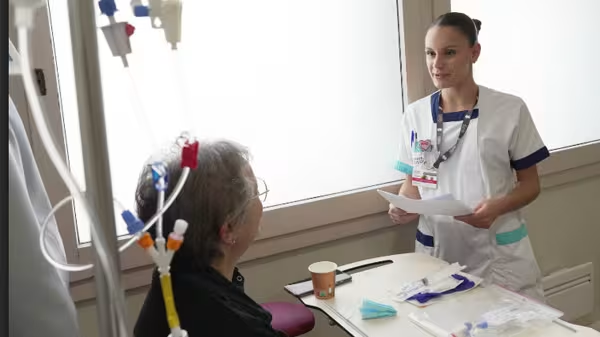
Chemotherapy refers to drug treatments designed to destroy cancer cells through nonspecific mechanisms. Some chemotherapy drugs can be administered orally, others intravenously; some are less toxic, others more so... Similarly, different tumors do not respond to the same chemotherapy regimens. Chemotherapy therefore does not refer to a single drug, but rather to a treatment approach that encompasses a wide range of drugs.

Frequency of Administration
The frequency of administration depends on the chemotherapy regimen chosen by the doctor.
This may involve daily chemotherapy (particularly when taken orally), weekly chemotherapy, or chemotherapy every 15 days, every 3 weeks, and so on...
Similarly, the total duration also depends on the protocol. However, there are some standard practices. For example, in testicular tumors, the number of cycles generally ranges from 2 to 4. In breast cancer following surgery, 6 cycles of chemotherapy are typically administered.
Infusion Chemotherapy
The duration of the infusion varies: from 10 minutes to more than 72 hours.
Chemotherapy infusions can be administered in an outpatient setting or during a “conventional” hospital stay, and sometimes as part of a Home Hospitalization (HAD) program. Administering chemotherapy in an outpatient setting allows the patient to return home without spending the night in the hospital.
Chemotherapy requires a conventional hospital stay when it lasts several days or when fluid replacement must be administered concurrently.
The infusion may sometimes require the placement of a port in a vein in the neck. This is because chemotherapy damages veins, and treatments cannot be administered repeatedly through the veins in the arm. Information about implantable ports is available from the nurses and at the Meeting and Information Center.
Side Effects
While chemotherapy is sometimes associated with side effects, these are generally well managed today with so-called “supportive” medications. The prevention and treatment of potential side effects require close cooperation between the primary care physician and the oncologist, as well as the patient’s understanding of how to respond if they occur. It is therefore essential for patients undergoing chemotherapy to be monitored concurrently by a general practitioner.
Nausea and Vomiting
These symptoms may begin as soon as chemotherapy is administered and may persist for up to 5 days afterward. This vomiting is very effectively managed by medications known as “antiemetics,” which are available intravenously or orally.
Mouth Sores
Chemotherapy can cause inflammation of the mouth (mucositis), which leads to pain. This inflammation can sometimes result in sores similar to canker sores. As with vomiting, prevention plays a major role in avoiding this side effect (using mouthwash, removing dentures at night, and avoiding alcohol, spicy, or acidic foods).
Diarrhea
Some medications can cause diarrhea. In this case, do not hesitate to call your oncologist and primary care physician if diarrhea develops, and especially if it persists (risk of dehydration). Chemotherapy is not the only cause of diarrhea. Gastrointestinal infections can also cause diarrhea and require specific treatment.
Constipation
Chemotherapy rarely causes constipation, and when it does, it is usually mild. However, severe constipation may occur with pain relievers or anti-nausea medications. In cases of constipation, the primary care physician may prescribe laxatives. Above all, it is important to monitor the number of bowel movements per day, check for persistent gas, and ensure there is no vomiting.
Hair Loss
Despite all the progress made, hair loss remains one of the major side effects of chemotherapy. However, not all chemotherapy treatments cause hair loss. If hair loss occurs, you can request a cooling cap at the start of treatment to wear on your head during chemotherapy. Clinical studies suggest that it may reduce hair loss. Wigs are partially covered by health insurance.
Skin Changes
Allergic reactions (itching, redness, etc.) that occur during the infusion should be reported to the nurse. Certain medications can cause skin reactions on the palms of the hands and soles of the feet. These should be reported to the doctor as soon as they appear. It is strongly recommended to avoid sun exposure during chemotherapy.
Hematologic Toxicity
Treatments can cause a decrease in white blood cells, platelets, and red blood cells: blood tests are generally performed to monitor these levels during chemotherapy. A severe drop in white blood cell count can lead to infection. Therefore, a fever occurring after chemotherapy treatment should be cause for concern.
If a fever is accompanied by a significant drop in white blood cell count, medications may be prescribed to minimize the decline in white blood cells during subsequent chemotherapy sessions (“hematopoietic growth factors”).
A drop in red blood cell count can cause fatigue. If this drop is significant, blood transfusions may sometimes be necessary. A decrease in red blood cells can also be prevented by prescribing erythropoietin.
A decrease in platelets can, very rarely, cause bleeding problems. These can be prevented with platelet transfusions.
Neurological Toxicity
Certain drugs, such as cisplatin, oxaliplatin, paclitaxel, and docetaxel, can cause tingling sensations in the hands and feet or a feeling of coldness. If these symptoms occur, you should inform your doctor.
Changes in the Nails
Nails may gradually become brittle, ridged, or darkened. This is not a serious condition. They will return to normal once treatment is stopped.
Veins
Certain medications can make veins more fragile. The skin along the veins may become discolored as a result.
Hearing problems
Changes in hearing and balance problems may occur in rare cases. These issues are most commonly seen with cisplatin.
Contraception is essential during chemotherapy. This is because chemotherapy can cause serious complications if administered during the first three months of pregnancy. Certain contraceptives are contraindicated in cases of cancer (such as estrogen in the context of breast cancer).