
Welcome to the new Gustave Roussy website
A new website designed to offer you a simpler, clearer, and more intuitive experience. Patients, caregivers, healthcare professionals, and donors: find information, news, and services more easily.
Interception
Personalized Cancer Prevention at Gustave Roussy.
Contact
Tél.: +33 (0)1.42.11.23.75
E-mail

Understanding the Interception Program
Approximately 30 to 40 percent of people who develop cancer could have been identified as being at increased risk in the years leading up to their diagnosis. It was based on this fundamental observation that Interception, Gustave Roussy’s personalized cancer prevention program, was created.
Launched in 2021, Interception aims to identify individuals at increased risk of cancer as early as possible in order to offer them tailored prevention strategies and provide them with better care through a city-hospital partnership. It also aims to develop, in the coming years, new screening and prevention methods tailored to these individuals, with the goal of “intercepting” cancer before it is even clinically detectable.
Cancer is currently the leading cause of death in France and in Western countries. Prevention and screening tailored to individual risk represent a major path forward for sustainably reducing its impact.
An innovative program—a first in France
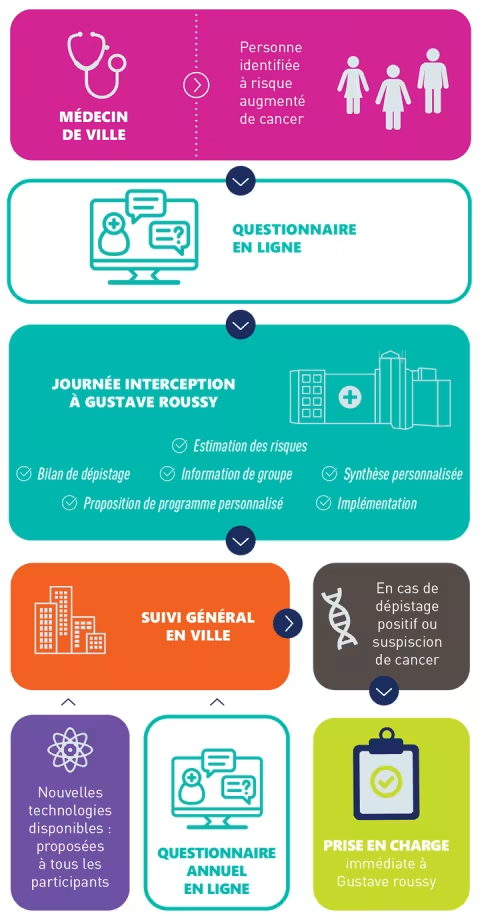
The Interception program offers each participant a day dedicated to Gustave Roussy, structured around individual consultations and awareness-raising workshops in groups of people with similar profiles.
At the end of the day, a personalized prevention and follow-up plan is developed in close collaboration with the patient’s primary care physician: imaging, addiction treatment, nutrition, colonoscopy, gynecological follow-up, etc.
This plan is then regularly reassessed based on new screening or prevention methods that become available, and includes access to a hotline in the event of suspected cancer.
Increased risk factors
A person is considered to be at increased risk for cancer in several situations. These factors may overlap, and they are evaluated in consultation with your doctor.
A significant family history or an identified genetic mutation (BRCA1/2, Lynch, Li-Fraumeni, etc.) can significantly increase the risk of developing certain cancers. An oncogenetic consultation helps determine this risk and tailor screening recommendations.
Certain lesions detected during routine examinations (colorectal polyps, cervical lesions, atypical breast lesions, etc.) are indicators that warrant enhanced and personalized follow-up.
Tobacco is the leading preventable cause of cancer. Other occupational or environmental exposures (asbestos, radon, arsenic, chromium, etc.) can also increase your risk. A personalized assessment can help evaluate your level of exposure.
Quitting smoking, staying physically active, eating a balanced diet, and limiting alcohol consumption are all ways to reduce your risk of cancer. The Interception program includes support for nutrition and physical activity.
The Interception Courses
Interception offers care pathways tailored to different groups of people at increased risk of cancer. Each pathway combines a day at Gustave Roussy with personalized follow-up in coordination with your primary care physician.
For women with a BRCA1/2 or PALB2 mutation, or other hereditary predispositions that increase the risk of breast cancer. Enhanced follow-up: annual MRI, tailored mammography, and oncogenetics.
For women at increased risk of breast cancer without an identified mutation: high breast density, a history of atypical lesions, or a significant family history.
For heavy smokers aged 50 to 74 (>20 pack-years), whether current smokers or those who quit less than 10 years ago. Annual low-dose chest CT screening + personalized smoking cessation plan.
For people with Lynch syndrome (MLH1, MSH2, MSH6, or PMS2 mutations). Monthly dedicated day: nutrition and exercise workshops, consultation with a gastrointestinal oncologist, and a scheduled colonoscopy.
For individuals with a first-degree relative who has colorectal cancer, a history of polyps, or other non-genetic high-risk factors. New care pathway launching in late 2025.
For individuals with a TP53 mutation (Li-Fraumeni syndrome) who are at increased risk for multiple cancers. Intensive, personalized multi-organ monitoring.
For individuals with rare predisposing genetic abnormalities (excluding TP53/BRCA/Lynch): CDH1, STK11, SDHA/B/C/D, attenuated APC, etc. Multidisciplinary care.
For adults who have been cured of pediatric cancer and are at increased risk of developing secondary cancers due to the treatments they received (radiation therapy, anthracycline chemotherapy, etc.).
For men with a genetic mutation that increases the risk of prostate cancer (BRCA2, HOXB13, etc.). Monitoring via enhanced PSA testing and biopsies tailored to the individual’s profile.
For individuals with clonal hematopoiesis of undetermined potential (CHIP), a marker of risk for the development of a malignant blood disorder. Monitoring and prevention program.
For people at increased risk of pancreatic cancer: those with BRCA2 or CDKN2A mutations, or a family history of the disease. Monitoring via MRI and endoscopic ultrasound.
Cancers Covered by the Interception Program
Interception covers a wide range of cancers for which personalized prevention is already possible today.
[Notes: List of links to be completed once the "Types of Cancer" pages are finalized]
How do I join the Interception program?
Physicians—whether in private practice or at hospitals—can refer their patients to the Interception program after identifying situations in which their patients have an increased risk of cancer.
See the different patient profiles involved: Interception Pathways [notes: dedicated page for each pathway?]
To better identify these risk situations, doctors can use the free online software developed by Gustave Roussy, available upon request from the Interception team:
Contact the Interception team (response within 48 business hours)
If you are a patient, please discuss your care with your referring physician, who can contact us if he or she deems it necessary.
Your doctor can schedule an appointment directly:
Via Doctolib—search for “Interception Gustave Roussy”
By phone: 01 42 11 23 75 (Monday–Friday, 8:30 a.m.–5:00 p.m.)
By email: interception@gustaveroussy.fr
If you are enrolled in the Interception program and have symptoms that may indicate cancer, or if you have been diagnosed with cancer, please contact our teams to arrange for urgent care:
Phone: 01 42 11 23 75
Email: interception@gustaveroussy.fr
Our teams will respond within 48 business hours.
We ask Interception participants to provide us with a brief update each year. The cohort formed in this way helps us improve our understanding of individual risks and assess the impact of the proposed interventions.
If new interventions become available (such as specialized screening or innovative prevention methods), participants and their doctors may be contacted.
Interception Centers in France
The centers
Since 2024, the Interception program has been expanded nationwide to offer a standardized, personalized prevention plan to anyone in France with an increased risk of cancer.

Perrine, who is participating in the Interception pancreatic program at Gustave Roussy.
Thanks to Interception, my pancreatic cancer was detected at an extremely early stage. Without this personalized prevention program, it probably would never have been discovered in time
.

The Interception Study
The teams at Gustave Roussy are working to advance research in the field of personalized prevention and screening: identifying new risk biomarkers, developing new screening and prevention methods, implementing nutritional interventions, studying the role of the immune system and the microbiome, and examining socio-psychological aspects.

-
Gustave Roussy is launching a groundbreaking cancer screening program—the first of its kind in France
The Gustave Roussy Interception Program aims to identify, as early as possible, individuals at increased risk for various cancers, in order to offer them personalized prevention strategies and provide them with better care, as part of a city-hospital collaboration. It also aims to develop, in the coming years, new screening and prevention methods tailored to these individuals, with the goal of eradicating cancer before it becomes clinically detectable. By fully committing to the field of prevention in this innovative way, Gustave Roussy is setting a new goal alongside its three founding missions: patient care, research, and education. Interception is the future of prevention!
-
Interception Receives 6 Million Euros in Funding: A Decisive Step Toward Personalized Prevention of High-Risk Cancers
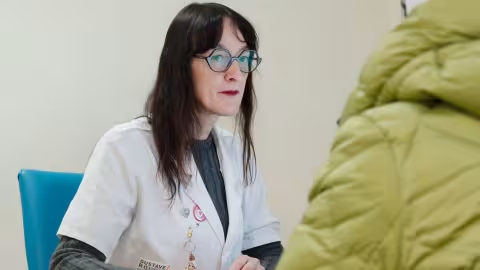
The national “Interception” pilot program—a personalized prevention and screening initiative for high-risk cancers conceived by Gustave Roussy in 2021—has reached a major milestone. Led by Unicancer, the program has received over 6 million euros in funding over four years and has just been officially announced by the Ministry of Health, Families, Autonomy, and People with Disabilities and authorized by a decree published in the Official Journal under Article 51 of the Social Security Financing Act (LFSS).
-
Personalized Cancer Prevention Takes Center Stage During Clinical Research Week
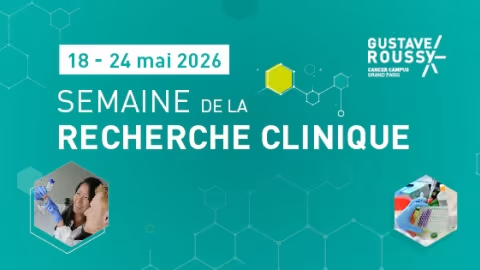
Scheduled to begin on May 18, this year’s Gustave Roussy Clinical Research Week will focus on personalized cancer prevention and the essential role that clinical research plays in advancing it. Hosted by health journalist Odile Pouget, a dedicated webinar will be held on May 21 at 6:00 p.m., featuring experts from Gustave Roussy.


Frequently Asked Questions
Interception is Gustave Roussy’s personalized cancer prevention program. It is designed for individuals identified by their doctor as being at increased risk of developing cancer. Its goal is to provide a comprehensive assessment and a customized prevention and follow-up plan, as part of a community-hospital partnership.
Your primary care physician or a hospital physician will assess your risk level. They may refer you to the Interception program if you have a significant family history, a genetic predisposition, precancerous lesions, or significant exposure to toxic substances (tobacco, asbestos, radon, etc.).
The Interception Day includes individual consultations with specialists (oncologist, geneticist, nutritionist, and addiction specialist, depending on the participant’s profile) and group awareness workshops. At the end of the day, a personalized prevention and follow-up plan is provided to the participant and their primary care physician.
No, enrollment in the Interception program is by medical referral only. If you think this program might be right for you, talk to your primary care physician, who can contact Gustave Roussy to enroll you if he or she deems it appropriate.
Coverage depends on the tests ordered and your risk profile. Your doctor and the Interception team will inform you of the reimbursement terms when you enroll.
The follow-up plan is tailored to each individual: regular imaging, specialized consultations (addiction medicine, nutrition, oncogenetics), colonoscopies, or other tests depending on the patient’s profile. This plan is reviewed regularly and incorporates new screening or prevention methods as they become available.