
Welcome to the new Gustave Roussy website
A new website designed to offer you a simpler, clearer, and more intuitive experience. Patients, caregivers, healthcare professionals, and donors: find information, news, and services more easily.
Liver Cancer
Director:
Prof Michel Ducreux
Contact:
Phone: +33 (0)1 42 11 57 99
Email

Understanding the Disease
Approximately 11,658 new cases of liver cancer are diagnosed each year in France, primarily among men. There are two main types of liver cancer:
- In 90% of cases, liver cancer presents as hepatocellular carcinoma, or hepatocarcinoma. This type of cancer most often originates in the cells that make up the majority of the liver. Hepatocellular carcinoma is primarily caused by liver cirrhosis, the main causes of which are excessive alcohol consumption, hepatitis B and C viruses, or the accumulation of fat in liver cells (20% of cases). The development of cirrhosis takes place over several years and constitutes a true precancerous condition.
- Liver cancer can also develop in the cells lining the bile ducts inside the liver. This is known as bile duct cancer or cholangiocarcinoma.
What is the liver?
The liver is a vital organ located in the upper right part of the abdomen. It is one of the largest organs in the human body and plays a central role in many vital functions. It filters the blood to remove toxins, processes nutrients from digestion to provide energy, and produces bile, which is essential for the digestion of fats.
The liver also contributes to the immune system and stores important reserves such as sugar, certain vitamins, and minerals. It has a remarkable ability to regenerate, allowing it to repair some of its tissue when damaged.
Although it is robust, the liver can be weakened by infections, excessive alcohol consumption, a high-fat diet, or certain medications. Taking care of your liver is essential for maintaining the body’s overall balance.
Liver Cancer by the Numbers
-
11,658
new cases in France each year.
-
75%
New cases are being diagnosed in men.
-
73 years old
median age at diagnosis among women.
-
70 years
median age at diagnosis among men.
Prevention and Risk Factors
When liver cancer develops, it often occurs in an organ that is already compromised. The main causes include viral hepatitis, fatty liver disease, and cirrhosis, regardless of its origin. When cirrhosis is diagnosed and being monitored, regular screening with ultrasound can help detect potential abnormalities earlier and make it easier to consider curative treatment.
Excessive alcohol consumption is one of the major risk factors for liver cancer. Alcohol causes progressive inflammation that can lead to cirrhosis. Reducing or stopping alcohol consumption is one of the most effective ways to protect the liver and prevent the development of serious complications.
Being overweight, obesity, and certain dietary habits contribute to fatty liver disease, which is the accumulation of fat in the liver. This condition may remain asymptomatic for a long time before leading to inflammation or fibrosis. A balanced diet and regular physical activity help reduce this risk.
Hepatitis B and C are viral infections that can lead to chronic inflammation of the liver and increase the risk of cirrhosis or liver cancer. Hepatitis B vaccination, screening, and early treatment of these infections can significantly reduce these risks.
Certain medications, supplements, or chemicals can be toxic to the liver when used for prolonged periods or improperly. Prevention relies on the judicious use of treatments, adherence to prescribed doses, and caution regarding self-medication.
The risk of liver disease increases with age due to prolonged exposure to various toxic or infectious factors throughout one’s life. Some people also have genetic predispositions or autoimmune diseases that make their livers more vulnerable.
Symptoms
Liver cancer often causes few symptoms in the early stages, which is why it may not be detected until later. When symptoms do appear, they are related to the gradual deterioration of liver function and the progression of the disease.
These symptoms include:
- Abdominal pain: Persistent pain or discomfort in the upper right part of the abdomen may be a sign of liver damage.
- Loss of appetite and weight loss: A gradual decrease in appetite, sometimes accompanied by unintentional weight loss, is common.
- Unusual fatigue: A persistent feeling of fatigue may develop, linked to liver dysfunction.
- Nausea or digestive problems: Nausea, indigestion, or a feeling of bloating may accompany the disease.
- Abdominal swelling: Fluid buildup in the abdomen (ascites) can cause visible swelling.
- Jaundice: A yellow discoloration of the skin and eyes may occur when the liver can no longer properly eliminate bilirubin.
- Itching: This may be related to the buildup of substances that the liver is no longer effectively eliminating.
Instadiag
The InstaDiag Liver Test
To optimize the diagnosis of liver cancer and expedite the treatment of affected patients, Gustave Roussy has developed the InstaDiag Liver care pathway. The Institute was selected by INCa as a pilot center for implementing this pathway as part of a project to improve care pathways for cancers with a poor prognosis.
[Add a button linking to the InstaDiag Pancreas page]

Coverage
Gustave Roussy provides diagnosis and treatment for liver cancer, but also treats patients who have already received a diagnosis.
All of the medical specialties involved in the management of hepatocellular carcinoma are represented at Gustave Roussy. Teams of experts in liver surgery, interventional radiology, radiation therapy, and gastrointestinal oncology have access to state-of-the-art technical facilities (PET scans, MRI, hybrid operating rooms, robotic surgery, etc.) and can offer each patient the most appropriate treatment.
Decisions regarding treatment plans are made during multidisciplinary team (MDT) meetings. These meetings bring together several physicians from different disciplines—gastrointestinal oncologists, liver surgeons, radiation oncologists, and interventional radiologists—who have access to state-of-the-art technical facilities. A MDT meeting report is prepared for each patient.
Treatments
The prognosis for hepatocellular carcinoma depends not only on the extent of the tumor, but also on the severity of cirrhosis. At Gustave Roussy, various treatments are available to manage the disease.
Surgical resection is a surgical procedure that involves the complete removal of the part of the liver in which the tumor has developed. This procedure can only be performed in cases of a single lesion and in the absence of complications related to cirrhosis, and requires the patient to have good liver function. Minimally invasive surgery—whether laparoscopic or robot-assisted—is now offered to the majority of patients at Gustave Roussy to improve postoperative outcomes.
The use of robotic surgery at Gustave Roussy now allows for broader indications thanks to greater surgical dexterity and 3D visualization.
Percutaneous tumor ablation is an alternative to surgery. It is a minimally invasive, image-guided technique that destroys the tumor using heat (radiofrequency) or cold (cryotherapy), significantly reducing the risk of complications. The procedure is performed through the skin under general anesthesia by an interventional radiologist specializing in medical imaging-guided treatments.
Chemoembolization and radioembolization are treatments known as “locoregional” therapies. They are intended for patients with hepatocellular carcinoma confined to the liver. These procedures involve injecting particles—of varying diameters—into the hepatic artery; these particles may be radioactive or contain a chemotherapy drug.
Gustave Roussy is a pioneer in locoregional treatments, with an expert and globally recognized interventional radiology team [notes: link to treatments to be added]. Access to all these treatments—as well as to all the latest innovations—is guaranteed by a technical platform unique in Europe, combining intratumoral immunotherapy, intra-hepatic arterial immunotherapy, robot-assisted guidance, multimodal therapeutic combinations, and more.
Also known as a liver transplant, liver transplantation has the advantage of treating both cirrhosis and hepatocellular carcinoma. However, this treatment can only be offered to a small number of patients (less than 5%) due to age, comorbidities, restrictive criteria regarding tumor extent, and a shortage of donor organs. Since liver transplantation is highly centralized in France, it is performed exclusively at two centers in the Île-de-France region, with which Gustave Roussy collaborates closely.
Other types of treatments for hepatocellular carcinoma are performed at Gustave Roussy. However, these treatments are intended to slow the progression of the tumor when surgery or percutaneous ablation is not possible, or while the patient is awaiting a liver transplant.
Stereotactic radiation therapy may be indicated, in particular, for patients with localized disease whose size and/or liver function preclude curative treatment.
Targeted therapies are drug-based treatments that act on mechanisms specific to cancer cells. Currently, the main targeted therapy drug approved for use in the treatment of hepatocellular carcinoma is bevacizumab in combination with immunotherapy. It slows the progression of cancer by affecting the growth rate of cancer cells and by preventing the development of blood vessels that supply the tumor. Other drugs are currently being evaluated in clinical trials.
The efficacy of immunotherapy has now been well established for advanced hepatocellular carcinoma, and it has received marketing authorization for this indication. It is generally well tolerated, even in patients with chronic liver disease, which is often associated with the tumor. Immunotherapy does not act directly on cancer cells, as conventional chemotherapy does, but acts indirectly by stimulating the patient’s immune system to target their own tumor cells.
Search
Depending on the characteristics and stage of the cancer, Gustave Roussy may offer patients the opportunity to participate in clinical research trials. The therapeutic innovations in these trials provide patients with access to new drugs and precision medicine through the molecular characterization of each tumor. If appropriate, the possibility of participating in a clinical trial will be discussed with patients during their care with their referring oncologist, allowing them to access innovative treatments.
Join a clinical trial
Many clinical trials are open to patients with cancer. Participating in a clinical trial provides access to innovative treatments while contributing to the development of new therapies.

Chair of the Gastrointestinal Committee:
Prof. Michel Ducreux
Contact
Tel.: +33 (0)1 42 11 57 99
avis.digestif@gustaveroussy.fr
Appointments and Second Opinions

-
Première destruction de métastases au foie guidée par robot
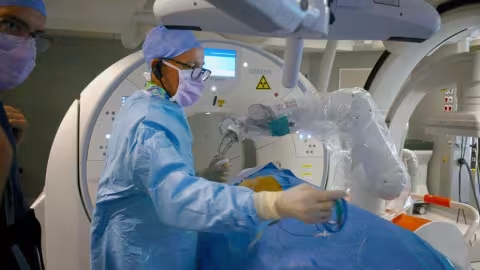
Le Pr Thierry de Baere, chef du service d’imagerie thérapeutique de Gustave Roussy et son équipe ont utilisé pour la première fois le robot de Quantum Surgical pour guider la destruction par micro-ondes de métastases localisées dans le foie. Ce dispositif robotique a pour but d’assister le radiologue interventionnel pour améliorer précision, sécurité et reproductibilité du traitement des tumeurs dont l’abord est délicat. La procédure s’est déroulée le 7 juillet à Gustave Roussy dans la salle hybride équipée d’un scanner avec intelligence artificielle embarquée du nouveau plateau de radiologie interventionnelle.
-
#Ledefidejanvier pour faire une pause dans sa consommation d’alcool
Même à faible dose, l’alcool peut augmenter le risque de développer plusieurs cancers, chez les hommes comme chez les femmes. La campagne de santé publique, Le défi de janvier, incite à ne pas boire d’alcool du 1er au 31 janvier, une aide utile pour mieux contrôler sa consommation annuelle.

-
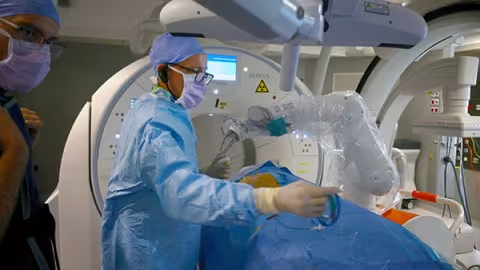
100 patients traités avec l’aide du nouveau robot Epione® à Gustave Roussy
Premier centre au monde à s’équiper de cette nouvelle technologie, Gustave Roussy propose des traitements de radiologie interventionnelle assistés du dispositif Epione®. Cent malades atteints de tumeurs primitives ou métastatiques ont déjà pu bénéficier de cette navigation robotique. Gustave Roussy mène une étude clinique pour élargir les indications d’utilisation aux tumeurs du poumon, après avoir été leader dans l’obtention de l’autorisation pour le foie et le rein.


Frequently Asked Questions
Liver cancer is characterized by the presence of abnormal cells that develop within the liver tissue. The most common type is hepatocellular carcinoma, which most often develops in a liver that is already compromised, particularly in cases of cirrhosis or chronic viral hepatitis.
Liver cancer can remain asymptomatic for a long time. When symptoms do appear, they may include pain in the upper right part of the abdomen, unusual fatigue, loss of appetite, weight loss, abdominal swelling, or jaundice. These symptoms are nonspecific and should prompt you to see a doctor for an appropriate evaluation.
The diagnosis is generally based on imaging, particularly ultrasound, CT, or MRI. These tests help identify a suspicious lesion. Blood tests may be used to supplement the evaluation. In some cases, a biopsy is necessary to confirm the nature of the tumor.
Prevention focuses primarily on protecting the liver: vaccination against hepatitis B, screening for and treatment of viral hepatitis, reducing alcohol consumption, maintaining a stable weight, and limiting exposure to toxic substances. For people with cirrhosis, regular follow-up with an ultrasound every six months helps detect the disease earlier.