
Welcome to the new Gustave Roussy website
A new website designed to offer you a simpler, clearer, and more intuitive experience. Patients, caregivers, healthcare professionals, and donors: find information, news, and services more easily.
Pancreatic cancer
Director:
Prof. Michel Ducreux
Contact:
Phone: +33 (0)1 42 11 57 99
Email

Understanding the Disease
Pancreatic cancer develops when a cell in the pancreas that was initially healthy undergoes a change (such as a mutation) and then multiplies uncontrollably until it forms a cluster of cancer cells called a tumor. Most tumors are located in the head of the pancreas, the part of the organ closest to the intestine.
In 90% of cases, pancreatic cancer presents as pancreatic ductal adenocarcinoma. This type of cancer develops from cells that produce pancreatic juice, which is necessary for digesting food.
In 10% of cases, it is another type of tumor: a neuroendocrine tumor that develops in the pancreas.
According to data from the National Cancer Institute, there are an estimated 16,000 new cases of pancreatic cancer per year in France. This disease affects roughly equal numbers of men and women.
What is the pancreas?
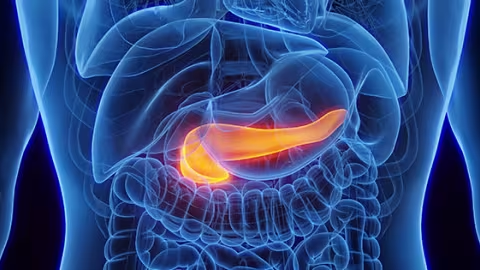
The pancreas is the second-largest gland in the body. It is located in the upper abdomen, between the small intestine and the spleen, just behind the stomach, and plays a vital role in the digestion of fats and the regulation of blood sugar levels.
Pancreatic Cancer by the Numbers
-
15,991
new cases in 2023.
-
71 years old
Median age at diagnosis among men.
-
74 years old
median age at diagnosis among women.
Prevention and Risk Factors
Smoking is the primary known risk factor for pancreatic cancer. The heavier and longer-term the smoking, the greater the risk. It is believed to be a factor in approximately 20 to 30 percent of cases.
Being overweight, especially when combined with abdominal fat, increases the risk of developing pancreatic cancer.
People with diabetes, particularly type 2 diabetes, are at increased risk for pancreatic cancer. It is worth noting that, in some cases, newly diagnosed diabetes can also be an early sign of the disease.
Chronic pancreatitis—that is, prolonged inflammation of the pancreas—is a recognized risk factor. It is often linked to excessive alcohol consumption.
The risk of pancreatic cancer increases with age, with the majority of cases occurring after age 50.
A family history of pancreatic cancer or certain genetic abnormalities (such as mutations in the BRCA genes) may increase the risk.
A diet high in processed foods and fats, along with a sedentary lifestyle, may contribute to an increased risk, although these links are still being studied.
Symptoms
The symptoms of pancreatic cancer are often subtle and nonspecific, which is why this cancer is frequently diagnosed at an advanced stage.
These symptoms may include:
- Pain in the upper abdomen, which may radiate to the back.
- Unexplained weight loss and loss of appetite.
- Jaundice (yellowing of the skin and the whites of the eyes).
- Persistent fatigue.
- Digestive problems (nausea, vomiting, diarrhea).
- Dark urine and lighter-colored stools.
- Itchy skin.
- New-onset diabetes or worsening of existing diabetes.
- Blood clots in some cases.
Diagnosis
Gustave Roussy provides diagnosis and treatment for pancreatic cancer, but also cares for patients who have already received a diagnosis.
More than half of patients have metastases at the time of diagnosis, largely because the symptoms of pancreatic ductal adenocarcinoma are nonspecific. A series of tests is therefore essential to assess the condition of the pancreas and the extent of the disease in order to establish an accurate diagnosis.
Various tests are used to diagnose pancreatic cancer:
- First, an ultrasound is used to examine the organs inside the abdomen and detect any suspicious masses on the pancreas.
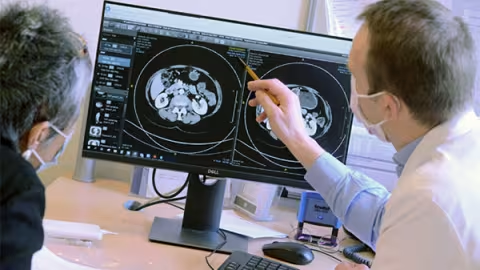
This test is supplemented by a CT scan (also known as computed tomography) to examine the detected tumor in greater detail. The CT scan also provides information on the tumor’s size, its location, the distance between the tumor and major blood vessels running around the pancreas, and whether it has spread beyond the pancreas. - In cases of localized tumors or prior to potential non-surgical treatment, an endoscopic ultrasound is performed to confirm that the disease has not spread to blood vessels. This test also allows for the precise identification of the tumor’s nature by taking a biopsy via an internal approach.
- Hepatic MRI plays an important role in assessing the extent of a pancreatic ductal adenocarcinoma. The exam is performed to detect the presence of liver metastases in cases of resectable tumors or those on the borderline of resectability.
Decisions regarding treatment options are made during multidisciplinary team (MDT) meetings. These meetings involve several physicians from different specialties: gastrointestinal oncologists, liver surgeons, radiation oncologists, and interventional radiologists, who have access to state-of-the-art technical facilities. A MDT meeting report is prepared for each patient.
Instadiag
The InstaDiag Pancreas Program
The InstaDiag Pancreas care pathway, developed and offered at Gustave Roussy, is designed to diagnose and treat pancreatic cancer. Gustave Roussy was selected by INCa as a pilot center for the implementation of this care pathway as part of a project to improve care pathways for cancers with a poor prognosis.
[Add a button linking to the InstaDiag Pancreas page]

Treatments and Clinical Trials
The prognosis for pancreatic ductal adenocarcinoma is largely determined by the extent of the tumor. In the treatment of this condition, and depending on the stage of vascular invasion, three types of tumors are distinguished: resectable tumors (those that can be removed surgically), borderline resectable tumors (also called borderline), and unresectable tumors.
Surgical Resection
Surgery is the primary treatment for resectable pancreatic ductal adenocarcinoma. It involves removing the part of the pancreas where the tumor has developed. The procedure is called a cephalic duodenopancreatectomy (CDP) when performed on the head of the pancreas, or a left splenopancreatectomy when performed on the tail of the pancreas. Part of the intestine, the stomach, the gallbladder, and the spleen may also be removed during the procedure to prevent cancer cells from spreading to these organs.
Adjuvant Chemotherapy
Once the tumor has been surgically removed, the patient is prescribed what is known as adjuvant chemotherapy. The goal of this treatment is to destroy any cancer cells that remain after the tumor has been surgically removed. Various drugs are used, either alone or in combination (gemcitabine, 5-fluorouracil, folinic acid, oxaliplatin, irinotecan, etc.).
Neoadjuvant Chemotherapy
Chemotherapy is often the first treatment given for borderline resectable pancreatic ductal adenocarcinoma. It is used to try to shrink the tumor before administering other treatments or before surgery. It is then referred to as “preoperative” or “neoadjuvant.”
Radiation Therapy
Radiation therapy may be prescribed in combination with chemotherapy, a treatment known as chemoradiation. Radiation therapy may be administered after neoadjuvant chemotherapy if the chemotherapy has reduced the tumor’s size, in order to complete the preoperative treatment. If the tumor progresses during chemotherapy, radiation therapy is not an option, as tumor regression is then unlikely.
After these treatments, the doctor will use computed tomography (CT) to reassess the tumor.
Surgical Resection
If the CT scan shows that the tumor has regressed and if the multidisciplinary team of physicians considers the possibility of completely removing it surgically after neoadjuvant treatment, surgical resection may then be performed.
Chemotherapy
For locally advanced and metastatic pancreatic ductal adenocarcinomas, chemotherapy is most often recommended. In fact, cases involving tumor shrinkage, invasion of the portal vein (one of the liver’s main blood vessels), or arterial extension preclude any surgical intervention on the tumor. The goal of chemotherapy is to slow or even stop the progression of the disease, reduce pain, and improve the patient’s quality of life.
Radiation Therapy
Radiation therapy may be administered after a course of chemotherapy to enhance the response to medical treatment and prolong disease control. It may also be prescribed to manage pain caused by cancer. In such cases, it is a palliative treatment rather than a curative one.
For pancreatic cancers, a multimodal treatment approach is most often implemented, in accordance with best-practice guidelines and based on the most recent data from the scientific literature.
Gustave Roussy, a center renowned for its clinical, translational, and basic research programs, offers each patient a state-of-the-art personalized molecular profile and the opportunity to participate in the latest innovative clinical trials.
Join a clinical trial
Many clinical trials are open to patients with cancer. Participating in a clinical trial provides access to innovative treatments while contributing to the development of new therapies.

Testimonial
Perrine's story: treated for pancreatic cancer at Gustave Roussy
I was diagnosed on June 11, and I was in the operating room on July 1. The surgery lasted eight hours. It was performed by Dr. Gelli, assisted by a robot, which left only three small incisions and allowed the tumor to be removed along with a significant portion of the pancreas. This was followed by a week in the hospital, marked by the compassion of the staff at Gustave Roussy, who showered me with small gestures of kindness, words of encouragement, and reassuring hand gestures that brought me great comfort. Trusting the teams and letting them take care of me helped dispel the anxiety that had consumed me since my diagnosis.

Search
Depending on the characteristics and stage of the cancer, Gustave Roussy may offer patients the opportunity to participate in clinical research trials. The therapeutic innovations in these trials provide patients with access to new drugs and precision medicine through the molecular characterization of each tumor. If appropriate, the possibility of participating in a clinical trial will be discussed with patients during their care with their referring oncologist, allowing them to access innovative treatments.
Spotlight on the YODA Program
There has been an alarming increase in the incidence of gastrointestinal cancers, including pancreatic cancer, among young adults (patients aged 20 to 49). The vast majority of these patients are diagnosed at a metastatic stage and have a shorter survival time, since current screening guidelines are designed for older individuals.
The YODA research program aims to generate knowledge about the genetic or environmental risk factors underlying the development and progression of gastrointestinal cancers in young adults. To this end, a European cohort of patients with early-onset gastrointestinal cancers (aged 20 to 49) and a comparison cohort of patients with gastrointestinal cancers (aged 65 to 70) will be established.
Contact
Head of the Gastrointestinal Committee:
Prof. Michel Ducreux
Contact
Tel.: +33 (0)1 42 11 57 99
avis.digestif@gustaveroussy.fr
Appointments and Second Opinions

-
Dépister plus tôt le cancer du pancréas pour mieux le guérir
Le cancer du pancréas est le 2e cancer digestif le plus fréquent. D’un pronostic sombre, il est souvent diagnostiqué à un stade inopérable et est donc extrêmement difficile à soigner dans 90 % des cas. Un des projets du Centre National de Médecine de Précision PRISM a pour objectif de dépister plus précocement les cancers du pancréas pour augmenter significativement les chances de guérison des patients. À terme, 100 000 vies pourraient être sauvées chaque année dans le monde.
-
Le lien entre consommation d’alcool et cancer du pancréas se précise
Une consommation régulière d’alcool entraîne la baisse dans l’organisme de plusieurs lipides, qui pourrait être associée à un risque plus élevé de cancer du pancréas.
-
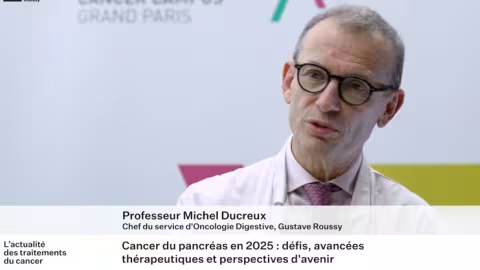
Pancreatic Cancer in 2025
Challenges, Therapeutic Advances, and Future Prospects


Frequently Asked Questions
The main factors identified are smoking, being overweight or obese, diabetes, chronic pancreatitis, and certain family histories or genetic predispositions.
In most cases, it is not hereditary. However, about 5 to 10 percent of pancreatic cancers are linked to genetic mutations that run in families.
It is not possible to completely prevent this cancer, but certain lifestyle choices can help reduce the risk, such as quitting smoking, maintaining a healthy weight, and limiting alcohol consumption.
Pancreatic cancer often progresses for a long time without any specific symptoms. Because the early signs are subtle, the diagnosis is often made at an advanced stage.