Welcome to the new Gustave Roussy website
A new website designed to offer you a simpler, clearer, and more intuitive experience. Patients, caregivers, healthcare professionals, and donors: find information, news, and services more easily.
Committee on Childhood and Adolescent Cancer
A committee at the intersection of patient care and research
The Pediatric and Adolescent Oncology Committee coordinates medical and scientific expertise in pediatric cancers at Gustave Roussy. It brings together professionals involved in diagnosis, treatment decisions, access to innovative therapies, and research, in order to tailor the approach to each child, adolescent, or young adult.
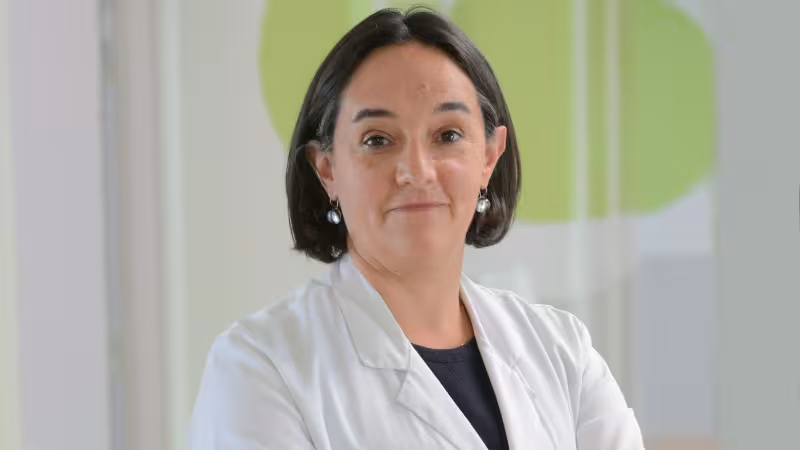
Led by Professor Véronique Minard-Colin, the committee coordinates care, research, and education in pediatrics and is part of a multidisciplinary care approach that brings together the various specialties necessary for a young patient’s treatment journey.
Types of Cancer Treated
Gliomas, medulloblastomas, and other tumors of the central nervous system
Pediatric Tumors of the Sympathetic Nervous System and the Kidney
Hodgkin's Lymphoma and Non-Hodgkin's Lymphomas
Ewing's sarcoma, osteosarcoma, and other bone tumors
Rhabdomyosarcomas and Other Sarcomas
Tumors that can develop in the gonads or other sites
Liver Tumors in Children and Adolescents
Situations Requiring Specialized Pediatric Expertise
A multidisciplinary treatment decision
Imaging, pathological examination, and molecular testing make it possible to characterize the tumor and identify factors that aid in decision-making.
Cases are discussed among specialists, particularly during weekly multidisciplinary consultation meetings and interregional pediatric meetings.
Quality of life, long-term effects, education, and social reintegration are among the issues monitored throughout the process.
Treatment plans tailored to young patients
Care combines cancer treatments with supportive care and age-appropriate support. Psychologists, neuropsychologists, rehabilitation specialists, dietitians, and educational and social service teams provide support based on the needs of the child, adolescent, and their family.
For adolescents and young adults, the care pathway is designed to address specific challenges, including independence, school or college life, social relationships, fertility, and returning to daily life. Following a brain tumor, personalized rehabilitation may be offered to address the cognitive, motor, academic, or social consequences of the disease and its treatments.
The committee's doctors
Dr. Samuel Abbou
Dr. Pablo Berlanga
Dr. Christelle Dufour, Department
Chair, Dr. Brice Fresneau
Dr. Nathalie Gaspar
Dr. Birgit Geoerger
Dr. Jacques Grill
Dr. Léa Guerrini Rousseau
Dr. Lucy Metayer
Dr. Claudia Pasqualini
Dr. Charlotte Rigaud
Dr. Clémentine Lopez
Dr. Sophie Espenel
Dr. Valentine Martin
Dr. Noura Sellami
Dr. Mario Terlizzi
Dr. Manel Mestiri
Dr. Salma Moalla
Dr. Neila Ines Ben Romdhane
Dr. Pierre Khneisser
Surgeons from Bicêtre and Necker Hospitals also participate in the weekly case conference.
An integrated research unit dedicated to pediatric cancers
- Unit U1360, Oncogenesis, Resistance, and Therapeutic Targets in Pediatric Cancers. Led by Thomas Mercher, this unit focuses on certain aggressive pediatric cancers, including acute myeloid leukemias, diffuse midline gliomas, osteosarcomas, and relapsed cancers, with the goal of identifying the molecular mechanisms responsible for their development and resistance, and developing more effective and less toxic therapeutic strategies.
- Unit U1356, Research and Innovative Therapies in Pediatric and Adult Immuno-Oncology. Led by Emmanuel Donnadieu, this unit conducts basic and translational research aimed at better understanding, predicting, and improving the response to immunotherapy treatments in pediatric and adult cancers.
- EpiRad Team: Understanding the long-term effects of cancer treatments and radiation exposure in children, adolescents, and young adults. This research team, led by Neige Journy and Rodrigue Allodji, studies the long-term health effects of ionizing radiation and cancer treatments, primarily in children, adolescents, and young adults. The goal is to better understand the factors responsible for complications related to cancer treatments, in order to improve prevention, personalized treatment, and the organization of long-term follow-up.
The committee’s physicians and researchers also participate in several research networks and programs, including PEDIAC, Paris Kids Cancer, and the European ITCC consortium. The committee is also involved in numerous national and international clinical trials focused on pediatric cancers.