Welcome to the new Gustave Roussy website
A new website designed to offer you a simpler, clearer, and more intuitive experience. Patients, caregivers, healthcare professionals, and donors: find information, news, and services more easily.
Ten years of scientific advances in melanoma teatments
The treatment of metastatic melanoma has advanced significantly in recent years thanks to immunotherapies and targeted therapies.
Published on
Changed on
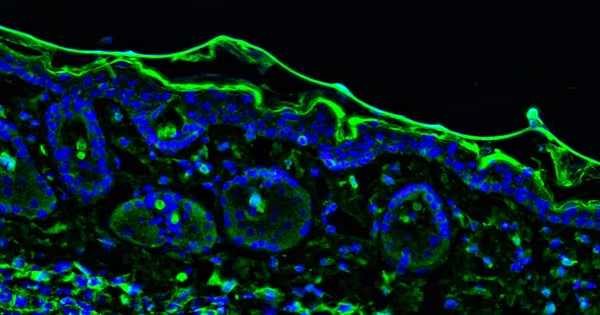
The treatment of metastatic melanoma has advanced significantly in recent years thanks to immunotherapies and targeted therapies. Some patients are now being cured of their disease, while others do not respond to treatment and their prognosis remains poor. Actively pursuing research in this field is a major priority for Prof. Caroline Robert, head of the onco-dermatology department at Gustave Roussy, and her team. Here’s a closer look at the advances made and the challenges ahead.
With more than 16,000 new cases per year in France, melanoma remains the most aggressive form of skin cancer. Nevertheless, thanks to research and the progress made, 70% of patients respond to targeted therapies, and 20% of metastases disappear completely. However, it is not uncommon to see a relapse after a few months or years. Immunotherapies, when effective—in 20 to 55% of patients—can, in some cases, lead to lasting complete remission, even after treatment is stopped.
In recent years, efforts have focused on finding new treatments and identifying markers that predict response or resistance.
The Role of Persistent Cells
Professor Caroline Robert’s team was able to identify and characterize persistent cancer cells—cells that are invisible to clinical examination and imaging yet remain present in the body after treatment. These cells may be responsible for relapses occurring several months or years after the end of treatment. The oncodermatologist and her team thus demonstrated that these persistent cells reprogram their protein production by translating a small number of messenger RNAs, which allows them to survive and trigger subsequent resistance. Furthermore, the energy consumption of these cells differs from that of other tumor cells, and this distinct metabolism may offer a therapeutic avenue.
For the first time, persistent cells were visualized in patient biopsies before and after treatment with targeted therapy or immunotherapy. This work was the subject of Dr. Sara Faouzi’s dissertation and was presented at an international conference in June 2022. Prof. Robert’s team also demonstrated that these persistent cells could be eliminated using an inhibitor of an enzyme involved in the production of proteins from messenger RNA. The results, which have shown promise in cell cultures and animal models, will be used to develop new, effective drugs to combat tumor progression.
To understand why persistent cells are not destroyed by the immune system, the laboratory has developed tests to evaluate the influence of these cells on immune cells: lymphocytes and monocytes. These tests show that a protein produced by persistent cells appears capable of paralyzing the immune system. The team is currently working to better characterize this protein and find a way to counteract its action.
New Biomarkers Predicting Response to Immunotherapies
Another of its advances is the ability to predict which individuals are likely to respond—or not—to immunotherapy treatment, thanks to the discovery of a new biomarker. It is based on the detection of an interaction between the PD-1 and PD-L1 receptors, which are directly targeted by immunotherapies. Professor Caroline Robert’s team is currently evaluating this biomarker in patients with lung cancer.
The researchers have also been studying the LDH marker, an enzyme found in the blood; its various forms, characterized in both the blood and metastases, provide a better understanding of its significance. These findings, which are currently being confirmed, will be particularly useful for better identifying patient profiles.
Last news
-
ADCs: Two Landmark Publications in Cancer Cell and Nature Medicine Showcase Gustave Roussy's Expertise
In less than two months, researchers and clinicians from Gustave Roussy have contributed to two major publications on Antibody-Drug Conjugates (ADCs) in Cancer Cell and Nature Medicine. Together, these papers provide both a comprehensive overview of current knowledge and a strategic vision to accelerate the development of the next generation of these innovative therapies.
-
Drug shortages: Gustave Roussy becomes the only Cancer Centre in France authorised to produce Special Hospital Preparations
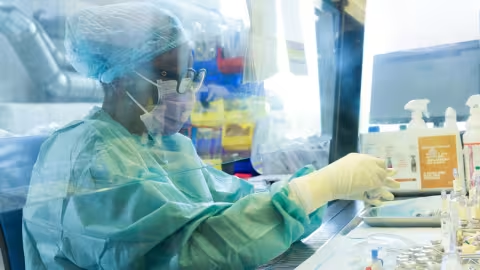
The Clinical Pharmacy Department at Gustave Roussy has been authorised by the French Ministry of Health to manufacture Special Hospital Preparations (SHPs). Granted for a period of seven years, this accreditation enables the Institute’s hospital pharmacy to produce certain medicines in coordination with the French National Agency for the Safety of Medicines and Health Products (ANSM) and the Ministry of Health. Gustave Roussy is the only French Comprehensive Cancer Centre (CLCC) authorised to manufacture Special Hospital Preparations, alongside ten university hospitals.
-
Personalising Breast Cancer Treatments: 5 Questions with Dr Barbara Pistilli
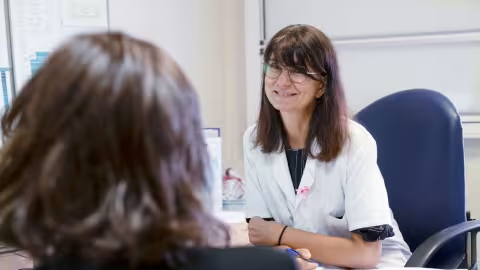
Advances in treatment and patient care mean that five-year net survival for breast cancer now reaches 88%1 in France. However, with around 60,000 new cases diagnosed each year in France alone, breast cancer remains a major public health challenge. One reason is the side effects associated with treatment. In response to this issue, Dr Barbara Pistilli, Head of the Breast Cancer Committee at Gustave Roussy, advocates an approach centred on personalised care, ensuring that each woman receives a treatment intensity tailored to her tumour and individual journey, without compromising her chances of recovery.
-
Breast Cancer: Gustave Roussy Ranked No. 1 in France for Breast Surgery and Breast Reconstruction
On the occasion of Breast Cancer Awareness Month, the 2025 data from Visuchir, the national surgical activity monitoring tool of the French Health Insurance system, places Gustave Roussy in first position for both breast surgery and breast reconstruction. Beyond this ranking, these figures highlight that reconstruction is now an integral part of breast cancer treatment. It is considered at every stage of care: from tumor removal surgery, whether lumpectomy or mastectomy, through to the post-cancer period, helping to restore the body and support women in regaining their physical integrity and quality of life.