Professor Alain Sarasin honoured by the French Academy of Sciences
The French Academy of Sciences has honoured Professor Alain Sarasin, emeritus researcher, for his work on DNA repair and mechanisms of predisposition to cancer. He received the “Frères JOFFARD - Fondation de France - Découverte médicale” prize at the formal awards ceremony held on 24 November 2026 beneath the dome of the Institut de France. This distinction recognises a scientific career devoted to understanding the fundamental mechanisms that enable cells to preserve the integrity of their genome, and how failures in these mechanisms can contribute to the development of cancer.
Published on

Professor Alain Sarasin, an emeritus researcher at the CNRS based at Gustave Roussy, continues his work within the research unit UMR9019 “Genome Integrity and Cancer”, headed by Patricia Kannouche.
A career devoted to understanding how DNA damage leads to cancer
Professor Alain Sarasin’s research has been guided by a fundamental question in cancer research: how do cells repair the damage that continually occurs in their DNA, and what happens when these protective mechanisms fail?
To address this question, Professor Sarasin has focused particularly on xeroderma pigmentosum (XP), sometimes known as “moon children disease”, a rare genetic disorder characterised by a deficiency in certain DNA repair mechanisms. In people with XP, DNA damage caused by ultraviolet radiation is either not repaired or only poorly repaired. This genetic vulnerability results in extreme sensitivity to sunlight and a very high predisposition to developing skin cancers at an early age.
Studying this rare disease therefore provides a valuable model for understanding a much broader phenomenon: the role played by alterations in DNA repair systems in the development of cancer.
Over the course of his research, Professor Alain Sarasin has helped to characterise more precisely the genetic abnormalities responsible for xeroderma pigmentosum, as well as their biological and clinical consequences. His research lies at the interface of molecular biology, genetics and cancer research.
His work has also made it possible to study populations particularly affected by the disease. He established and studied a large French cohort of patients with xeroderma pigmentosum, which enabled him to observe that some patients had an increased risk of developing cancers other than skin cancer, including haematological malignancies and brain, gynaecological or thyroid tumours.
These observations have changed our understanding of the disease. They show that the consequences of defective DNA repair are not limited to skin exposed to sunlight but can also contribute to the development of internal cancers.
From a rare disease to the fundamental mechanisms of cancer
Professor Sarasin’s work therefore sheds light on one of the fundamental mechanisms of carcinogenesis: the accumulation of mutations when a cell is no longer able to repair its DNA properly.
This approach lies at the heart of the research carried out within UMR9019 “Genome Integrity and Cancer”, which investigates the mechanisms that maintain genome integrity, how they are altered in cancer cells, and their role in resistance to treatment.
Last news
-
Research focus: targeted therapy, artificial intelligence, immunology... Three other breakthroughs to watch
Last quarter, we also learnt that certain immune cells in the brain help gliomas evade the body's defences, that mutations in the KRAS gene may promote resistance to targeted therapies in some lung cancers, and that artificial intelligence could help improve prognostic assessment for women with triple-negative breast cancer.
-
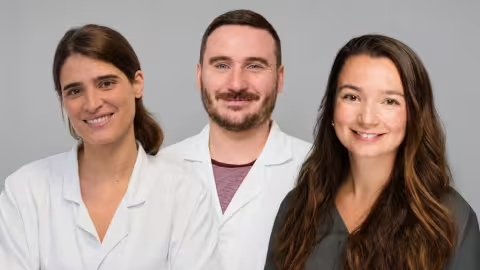
Cancer research: the Gustave Roussy Foundation opens three new Chairs of Excellence
Following the inauguration of its first three Chairs of Excellence in 2024, the Gustave Roussy Foundation is continuing to roll out this programme, which aims to attract and retain the best researchers in oncology. The new Chairs inaugurated this year will generate fresh momentum around cutting-edge research in immunology, artificial intelligence and genetics.
-
18 Gustave Roussy doctors and researchers named among the world’s most influential researchers in 2026
The 2026 Highly Cited Researchers list, published by Clarivate, recognises 18 doctors and researchers affiliated with Gustave Roussy. This international recognition reflects the influence of the research conducted at the Institute and its impact across the global scientific community.
-
Two photon-counting CT scanners now equip Gustave Roussy's imaging department
Since September 2026, Gustave Roussy's Department of Medical Imaging has been equipped with a second photon-counting CT scanner, delivering higher image resolution while reducing the doses of X-rays and contrast agent administered to patients. This technology recently enabled the Institute to perform an iodine-free pulmonary CT angiogram, a world first.