Welcome to the new Gustave Roussy website
A new website designed to offer you a simpler, clearer, and more intuitive experience. Patients, caregivers, healthcare professionals, and donors: find information, news, and services more easily.
Cancer and sun: good habits to adopt
Summer is all too often synonymous with excessive sun exposure; according to data from Santé Publique France, ultraviolet radiation on the skin is responsible for more than 10,000 new cases of melanoma in France each year. Providing optimal protection for oneself and one’s loved ones is a major public health issue, especially for patients who are being treated for or have recovered from cancer, for whom UV radiation can cause numerous complications.
Published on
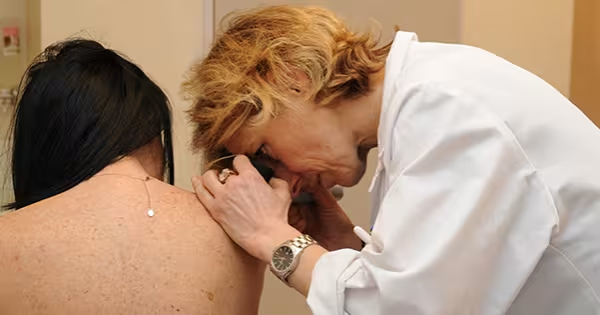
In France, the incidence of skin melanoma has increased fivefold in less than thirty years, according to the National Cancer Institute, making it one of the cancers with the steepest rise in incidence. Between 2010 and 2023, this trend continued at a steady pace, with an average annual increase of 2% in the number of new cases. These figures underscore the importance of continuing to raise public awareness about the risks posed by exposure to sunlight and artificial ultraviolet radiation—especially as the summer vacation season approaches.
Protecting Yourself Effectively
To protect yourself from the sun, there are several habits to adopt and keep in mind all year round:
- Limiting direct exposure to the sun’s rays as much as possible remains the best protection, especially during the hottest hours of the day, from 11 a.m. to 4 p.m.
- Apply a sufficient amount (two teaspoons for the face, arms, and neck; two tablespoons for the body when swimming) of SPF 50+ sunscreen that protects against both UVA and UVB rays every two hours and after swimming or exercising.
- Wear long, loose-fitting, covering clothing, along with a hat with a brim at least 7 cm wide and a pair of CE-marked sunglasses.
- Never expose infants to the sun, and take special care to protect children with covering clothing, even while swimming. Sunburns during childhood are, in fact, a major risk factor for skin cancer.
Finally, tanning bed sessions should be avoided year-round.
Monitor your moles and know your skin
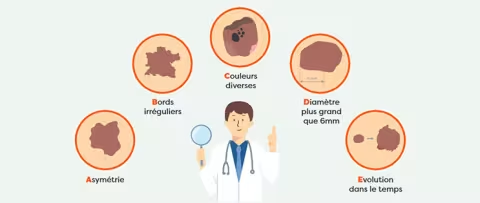
Melanoma detected early has a good prognosis. However, a late diagnosis greatly reduces the chances of recovery. Melanoma is a cancer with a high potential for metastasis, particularly to the lungs. It is therefore essential to have photos of your entire skin taken at a specific point in time so you can track any changes and learn to monitor your moles. To this end, the ABCDE rule has been established to help identify moles that appear abnormal. If in doubt—or if a mole changes, itches, or starts to bleed—you should consult a healthcare professional immediately.
Additional Precautions for Cancer Patients
People currently undergoing cancer treatment or who have recently completed treatment may be more sensitive to ultraviolet (UV) rays. This is mainly due to the side effects of treatment, which can make the skin more fragile or even photosensitive. It is therefore essential to strictly follow sun safety guidelines, especially during the summer months.
Depending on the treatments received, the risks associated with sun exposure may vary. As summer approaches, it is therefore important to consult with your oncologist, who will use their expertise to inform you of the various risks.
- Chemotherapy: Certain medications can cause photosensitization reactions, leading to redness, burns, or rashes after sun exposure. The loss of eyelashes makes the eyes more sensitive to the sun, requiring the use of sunglasses that provide high protection.
- Radiation therapy: Irradiated skin becomes particularly vulnerable. It must be strictly protected from the sun for several months, or even more than a year, to prevent inflammation, burns, or permanent pigmentation.
- Targeted therapies and immunotherapy: Certain treatments can cause an exaggerated skin reaction to UV rays, increasing the risk of severe sunburn.
- Hormone therapy: It can promote the development of pigmented spots, particularly on the face.
- Surgery: A scar exposed to the sun too soon may become permanently pigmented. It is recommended to cover it completely for at least one year.
Last news
-
ADCs: Two Landmark Publications in Cancer Cell and Nature Medicine Showcase Gustave Roussy's Expertise
In less than two months, researchers and clinicians from Gustave Roussy have contributed to two major publications on Antibody-Drug Conjugates (ADCs) in Cancer Cell and Nature Medicine. Together, these papers provide both a comprehensive overview of current knowledge and a strategic vision to accelerate the development of the next generation of these innovative therapies.
-
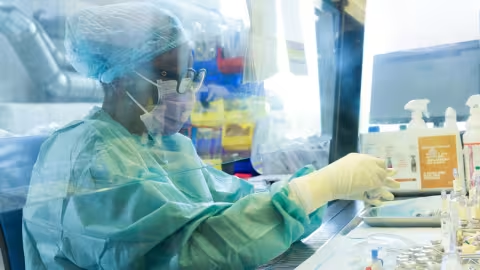
Drug shortages: Gustave Roussy becomes the only Cancer Centre in France authorised to produce Special Hospital Preparations
The Clinical Pharmacy Department at Gustave Roussy has been authorised by the French Ministry of Health to manufacture Special Hospital Preparations (SHPs). Granted for a period of seven years, this accreditation enables the Institute’s hospital pharmacy to produce certain medicines in coordination with the French National Agency for the Safety of Medicines and Health Products (ANSM) and the Ministry of Health. Gustave Roussy is the only French Comprehensive Cancer Centre (CLCC) authorised to manufacture Special Hospital Preparations, alongside ten university hospitals.
-
Personalising Breast Cancer Treatments: 5 Questions with Dr Barbara Pistilli
Advances in treatment and patient care mean that five-year net survival for breast cancer now reaches 88%1 in France. However, with around 60,000 new cases diagnosed each year in France alone, breast cancer remains a major public health challenge. One reason is the side effects associated with treatment. In response to this issue, Dr Barbara Pistilli, Head of the Breast Cancer Committee at Gustave Roussy, advocates an approach centred on personalised care, ensuring that each woman receives a treatment intensity tailored to her tumour and individual journey, without compromising her chances of recovery.
-
Breast Cancer: Gustave Roussy Ranked No. 1 in France for Breast Surgery and Breast Reconstruction
On the occasion of Breast Cancer Awareness Month, the 2025 data from Visuchir, the national surgical activity monitoring tool of the French Health Insurance system, places Gustave Roussy in first position for both breast surgery and breast reconstruction. Beyond this ranking, these figures highlight that reconstruction is now an integral part of breast cancer treatment. It is considered at every stage of care: from tumor removal surgery, whether lumpectomy or mastectomy, through to the post-cancer period, helping to restore the body and support women in regaining their physical integrity and quality of life.