
Welcome to the new Gustave Roussy website
A new website designed to offer you a simpler, clearer, and more intuitive experience. Patients, caregivers, healthcare professionals, and donors: find information, news, and services more easily.
CAR-T cells
CAR-T cells are an innovative form of cellular immunotherapy. This approach involves harvesting certain immune cells from the patient, modifying them in the laboratory so that they can better recognize cancer cells, and then re-injecting them into the patient to help fight the disease. It is currently used in certain situations, particularly to treat blood cancers.
Understanding CAR-T Cells
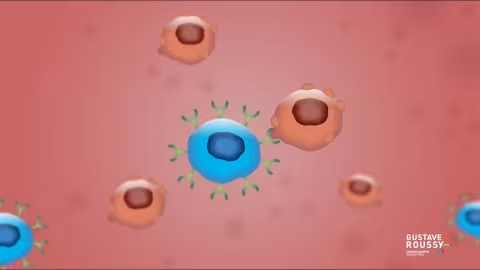
T cells are immune system cells capable of recognizing and eliminating abnormal cells, including cancer cells. However, some tumors develop mechanisms that allow them to evade this surveillance.
CAR-T therapies were designed to restore T cells’ ability to effectively identify and attack tumor cells.
CAR-T stands for "Chimeric Antigen Receptor T-cell"
These are T cells that have been genetically modified to express a specific receptor (CAR) on their surface, enabling them to identify and eliminate certain cancer cells.
Understanding CAR-T Cells
- CAR-T cells are made from the patient's own T cells.
- These cells are modified in the laboratory to recognize cancer cells.
- After being reinfused, they specifically target and destroy tumor cells.
- This approach is primarily used to treat certain types of blood cancers.
- Gustave Roussy has been authorized to administer CAR-T therapies since 2019.
How do CAR-T cell therapies work?
How does the treatment work?
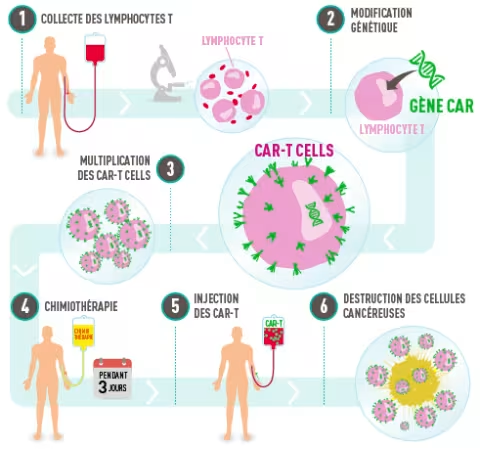
Step 1: Collection of T cells
T cells are collected from the patient’s blood. These cells are part of the immune system and play an important role in the body’s defense.
Step 2: Genetic modification
The collected T cells are then modified in the laboratory. This modification enables them to express a specific receptor on their surface, called a CAR, which is designed to recognize certain cancer cells.
Step 3: Multiplication of CAR-T Cells
Once modified, the CAR-T cells are multiplied in the laboratory to obtain a sufficient number of cells before they are administered to the patient.
Step 4: Preparatory Chemotherapy
Before the CAR-T cells are injected, the patient receives a short course of chemotherapy. This prepares the body to receive the modified cells and enhances their effectiveness after reinfusion.
Step 5: Reinfusion
The CAR-T cells are reinfused into the patient via an IV infusion. They then circulate throughout the body to recognize the targeted cancer cells.
Step 6: Destruction of cancer cells
Once in the body, the CAR-T cells recognize the cancer cells via the CAR receptor, activate against them, and help destroy them. Close monitoring is implemented to assess the treatment’s effectiveness and manage any potential side effects.
For which types of cancer are CAR-T cells used?
CAR-T cell therapies are currently used in the treatment of certain blood cancers, including some forms of acute lymphoblastic leukemia and lymphoma. They may be a treatment option when the disease no longer responds to standard treatments or recurs after initial treatment. Their use is also being studied for other types of cancer and new indications.
Like any innovative treatment, CAR-T cells can cause side effects that require specialized monitoring.
-
Key Points
CAR-T cells are not indicated for all cancers. Each case is evaluated individually by the medical team to determine whether this treatment is appropriate for the patient.
-
An Ever-Evolving Approach
CAR-T cells have opened up new therapeutic possibilities for certain patients with hematologic cancers. Research teams are now working to improve their effectiveness, expand their use to other cancers, and develop new generations of cell therapies.
Gustave Roussy's Expertise
Specialized Care
CAR-T cell therapies require highly specialized medical, biological, and pharmaceutical expertise. Since 2019, Gustave Roussy has been authorized to administer these innovative treatments and provides dedicated support at every stage of the care journey.
A Center Committed to Innovation
The teams at Gustave Roussy are actively involved in developing the next generation of cell therapies. Their work focuses in particular on improving the efficacy of CAR-T cells, gaining a better understanding of tumor resistance mechanisms, and expanding these approaches to a larger number of patients.
Allogeneic CAR-T cells: What are they?
The CAR-T cells currently in use are generally made from the patient's own cells. Researchers are also developing CAR-T cells derived from healthy donors, known as allogeneic CAR-T cells. This approach could eventually make these treatments more accessible and enable their production on a larger scale.
The Cell Therapies of Tomorrow
In particular, researchers are exploring:
- the development of CAR-T cells for a wider range of cancers;
- allogeneic CAR-T cells derived from healthy donors;
- new strategies to improve the persistence and efficacy of the cells in the body;
- innovative cell therapy approaches currently being evaluated in research.