"Pancreatic Cancer" Researcher Sponsorship
Support research on pancreatic cancer
For decades, pancreatic cancer has seen very few major therapeutic innovations. Today, a new generation of drugs targeting the KRAS* genetic mutation is changing the game. Daraxonrasib has shown results promising enough to potentially become a new standard of care in the coming years.
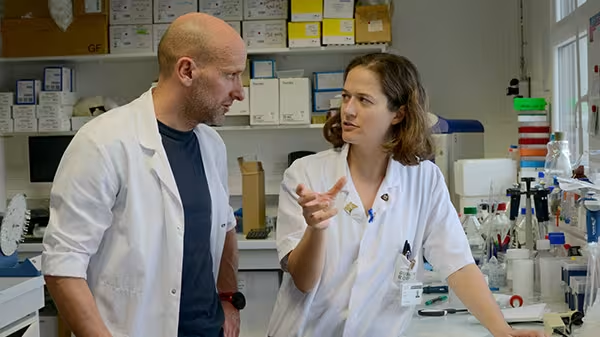
But researchers already know that tumors will eventually learn to evade this new treatment. That is why Dr. Alice Boilève, a medical oncologist specializing in gastrointestinal cancers, and Dr. Antoine Hollebecque, an oncologist in the Department of Therapeutic Innovation and Early-Phase Trials, are launching a program dedicated to studying resistance to daraxonrasib.
Today, when a treatment stops working against pancreatic cancer, options become limited.
* KRAS: This genetic mutation, present in 90% of pancreatic cancers, is responsible for the proliferation of tumor cells.
The Research Project
- Understanding why patients with pancreatic cancer eventually develop resistance to daraxonrasib
- Identifying treatment combinations capable of prolonging its effectiveness
- Prepare today the treatments that will take over when this first targeted therapy is no longer effective.
This video requires a cookie from the website: youtube.com
Dr. Alice Boilève
Research Physician at Gustave Roussy
We are not only seeking to support the introduction of a new treatment for pancreatic cancer, but also to understand today how this treatment will one day stop working, in order to prepare the therapeutic solutions of tomorrow. Thanks to cutting-edge technologies and close collaboration between physicians, biologists, and experts in precision medicine, this research could pave the way for a new generation of treatments for one of the most difficult cancers to treat—one that is rapidly increasing in our country.

What Your Sponsorship Will Actually Fund
Researchers will monitor 20 patients before and after treatment and will analyze the tumors at the start of treatment and when the cancer begins to progress again.
Each tumor sample is a piece of the puzzle that will help us understand how cancer evades treatment.
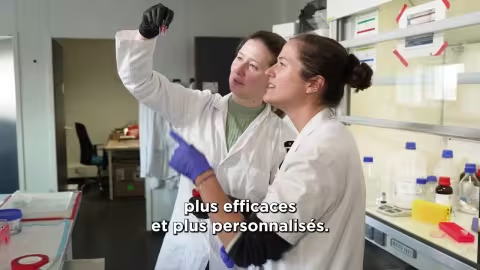
Using biopsies, the team creates organoids. These living mini-replicas of patients’ tumors make it possible to test treatments in the lab before offering them to patients.
Thanks to your support, researchers can recreate a patient’s tumor and test new treatments to combat it.
Bioinformaticians will decipher how the tumor functions, its genetic mutations, its microenvironment, its resistance mechanisms, and its changes over time.
Nearly 2,000 different genes will be analyzed using this cutting-edge technology to identify those whose inhibition could restore the cancer's sensitivity to daraxonrasib.
The team will evaluate new drug combinations in early-phase clinical trials.
The story of Abdel, 69
"I'm alive, and I'm enjoying every moment!"
Abdel, who has pancreatic cancer, received targeted therapy as part of a clinical trial. His disease has been under control for the past eighteen months.
After an initial year-and-a-half-long course of chemotherapy that was very difficult to tolerate, my oncologist told me that we were going to stop the treatment because my pancreatic tumor was growing again. She then suggested I participate in a trial of a new treatment, which involves taking one daraxonrasib tablet every day at 7 a.m. It’s blue, about the size of a Doliprane, and an hour later, I can eat breakfast and go about my daily life. I’ve been taking it for eighteen months, and the disease is under control. My nails have become brittle, and I have to protect myself from the sun, but I’m not in any pain, and most importantly, I no longer feel sick. I have lots of plans with my children and grandchildren. I’m alive, and I’m enjoying every moment!

By supporting this program every month, you help researchers identify new solutions to provide more time, more hope, and more treatment options for patients with pancreatic cancer.
The coordinators of the researcher sponsorship program dedicated to pancreatic cancer:
Dr. Alice Boilève
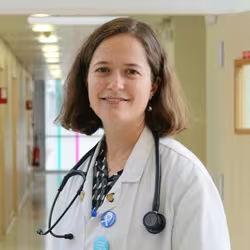
Dr. Alice Boilève is an oncologist specializing in gastrointestinal cancers and a researcher focused on pancreatic cancer. Trained under Prof. Michel Ducreux, Chair of the Gastrointestinal Cancers Committee at Gustave Roussy, she has been conducting cutting-edge research on mechanisms of treatment resistance for several years. After completing a Ph.D. thesis on pancreatic cancer in Fanny Jaulin’s laboratory, she has been developing innovative approaches to personalized medicine based on tumor organoids. Her goal is to offer new treatment options to patients with one of the most difficult cancers to treat.
Dr. Antoine Hollebecque
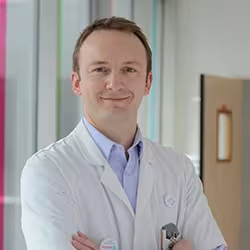
Dr. Antoine Hollebecque is an oncologist in the Department of Therapeutic Innovation and Early-Phase Trials (DITEP) at Gustave Roussy. A recognized expert in targeted therapies and precision medicine, he oversees the clinical development of the most promising treatments for gastrointestinal cancers, particularly those targeting the KRAS protein. Through his involvement in numerous international clinical trials, he works to make the latest therapeutic innovations accessible to patients. As part of the pancreatic cancer research program, his expertise is essential for accelerating the translation of scientific discoveries into future treatments.