Welcome to the new Gustave Roussy website
A new website designed to offer you a simpler, clearer, and more intuitive experience. Patients, caregivers, healthcare professionals, and donors: find information, news, and services more easily.
Therapeutic Education for Adolescents and Young Adults
Fully integrated into the care pathway for adolescents and young adults treated at Gustave Roussy, therapeutic education takes the form of group workshops organized around topics related to cancer and the participants’ interests.
What is therapeutic education?
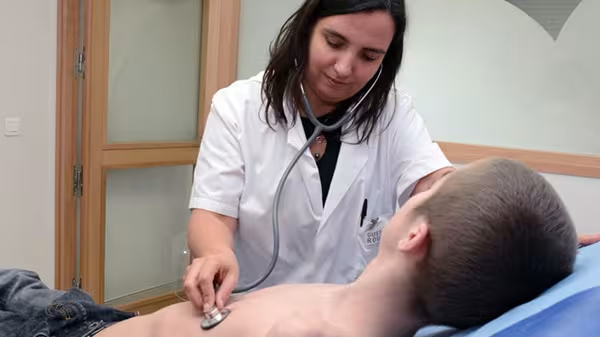
Therapeutic education plays a vital role in the management of many chronic diseases, particularly cancer. Its goal is “to help patients acquire or maintain the skills they need to best manage their lives with the disease,¹” as emphasized by the World Health Organization.
While it is intended for all patients, its importance is even greater for adolescents and young adults. At an age when they are developing their identity, independence, and life plans, a cancer diagnosis represents a major upheaval. Therapeutic education supports these patients during this pivotal period by providing them with guidance, tools, and the ability to take action. It has several objectives:
- To help patients acquire and maintain the skills needed to take an active role in their treatments and the decisions that affect them
- To better enable adolescents and young adults to cope with the disease and its consequences, both during and after treatment
-
Source: WHO definition
The Benefits of Therapeutic Education
In practical terms, therapeutic education helps adolescents and young adults, in particular, to:
- Relieve their symptoms
- Manage their emotions and stress
- Adjust their lifestyle through diet and physical activity
Source: https://sante.gouv.fr/
AGORA, Gustave Roussy’s therapeutic education program
At Gustave Roussy, adolescents and young adults aged 13 to 25 benefit from a therapeutic education program designed specifically for them: AGORA. This program is part of the Specific Interdisciplinary Care Program for Adolescents and Young Adults (SPIAJA).
A program approved by the ARS
Recognized and authorized by the Regional Health Agency (ARS), the AGORA program has been in existence since 2012.
Dr. Christelle Dufour
Head of the Department of Pediatric and Adolescent Oncology
“The AGORA therapeutic education program, designed and led by the multidisciplinary team of the SPIAJA program, offers adolescents and young adults workshops to help them better understand their illness and treatments, as well as their impact on daily life, and provides them with tools to cope. The goal? To empower them to take charge of their health throughout their lives and help them take care of themselves.”

A multi-step support process
During this first stage, after the diagnosis and at the beginning of the care journey, the patient meets with the AJA nurse coordinator.
Based on the shared educational assessment, the AJA nursing coordinator develops a therapeutic education plan. This personalized plan takes the patient’s needs into account.
Next, the patient begins group therapeutic education sessions.
How are the therapeutic education workshops conducted at Gustave Roussy?
The AGORA program is based on group workshops that combine games, quizzes, and discussion time. These workshops are designed to meet personalized educational goals established in collaboration with patients and are followed by an evaluation.
The program consists of several workshops, each dedicated to a specific topic.
A workshop to help you understand the disease, its symptoms, medical tests, treatments, and follow-up care.
A time for discussion about physical changes related to the disease and treatments, and their impact on daily life.
Learn more about pain, its mechanisms, and drug and non-drug treatments.
A workshop focused on nutrition to teach patients how to take control of their diets and rediscover the joy of eating.
A workshop to discuss love lives, sexuality, and fertility during and after treatment.
A workshop that provides an opportunity to discuss fatigue and ways to manage it, with a particular focus on adapted physical activity.