
Welcome to the new Gustave Roussy website
A new website designed to offer you a simpler, clearer, and more intuitive experience. Patients, caregivers, healthcare professionals, and donors: find information, news, and services more easily.
Treatments for Thyroid Cancer
Treatment depends on the type of thyroid cancer, its extent, and the risk of recurrence. It may involve a combination of surgery, radioactive iodine, and hormone therapy. For advanced or iodine-refractory forms of the disease, other local or systemic treatments may be recommended. The treatment strategy is determined during a multidisciplinary team meeting.
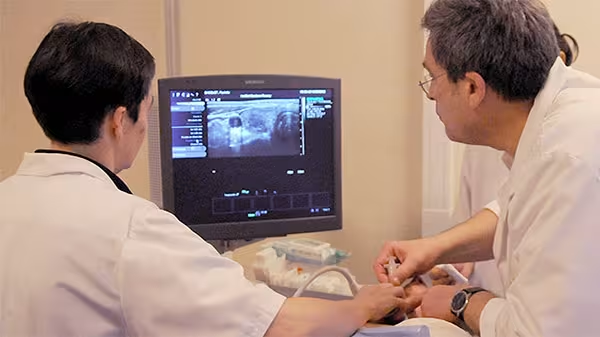
Coordinated care
Treatment and follow-up care can be provided at Gustave Roussy, in the city, or in coordination with a facility near the patient’s home. The care plan is tailored to each patient’s medical condition and needs.
Surgery
Surgery is the primary treatment for many types of thyroid cancer. Depending on the size and characteristics of the tumor, it may involve removing a single lobe of the thyroid—a procedure called a lobectomy—or the entire gland—a procedure called a total thyroidectomy. If lymph nodes in the neck are affected or strongly suspected of being affected, a lymph node dissection may be performed during the same surgical procedure.
Pathological analysis of the surgical specimen confirms the type of tumor, determines its extent, and helps determine follow-up treatments and monitoring.
Thyroid Surgery
This booklet describes the diagnostic tests, the main surgical procedures, the course of the operation, and postoperative care.
Radioactive iodine or iodine therapy
Radioactive iodine, or iodine-131, is a targeted form of internal radiation therapy used to treat certain differentiated cancers originating from follicular cells. It may be recommended following a total thyroidectomy to destroy residual thyroid tissue, treat any persistent cancer cells, and, in certain situations, help assess the extent of the disease.
This treatment is not routine. Its indication depends, in particular, on the type of cancer and the risk of recurrence. It is discussed during a multidisciplinary team meeting, and the treatment is administered in a nuclear medicine department.
Radioactive Iodine Therapy
This booklet explains how to prepare for treatment, your hospital stay in the nuclear medicine department, the treatment process, and the radiation safety guidelines to follow after discharge.
Hormone therapy
After a total thyroidectomy, daily treatment with synthetic thyroid hormone replaces the hormones that the thyroid no longer produces. Depending on the type of cancer and the risk of recurrence, the dose may also be adjusted to maintain TSH at a level determined by the medical team.
Iodine-refractory cancers
Some locally advanced, recurrent, or metastatic differentiated thyroid cancers no longer respond to radioactive iodine. This is referred to as iodine-refractory cancer. Not all lesions require immediate treatment: the decision takes into account their location, progression, symptoms, and the patient’s overall condition.
Depending on the situation, several approaches may be considered:
- local treatment, such as surgery, external beam radiation therapy, or an interventional radiology technique;
- targeted therapy, selected based on the type of cancer and, in some cases, the molecular alterations found in the tumor;
- more rarely, chemotherapy;
- inclusion in a clinical trial when the patient is eligible.
Iodine-Refractory Thyroid Cancers
This document discusses follicular thyroid cancers that no longer respond to radioactive iodine, their monitoring, and the main treatment options.
Supportive Care
Supportive care as needed
Psychological, nutritional, nursing, or social support, pain management, and an oncogenetics consultation may be offered depending on the situation.