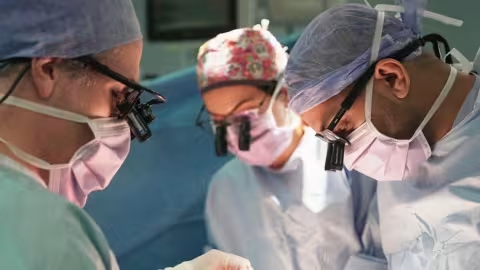
Welcome to the new Gustave Roussy website
A new website designed to offer you a simpler, clearer, and more intuitive experience. Patients, caregivers, healthcare professionals, and donors: find information, news, and services more easily.
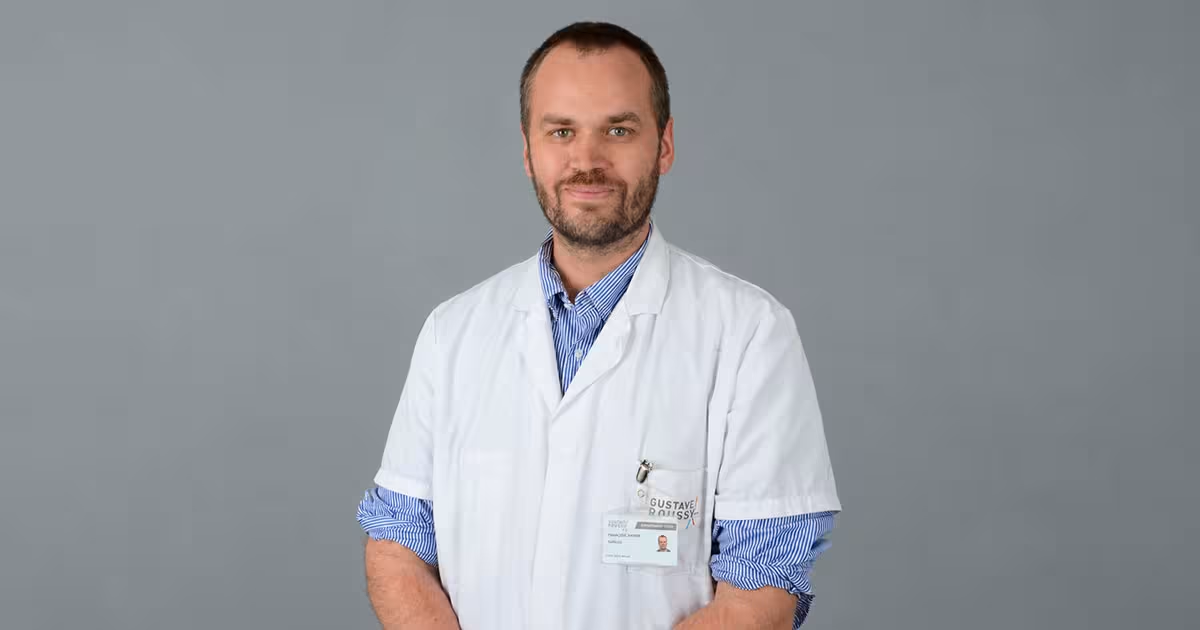
5 questions with Dr François-Xavier Danlos about therapeutic cancer vaccines
Therapeutic cancer vaccines are making significant progress in clinical development. The ESMO Congress, which begins on 23 October, will provide an opportunity to learn about new data on a therapeutic vaccine against melanoma. However, there are major differences between vaccines traditionally used to prevent disease and therapeutic cancer vaccines. Dr François-Xavier Danlos, a medical oncologist in Gustave Roussy’s Drug Development Department and a specialist in immunotherapy development, explains.
Published on
This summer, a therapeutic vaccine against melanoma attracted considerable attention. Why?
Dr François-Xavier Danlos: The announcement of the first positive results for this vaccine is indeed an important advance for patients and oncology research, for several reasons. The data come from a phase III trial, the final stage of the clinical evaluation of a new treatment before it can be made commercially available. This makes it the most advanced study to date in the field of therapeutic cancer vaccines, an area of fundamental and clinical research that has been developing for several decades. These positive results in patients with melanoma therefore represent an important step forward. They support this therapeutic approach and could encourage its development in other tumour types. However, one point must be made very clear: therapeutic cancer vaccines are not intended to prevent the disease from developing. They are treatments prescribed to people who already have cancer. The aim is to train the immune system to recognise cancer cells more effectively and therefore attack them more efficiently. In the study concerned, the objective was to eliminate any cancer cells that might still be present after surgery, while generating an immune memory capable of fighting a possible recurrence. The detailed study results will be presented during a Presidential Symposium at the ESMO Congress.
In practical terms, how can this vaccine “train” the immune system?
Dr François-Xavier Danlos: The vaccine evaluated uses messenger RNA technology. It is designed to train the patient’s lymphocytes, cells of the immune system, to act more effectively against cancer cells. This first requires the identification of neoantigens, proteins expressed by cancer cells whose presence can activate the immune system. Messenger RNA provides the “recipe” needed to produce these neoantigens. Once the vaccine has been administered, the patient’s body begins producing these proteins of interest. This triggers an immune response by stimulating the patient’s T cells that specifically recognise the vaccine neoantigens. When the immune system encounters these neoantigens again on cancer cells, it already knows that it needs to attack. The patient’s lymphocytes are therefore much more effective against the cancer. Another distinctive feature of this vaccine is that it is personalised. For each patient, the proteins most likely to trigger a strong immune response are identified so that a vaccine can be developed to match that individual’s cancer as closely as possible.
In oncology, is it always necessary to create a new vaccine for each patient?
Dr François-Xavier Danlos: No. Other vaccination strategies are being investigated. New sequencing technologies can now rapidly identify mutations that are likely to be recognised by the immune system and could therefore be targeted by a therapeutic vaccine. This makes it possible to identify mutations shared by a group of patients. This is particularly the case for certain mutations in the KRAS protein, which are found in several cancers, including some pancreatic tumours. Messenger RNA vaccines targeting these mutated proteins are currently being evaluated. Unlike personalised vaccines, which must be designed specifically for each patient, these approaches could benefit a larger number of patients and be developed more rapidly.
Are vaccine technologies other than messenger RNA being investigated?
Dr François-Xavier Danlos: Yes, of course. Messenger RNA is only one of the many vaccine technologies being evaluated in oncology. Peptide vaccines have been researched for several years. They involve injecting small fragments of proteins, known as peptides, which the immune system can learn to recognise. The objective remains the same: to train lymphocytes to identify cancer cells more effectively and eliminate them. Tedopi, a vaccine evaluated at Gustave Roussy in clinical trials focusing on lung and ovarian cancers, uses this technology. It is not a personalised vaccine: it targets several proteins shared by a group of patients. Other studies are investigating dendritic-cell vaccines, vaccines made directly from tumour material and viral-vector vaccines. This work illustrates the diversity of vaccination strategies currently being explored to mobilise the immune system against cancer.
Vaccines to prevent cancer: is this science fiction?
Dr François-Xavier Danlos: A universal vaccine that would protect us against every form of cancer remains a utopian prospect. However, preventive vaccines already exist for certain cancers. Vaccination against hepatitis B can prevent some liver cancers. Another vaccine has already clearly demonstrated its effectiveness: the vaccine against human papillomavirus (HPV). In the long term, infection with human papillomavirus, which generally occurs from the onset of sexual activity, can cause certain cancers. Almost 100% of cervical cancers are attributable to HPV infection. These viruses are also responsible for cancers in the head and neck region, mainly in the throat, as well as cancers of the vagina, vulva, anus and penis. Vaccinating adolescents, both boys and girls, is a major public health priority.
Last news
-
ADCs: Two Landmark Publications in Cancer Cell and Nature Medicine Showcase Gustave Roussy's Expertise
In less than two months, researchers and clinicians from Gustave Roussy have contributed to two major publications on Antibody-Drug Conjugates (ADCs) in Cancer Cell and Nature Medicine. Together, these papers provide both a comprehensive overview of current knowledge and a strategic vision to accelerate the development of the next generation of these innovative therapies.
-
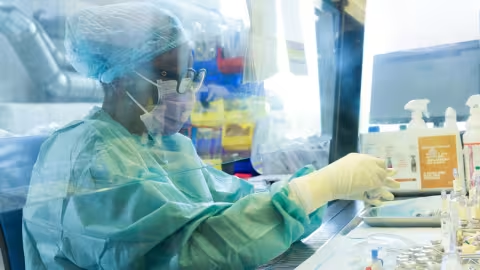
Drug shortages: Gustave Roussy becomes the only Cancer Centre in France authorised to produce Special Hospital Preparations
The Clinical Pharmacy Department at Gustave Roussy has been authorised by the French Ministry of Health to manufacture Special Hospital Preparations (SHPs). Granted for a period of seven years, this accreditation enables the Institute’s hospital pharmacy to produce certain medicines in coordination with the French National Agency for the Safety of Medicines and Health Products (ANSM) and the Ministry of Health. Gustave Roussy is the only French Comprehensive Cancer Centre (CLCC) authorised to manufacture Special Hospital Preparations, alongside ten university hospitals.
-
Personalising Breast Cancer Treatments: 5 Questions with Dr Barbara Pistilli
Advances in treatment and patient care mean that five-year net survival for breast cancer now reaches 88%1 in France. However, with around 60,000 new cases diagnosed each year in France alone, breast cancer remains a major public health challenge. One reason is the side effects associated with treatment. In response to this issue, Dr Barbara Pistilli, Head of the Breast Cancer Committee at Gustave Roussy, advocates an approach centred on personalised care, ensuring that each woman receives a treatment intensity tailored to her tumour and individual journey, without compromising her chances of recovery.

-
Breast Cancer: Gustave Roussy Ranked No. 1 in France for Breast Surgery and Breast Reconstruction
On the occasion of Breast Cancer Awareness Month, the 2025 data from Visuchir, the national surgical activity monitoring tool of the French Health Insurance system, places Gustave Roussy in first position for both breast surgery and breast reconstruction. Beyond this ranking, these figures highlight that reconstruction is now an integral part of breast cancer treatment. It is considered at every stage of care: from tumor removal surgery, whether lumpectomy or mastectomy, through to the post-cancer period, helping to restore the body and support women in regaining their physical integrity and quality of life.