Welcome to the new Gustave Roussy website
A new website designed to offer you a simpler, clearer, and more intuitive experience. Patients, caregivers, healthcare professionals, and donors: find information, news, and services more easily.
With its new Institutional Mission Statement, Gustave Roussy reaffirms its goal of curing 80% of patients by 2040
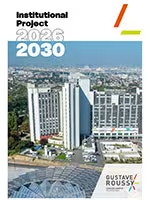
Gustave Roussy, France’s and Europe’s leading cancer research center, has unveiled its 2026–2030 Institutional Plan. This ambitious plan, the result of a participatory process, updates the 2020–2030 roadmap of its institutional strategic plan by focusing on key drivers: personalized care, the impact of research, digital transformation, and securing resources. It sets out a clear path to bring about lasting transformation in cancer care and accelerate innovation.
On

A Bold Ambition
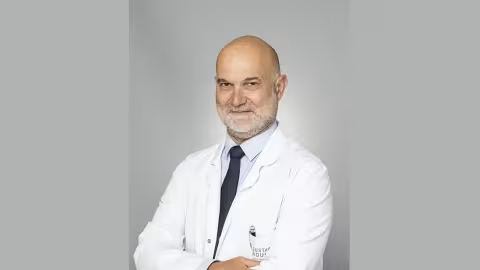
“Our 2026–2030 institutional plan is not just a roadmap: it concretely reflects our commitment to patients, our staff, and society. Achieving an 80% cure rate by 2040 requires us to accelerate our efforts to implement our vision at every level: better prevention, faster diagnosis, and innovation at every stage and throughout the entire care continuum. “This initiative gives us the means to act sustainably by strengthening our scientific excellence, the reliability of patient care pathways, our international reach, and a model capable of supporting innovation for the benefit of all,” states Prof. Fabrice Barlesi, Executive Director of Gustave Roussy.
In an environment marked by an increasing pace of therapeutic innovations and the need for responsible use of resources, Gustave Roussy reaffirms its commitment through an integrated oncology model that combines care, research, commercialization, and education. This new institutional plan is based on four guiding principles that will steer the Institute’s actions over the next five years.
Four Major Strategic Priorities for 2026–2030
1. Implementing personalized care pathways and “appropriate care”
The Institute is focusing its efforts on the key phases of the care pathway where its expertise is critical. This approach introduces the concept of “appropriate care,” aimed at ensuring the relevance and proportionality of treatments, including therapeutic de-escalation when necessary. It also calls for the expansion of personalized prevention and rapid diagnosis programs (Interception and Instadiag), and strengthening coordination with healthcare partners to ensure local follow-up care after the acute phase of the disease, using digital tools such as the Shared Medical Record.
2. Intensifying research with significant societal impact and its dissemination
With the support of its Foundation, Gustave Roussy is consolidating its integrative research model, prioritizing the most common cancers and the most aggressive tumors. Particular emphasis will be placed on cancers affecting young people (ages 25–45) and aggressive gastrointestinal cancers. The goal is to reach 60 research teams and to enroll 1,000 patients each year in early-phase trials through the clinical research platform, in collaboration with DITEP (Department of Therapeutic Innovation and Early-Phase Trials). The commercialization of innovations developed by Gustave Roussy’s teams will be strengthened with the support of Gustave Roussy Transfert’s expertise and the partnership with the Paris-Saclay Cancer Cluster. Finally, the mission to provide training and disseminate knowledge in oncology is reaffirmed, both in France and internationally.
3. Accelerating Digital Transformation and AI
A major new feature of this plan is the integration of AI, which will serve as a concrete lever for precision medicine and saving clinical time. The Institute plans to deploy decision-support tools while ensuring that human validation remains an integral part of the medical diagnostic process. By 2026, Gustave Roussy will complete the modernization of its information system with the full migration of its DxCare electronic health record system and the deployment of Doctolib. Several key projects are currently underway: the GOLDEN health data warehouse, which consolidates data from more than 400,000 patients; work on generative AI conducted with IHU PRISM; and the exploration of new AI agents designed to accelerate research.
4. Securing Resources to Match Our Ambitions
In response to pressures in the healthcare professions, and to enhance its appeal and retain its teams, the Institute is focusing on a competitive compensation policy, the development of training programs, and improvements to the quality of life at work. Financially, the goal is to maintain self-financing capacity, increase philanthropic fundraising, and support the growth of subsidiaries responsible for commercialization and international development. Real estate development and infrastructure modernization will continue with the renovation of the historic building and the construction of three new buildings—including those dedicated to research and teaching—by 2028.
A vision driven by the community
Developed between March and November 2025, the 2026–2030 Institutional Plan is the result of a broad collaborative effort involving all of the Institute’s professionals. More than 150 volunteers participated in collaborative workshops, supplemented by an internal survey and co-writing groups that included the Patients and Caregivers Collective. In total, nearly 1,000 people were involved in shaping this new institutional plan—representing about a quarter of the workforce—without compromising the founding spirit of the 2020–2030 Institutional Strategic Plan.
“The goal was to rethink the guidelines, update them, and anchor them in a forward-looking perspective by relying on a fully participatory approach,” emphasizes Sylvain Ducroz, Deputy Director General of Gustave Roussy. “This project is a collective commitment to ensuring that Gustave Roussy’s excellence benefits as many people as possible.”
2025 Results in Figures
In 2025, more than 24,000 new patients—and more than 52,000 patients in total, including 2,700 children and adolescents—were treated at Gustave Roussy. More than 6,100 patients were enrolled in clinical trials, confirming the institute’s role as a driving force in translational research; nearly 500 of these patients benefited from early access to innovative therapies through the DITEP. Activity indicators (+5%) reflect an enhanced capacity to admit, diagnose, and treat an ever-increasing number of patients, sometimes in highly complex situations. The institute’s total budget amounts to 600 million euros, of which 150 million are dedicated to research and 53 million to ambitious investments. Research conducted at the Institute has resulted in more than 1,200 publications, including over 150 in high-impact international journals. In total, Gustave Roussy Transfert has co-founded 21 companies, including three new ones in 2025, all stemming from research conducted at Gustave Roussy.
All of these advances have a direct and tangible impact on the lives of patients and their loved ones.
Press contact
If you are a journalist and have a question, please contact:
Claire Parisel or Léona Pinto
Tel. +33 1 42 11 50 59
Tel. +33 1 42 11 63 59
Mob. +33 6 17 66 00 26
Email
The Media Team cannot respond to patient inquiries.
Last press releases
-
INTERCEPTION: The national pilot program for personalized cancer prevention among individuals at increased risk of cancer enters its operational phase with the enrollment of the first patients
The Interception program has reached a new milestone with the enrollment of its first patients as part of the national Article 51 pilot program. Rolled out over four years across seven healthcare facilities, this pilot program is designed to evaluate an innovative model for personalized cancer prevention and screening.
-
After a breast cancer diagnosis, how can treatment be started more quickly?
Gustave Roussy is launching a new care pathway designed to accelerate the management of women recently diagnosed with breast cancer. It brings together, in a single day, the radiology examinations, blood tests, and oncology consultation required to initiate treatment. This new pathway complements the Institute’s rapid breast care offering. The InstaDiag Breast pathway already consolidates all diagnostic examinations into a single day to establish a diagnosis.

-
Gold september: two new research programmes launched to tackle childhood cancers
Two of Gustave Roussy’s four new medical and scientific programmes are dedicated to childhood cancers. The first, DECRIPT, aims to improve understanding of the role played by genetics in the development of certain childhood cancers, as well as second cancers that may occur in adulthood. The second, INSPIRE, will draw on the knowledge and techniques already developed at the Institute to create organoids, with the aim of deciphering the mechanisms underlying metastasis and resistance to treatment.

-
Prof. Fabrice Barlesi reappointed at the head of Gustave Roussy, the leading cancer center in France and Europe
By order of Ms. Stéphanie Rist, Minister of Health, Families, Autonomy and Persons with Disabilities, dated 27 July 2026, Professor Fabrice Barlesi has been reappointed as Director General of Gustave Roussy, effective 1 August 2026. At the helm of the Institute for five more years, Prof. Barlesi will continue the transformations undertaken during his first term. This renewal reflects the confidence placed in the project led by the institution to accelerate progress in the fight against cancer, foster and support the development of innovations set to change the future of oncology, and strengthen the influence of one of the world's leading cancer centers.