Welcome to the new Gustave Roussy website
A new website designed to offer you a simpler, clearer, and more intuitive experience. Patients, caregivers, healthcare professionals, and donors: find information, news, and services more easily.
Inflammation and Tumor Plasticity
- Thematic(s)
- Cell Dynamics, Tumor microenvironment, Tumor Progression
- Attachment unit
- U981 - Molecular Predictors and New Targets in Oncology
- Manager(s)
- Sophie de Carné
- Institutional connection
-
Gustave Roussy, Inserm, Paris-Saclay University
Summary
Objectives and Challenges
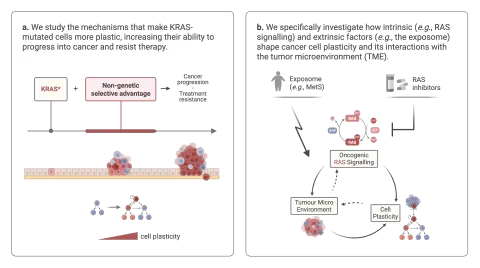
The irreversible genetic alterations that cause cancer—such as KRAS mutations—accumulate in tissues over time, but in most cases do not lead to tumor development. We believe that, in addition to the presence of these oncogenic alterations, the initiation of cancer requires that cells carrying this abnormality receive promoting signals from their environment.
The “Inflammation and Tumor Plasticity” team studies why certain aspects of our environment increase the risk of cancer. Our studies focus on the mechanisms underlying the phenotypic plasticity necessary for cells to withstand oncogenic stress and evolve toward a cancerous phenotype. We seek to determine how the exposome (for example, diet, metabolic diseases, and inflammation) influences these mechanisms in a way that promotes tumor initiation—either directly or through immune cells present in the tissue—and how these mechanisms subsequently shape the response to treatments.
Research Areas/Major Projects
Our research questions are interconnected and span several fields of cancer biology. Regarding oncogenic stress, we seek to determine the impact of oncogenic RAS activation—or its pharmacological inhibition—on cellular plasticity and the establishment of the tumor microenvironment. We study the plasticity of cancer cells and, in particular, how metabolic diseases interact with RAS oncogenic signaling to influence transcriptional heterogeneity within the cancer cell population. Our studies on the tumor microenvironment focus on the role of tissue-resident immune cells, under the influence of the exposome, in tumor progression.
For these studies, we combine the analysis of patient samples, collected in partnership with the clinical teams at Gustave Roussy, genetically modified mouse models, and organoids equipped with lineage tracing systems, as well as single-cell and spatial transcriptomics approaches.
Key Findings and Scientific, Clinical, and Societal Impacts
In an increasingly carcinogenic environment, a precise understanding of the mechanisms underlying tumor initiation and progression is a major challenge, both for identifying viable therapeutic targets and for developing new prevention strategies.
Team members
-
Sophie DE CARNÉ - Team Leader
Professor, Paris-Saclay University
DAHER, Rayan
Ph.D. Candidate, Paris-Saclay University
DIEZ BALLARIN, Fernando
Ph.D. Candidate, Paris-Saclay University
Key publications
Contacts