Welcome to the new Gustave Roussy website
A new website designed to offer you a simpler, clearer, and more intuitive experience. Patients, caregivers, healthcare professionals, and donors: find information, news, and services more easily.
U981 - Molecular Predictors and New Targets in Oncology
- Thematic(s)
- Cell Dynamics, Epigenetics, Genetics / Genomics, Precision Medicine, Tumor Metabolism, Tumor microenvironment, Onco-hematology, Innovative Therapies
- Director(s)
- Virginie Penard-Lacronique
- Institutional connection
-
Gustave Roussy, Inserm, Paris-Saclay University
Summary
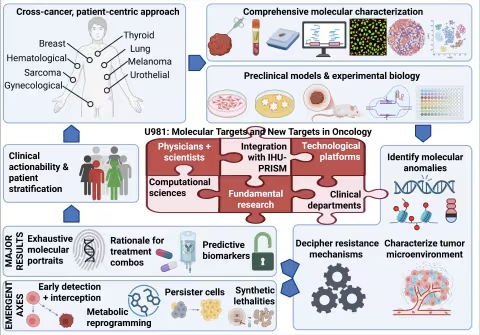
Themes, Objectives, and Challenges
Unit U981, “Molecular Predictors and New Targets in Oncology,” conducts integrated translational research covering a broad spectrum of cancers: gynecological and ovarian cancers, melanomas, malignant lymphoid and myeloid hematologic diseases, sarcomas, endocrine, gastrointestinal, thoracic, and urogenital cancers. The teams share a common strategy based on a patient-centered approach: biological questions arise from local clinical needs, and functional genomics analyses, molecular profiling, and experimental and spatial biology are conducted on human or preclinical tumor samples. The central objective is to identify molecular abnormalities and cellular states that confer a selective advantage to tumor cells, to decipher the mechanisms of resistance to innovative therapies, and to characterize the influence of the tumor microenvironment, the immune system, metabolism, and inflammation on tumorigenesis, including during the early stages of malignant transformation. Clinical applicability is the ultimate goal of all this research.
Results, Prospects, and Impacts
U981’s research has enabled the establishment of comprehensive molecular profiles of numerous tumor subtypes, the identification of genetically-based vulnerabilities and dependencies that can be exploited therapeutically, and the development of rationales for new treatment combinations based on molecular alterations. The identification of biomarkers predictive of response or resistance has a direct clinical impact on patient stratification. Emerging research areas—synthetic lethality, metabolic reprogramming, persistent tumor cells, the role of inflammation in early transformation, risk biomarkers, early detection, and cancer interception—open up unprecedented preventive and therapeutic prospects. The unit’s uniqueness lies in the presence of numerous physician-researchers within its teams and in its integration into the IHU PRISM, which connects basic research, computational sciences, technological platforms, and clinical departments, ensuring a continuum from prevention to precision medicine.
Research team
Contacts
- Phone
- 01.42.11.51.17