
Welcome to the new Gustave Roussy website
A new website designed to offer you a simpler, clearer, and more intuitive experience. Patients, caregivers, healthcare professionals, and donors: find information, news, and services more easily.
Lung Cancer Treatments
The treatment of lung cancer depends on the type of tumor, its stage, its molecular characteristics, and the patient’s overall health. Surgery, radiation therapy, and drug therapies may be used alone or in combination. The treatment strategy is determined during a multidisciplinary team meeting.
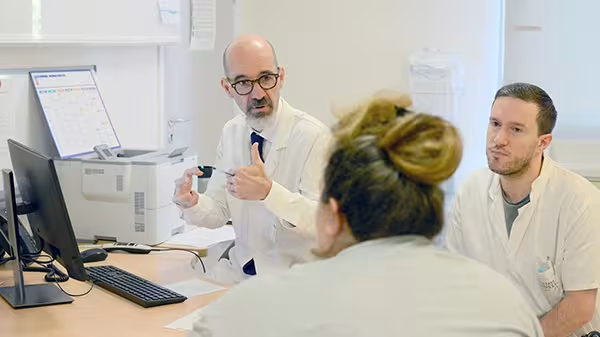
A treatment tailored to each situation
Treatment varies depending on whether the cancer is non-small cell or small cell lung cancer, whether the disease is localized or widespread, and depending on the tumor’s biological characteristics.
Topical Treatments
Surgery may be recommended when the tumor is localized and can be completely removed. Depending on its location and extent, the procedure involves removing part of the lung or, more rarely, the entire lung. Lymph nodes are also biopsied or removed to determine the extent of the disease. Drug therapy may be recommended before or after surgery, depending on the situation.
Radiation therapy uses radiation to destroy cancer cells. It can be used as an alternative to surgery when a localized tumor cannot be removed, can be combined with chemotherapy for certain locally advanced forms of cancer, or can be used to treat symptoms and certain metastases. Modern techniques allow the radiation beams to be precisely tailored to the tumor and, in some situations, to account for respiratory movements.
For certain small lung lesions, an interventional radiology technique may be considered. Guided by imaging, this technique destroys the tumor using heat—such as radiofrequency or microwaves—or cold, through cryotherapy, without resorting to conventional surgery.
Drug Treatments
Chemotherapy affects the mechanisms of cell division. It can be used before or after surgery, in combination with radiation therapy, or recommended when the disease is advanced. The medications, the number of treatment cycles, and the schedule are tailored to the type of cancer and the patient’s tolerance.
Targeted therapies block a specific mechanism involved in tumor development. They are offered only when molecular testing identifies a mutation that can be targeted. The abnormalities tested for include, in particular, those in the EGFR, ALK, and ROS1 genes, as well as other alterations that are now useful in selecting a treatment.
Immunotherapy helps the immune system recognize and fight cancer cells. Depending on the type and stage of the cancer, it may be administered on its own, in combination with chemotherapy, or as part of treatment before or after surgery or radiation therapy.
Why analyze the tumor?
Molecular analysis looks for biomarkers that can guide treatment. When it is difficult to obtain a tumor sample, or when the situation warrants it, a liquid biopsy performed using a blood sample can supplement this analysis.
Coordinated Care at the CICT
Gustave Roussy, Marie-Lannelongue Hospital, and Paris Saint-Joseph Hospital are pooling their expertise within the International Center for Thoracic Cancers. This collaboration brings together medical oncology, thoracic surgery, pulmonology, radiation therapy, imaging, and supportive care to coordinate the patient’s care pathway.
-
Multidisciplinary Decision
Specialists pool their expertise to determine the sequence and combination of treatments.
-
Precision Medicine
The biological and molecular characteristics of the tumor influence the choice of treatment.
Clinical Trials
Depending on the type of cancer, its stage, and the treatments already received, eligible patients may be offered the opportunity to participate in a clinical trial. These studies evaluate new drugs, new combinations of drugs, or new ways of administering treatments within a regulated framework.
Join a clinical trial
Many clinical trials are open to patients with cancer. Participating in a clinical trial provides access to innovative treatments while contributing to the development of new therapies.

Supportive Care
Supportive care is an integral part of the care journey. Depending on the patient’s needs, it may include pain management and treatment of respiratory symptoms, nutritional and psychological support, smoking cessation assistance, adapted physical activity, or social support.