Welcome to the new Gustave Roussy website
A new website designed to offer you a simpler, clearer, and more intuitive experience. Patients, caregivers, healthcare professionals, and donors: find information, news, and services more easily.
Understanding and Preventing the Rise of Cancer in 20- to 40-Year-Olds: A Challenge for an Entire Generation
The number of cancers diagnosed in people under 50 is increasing worldwide, affecting a growing number of young adults in the midst of their working lives. In response to this worrying trend, researchers and clinicians are collaborating to understand the causes, enhance prevention, and refine screening strategies. The aim: to turn this health alert into a driver of action and hope for generations to come.
Published on

The number of cancers diagnosed in people under 50 is increasing worldwide, affecting a growing number of young adults in the midst of their working lives. In response to this worrying trend, researchers and clinicians are collaborating to understand the causes, enhance prevention, and refine screening strategies. The aim: to turn this health alert into a driver of action and hope for generations to come.

Once regarded as a disease of old age, cancer is now increasingly affecting young adults, with the incidence of these early-onset tumours rising globally, according to an article published on 3 September 2025 in ESMO Open and co-authored by physician-researchers at Gustave Roussy.
20- to 40-Year-Olds on the Front Line
Long considered a low-risk age group, 20- to 40-year-olds are being diagnosed with cancer more and more often. Biologically, young adults are in a unique life stage: they have completed puberty but have not yet experienced the effects of ageing (reduced hormone production, weakening of the immune system, onset of chronic diseases). These patients are often in the process of building their professional, family and social lives. Diagnosis is frequently delayed: young adults, believing themselves to be healthy, tend to downplay their symptoms, and screening programmes—apart from cervical screening—rarely target those under 40.
In 2022, there were more than 1.2 million new cases and 350,000 deaths worldwide among this age group. These cancers often affect the digestive system (colorectal, stomach, liver, pancreas), as well as the breast, thyroid, kidneys, testicles, and even, in some cases, the lungs of young non-smokers.
The trend is particularly pronounced among women, whose incidence rates now exceed those of men of the same age, largely due to breast and thyroid cancers. By 2050, projections indicate a 13% increase in both cases and deaths linked to early-onset cancers.
The exact causes of this rise remain to be clarified. Researchers suggest several possible contributing factors: increasing rates of obesity, pollution, endocrine disruptors, diet, sedentary lifestyles, and early exposure to certain treatments and environmental agents.
To address this significant global public health challenge, Gustave Roussy has launched the POWER for YA programme, a dedicated research initiative focused on cancers in individuals aged 20 to 40. Its goal is to intensify research, rethink prevention, and raise awareness among younger generations.
Source
F. André, E. Rassy, B. Achutti-Duso, A. Boilève, C. Smolenschi, S. Delaloge, F. Barlesi,
The rising tides of cancers among young adults
ESMO Open, Volume 10, Issue 9, 2025, 105553, ISSN 2059-7029,
https://doi.org/10.1016/j.esmoop.2025.105553
https://www.sciencedirect.com/science/article/pii/S205970292501422X
Last news
-
Gustave Roussy at the ESMO 2026 Congress
The European Society for Medical Oncology (ESMO) is holding its annual congress from 23 to 27 October in Madrid, Spain. This major international event provides oncologists and researchers from around the world with an opportunity to present the latest findings from clinical studies aimed at improving cancer care and deepening our understanding of the disease. Once again, this year, physicians and researchers from Gustave Roussy have contributed to several dozen studies that will be presented during the five-day congress.
-
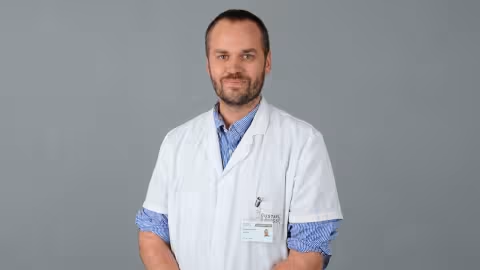
5 questions with Dr François-Xavier Danlos about therapeutic cancer vaccines
Therapeutic cancer vaccines are making significant progress in clinical development. The ESMO Congress, which begins on 23 October, will provide an opportunity to learn about new data on a therapeutic vaccine against melanoma. However, there are major differences between vaccines traditionally used to prevent disease and therapeutic cancer vaccines. Dr François-Xavier Danlos, a medical oncologist in Gustave Roussy’s Drug Development Department and a specialist in immunotherapy development, explains.
-
ADCs: Two Landmark Publications in Cancer Cell and Nature Medicine Showcase Gustave Roussy's Expertise
In less than two months, researchers and clinicians from Gustave Roussy have contributed to two major publications on Antibody-Drug Conjugates (ADCs) in Cancer Cell and Nature Medicine. Together, these papers provide both a comprehensive overview of current knowledge and a strategic vision to accelerate the development of the next generation of these innovative therapies.
-
Drug shortages: Gustave Roussy becomes the only Cancer Centre in France authorised to produce Special Hospital Preparations
The Clinical Pharmacy Department at Gustave Roussy has been authorised by the French Ministry of Health to manufacture Special Hospital Preparations (SHPs). Granted for a period of seven years, this accreditation enables the Institute’s hospital pharmacy to produce certain medicines in coordination with the French National Agency for the Safety of Medicines and Health Products (ANSM) and the Ministry of Health. Gustave Roussy is the only French Comprehensive Cancer Centre (CLCC) authorised to manufacture Special Hospital Preparations, alongside ten university hospitals.