Welcome to the new Gustave Roussy website
A new website designed to offer you a simpler, clearer, and more intuitive experience. Patients, caregivers, healthcare professionals, and donors: find information, news, and services more easily.
Gustave Roussy at the ESMO 2026 Congress
The European Society for Medical Oncology (ESMO) is holding its annual congress from 23 to 27 October in Madrid, Spain. This major international event provides oncologists and researchers from around the world with an opportunity to present the latest findings from clinical studies aimed at improving cancer care and deepening our understanding of the disease. Once again, this year, physicians and researchers from Gustave Roussy have contributed to several dozen studies that will be presented during the five-day congress.
Published on
The presentations involving Gustave Roussy experts at this year's ESMO Congress reflect both the breadth of research conducted at the Institute and its international recognition.
This year, Gustave Roussy physicians and researchers are involved in:
- 17 studies presented in proffered paper sessions, including two presented by a Gustave Roussy expert.
- 25 mini oral presentations, including nine presented by an Institute expert.
- 2 presidential sessions as discussants, providing expert perspectives on studies whose findings are expected to influence future standards of care.
- 61 posters and ePosters.
- 8 educational sessions.
- 5 special symposia.
- 15 sessions chaired by a Gustave Roussy expert.
Les présentations orales
Dr Joana Ribeiro – Bringing immunotherapy earlier into the treatment of triple-negative breast cancer
On Friday 24 October, Dr Joana Ribeiro, medical oncologist within the Gustave Roussy Breast Cancer Committee, will present the results of the POP-DURVA study. This phase II trial focused on women with stage I triple-negative breast cancer and small tumours. It evaluated the administration of two doses of immunotherapy before surgery, replacing chemotherapy, which is normally the standard treatment given before or after the operation. Conducted as part of Gustave Roussy's UNLOCK programme, one of the flagship initiatives of the Prism Institute, POP-DURVA aims to improve cure rates for women with triple-negative breast cancer. By replacing chemotherapy with immunotherapy, the goal is to reduce treatment-related side effects and burden for eligible patients without compromising their chances of cure.
Dr Maria Alice Franzoi – Endocrine therapy and breast cancer: a hybrid solution to better manage side effects
On Monday 26 October, Dr Maria Alice Franzoi, medical oncologist within the Gustave Roussy Breast Cancer Committee and specialist in digital health, will present the results of the HOPE study. The study evaluated an innovative care pathway based on a mobile application combined with nurse-led support. Its objective was to reduce the burden of side effects experienced by women receiving endocrine therapy and to help them better self-manage their symptoms. The broader aim is to improve adherence to endocrine therapy to reduce the risk of recurrence in hormone receptor-positive breast cancer.
Mini oral presentations
-
Dr Barbara Pistilli – VIKTORIA-1 study, assessing the addition of a targeted therapy to endocrine therapy, with or without a CDK4/6 inhibitor, in patients with advanced hormone receptor-positive breast cancer.
-
Professor David Planchard – FLAURA2 study, investigating the role of liquid biopsy in identifying which patients with non-small cell lung cancer are most likely to benefit from targeted therapy alone or in combination with chemotherapy.
-
Dr Lisa Derosa – How modifying the gut microbiome could improve the effectiveness of immunotherapy in patients with cancer.
-
Dr Sabine Mouawad – The complementary role of liquid biopsy and imaging in assessing tumour burden in metastatic cancers.
-
Dr Ronan Flippot – CARE1 study, evaluating the value of the PD-L1 biomarker in guiding first-line treatment decisions for patients with metastatic kidney cancer.
-
Dr Yungan Tao – IDEAL study, assessing a novel strategy combining immunotherapy and targeted therapy before standard treatment to improve outcomes for patients with locally advanced head and neck cancers.
-
Dr Antoine Hollebecque – Evaluation of a new KRAS G12D inhibitor given as second-line treatment alongside chemotherapy in advanced or metastatic pancreatic cancer.
-
Dr Pamela Abdayem – Lung cancer prevention in people living with severe psychiatric disorders, as part of the Interception Lung pathway.
-
Dr Pamela Abdayem – The risk of second primary lung cancers in adults treated for cancer during childhood.
Studies featured in Presidential Sessions
As discussants, Gustave Roussy experts will provide expert commentary on two studies presented during Presidential Sessions.
- Professor Benjamin Besse will discuss the results of the Krascendo 1 study. This trial compares a new targeted therapy with currently available treatments in patients with KRAS G12C-mutated lung cancer. This genetic alteration, long regarded as difficult to target, has already led to the development of several innovative therapies in recent years. The study may help determine whether a new generation of treatments can further improve outcomes for these patients.
- Dr Nathalie Gaspar will discuss the results of the ARTEMIS-011 study, which is evaluating a new targeted therapy in patients with relapsed or treatment-resistant osteosarcoma. This bone cancer primarily affects children, adolescents, and young adults. When the disease recurs or becomes resistant to treatment, therapeutic options remain limited, and progress has been scarce. This study may help identify a new treatment option for patients facing a significant unmet medical need.
Dr Mihaela Aldea receives the ESMO 2026 José Baselga Fellowship
ESMO has awarded the 2026 José Baselga Fellowship for Clinician Scientists to Dr Mihaela Aldea, a medical oncologist at Gustave Roussy specialising in thoracic cancers and artificial intelligence.
This international distinction supports early-career clinician-scientists by providing protected research time, scientific guidance and mentoring opportunities, helping to accelerate the development of innovative cancer research projects.
Through this fellowship, ESMO highlights the essential role of clinician-scientists in advancing translational research and improving the care of people living with cancer.
Last news
-
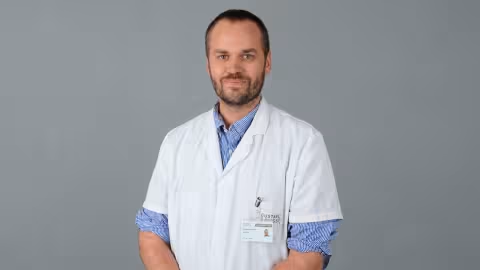
5 questions with Dr François-Xavier Danlos about therapeutic cancer vaccines
Therapeutic cancer vaccines are making significant progress in clinical development. The ESMO Congress, which begins on 23 October, will provide an opportunity to learn about new data on a therapeutic vaccine against melanoma. However, there are major differences between vaccines traditionally used to prevent disease and therapeutic cancer vaccines. Dr François-Xavier Danlos, a medical oncologist in Gustave Roussy’s Drug Development Department and a specialist in immunotherapy development, explains.
-
ADCs: Two Landmark Publications in Cancer Cell and Nature Medicine Showcase Gustave Roussy's Expertise
In less than two months, researchers and clinicians from Gustave Roussy have contributed to two major publications on Antibody-Drug Conjugates (ADCs) in Cancer Cell and Nature Medicine. Together, these papers provide both a comprehensive overview of current knowledge and a strategic vision to accelerate the development of the next generation of these innovative therapies.
-
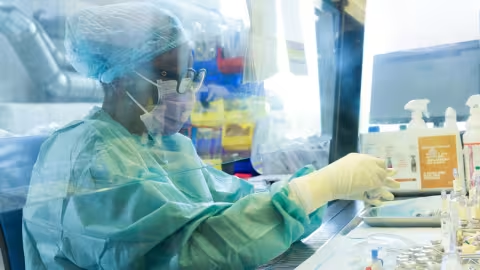
Drug shortages: Gustave Roussy becomes the only Cancer Centre in France authorised to produce Special Hospital Preparations
The Clinical Pharmacy Department at Gustave Roussy has been authorised by the French Ministry of Health to manufacture Special Hospital Preparations (SHPs). Granted for a period of seven years, this accreditation enables the Institute’s hospital pharmacy to produce certain medicines in coordination with the French National Agency for the Safety of Medicines and Health Products (ANSM) and the Ministry of Health. Gustave Roussy is the only French Comprehensive Cancer Centre (CLCC) authorised to manufacture Special Hospital Preparations, alongside ten university hospitals.
-
Personalising Breast Cancer Treatments: 5 Questions with Dr Barbara Pistilli
Advances in treatment and patient care mean that five-year net survival for breast cancer now reaches 88%1 in France. However, with around 60,000 new cases diagnosed each year in France alone, breast cancer remains a major public health challenge. One reason is the side effects associated with treatment. In response to this issue, Dr Barbara Pistilli, Head of the Breast Cancer Committee at Gustave Roussy, advocates an approach centred on personalised care, ensuring that each woman receives a treatment intensity tailored to her tumour and individual journey, without compromising her chances of recovery.