Welcome to the new Gustave Roussy website
A new website designed to offer you a simpler, clearer, and more intuitive experience. Patients, caregivers, healthcare professionals, and donors: find information, news, and services more easily.
Questions to Ask If I'm Told I Have Ovarian Cancer
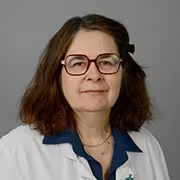
Ovarian cancer affects approximately 5,200 women each year in France. In honor of Turquoise September, Dr. Patricia Pautier, head of the gynecologic oncology department at Gustave Roussy, answers questions that may arise upon receiving a diagnosis.
Published on
Changed on

How widespread is my tumor?
Ovarian cancer initially develops in the ovary but most commonly in the fallopian tube, and can quickly spread to the peritoneum and other abdominal organs through direct contact. In 75% of cases, the cancer is at an advanced stage at the time of diagnosis, often because there are no symptoms suggestive of the disease in its early stages. It is important to know the exact location and extent of the disease in order to decide on the choice and sequence of treatments.
What treatment options are available to me?
Surgery is the primary treatment for ovarian cancer. As it can sometimes be invasive, it must be performed at a specialized center with surgeons experienced in gynecologic oncology and a trained postoperative intensive care team, as is the case at Gustave Roussy. The goal is to achieve complete resection of all visible lesions. This surgery is followed by platinum-based chemotherapy.
When the tumor is too extensive to allow for complete resection as a first-line treatment, several cycles of chemotherapy are administered beforehand. This strategy reduces the tumor mass in an effort to make complete surgery possible. After the procedure, chemotherapy is resumed.
Finally, depending on the tumor’s biological profile, maintenance therapy may be recommended for one to two years. This treatment relies on PARP inhibitors (which target DNA repair in tumor cells damaged by chemotherapy) and/or bevacizumab (which targets blood vessel formation around tumors). These treatments aim to prolong remission and delay a potential relapse.
Does my ovarian cancer have any specific biological characteristics?
Not all ovarian cancers are the same. The majority are epithelial tumors, but there are also rarer forms—germ cell or stromal tumors—that tend to affect younger women and require different treatments. Molecular analysis also makes it possible to screen for specific abnormalities, particularly mutations in the BRCA1 and BRCA2 genes, or a DNA repair defect known as HRD. These abnormalities directly influence the tumor’s sensitivity to certain innovative treatments.
Are my relatives at higher risk of developing ovarian cancer?
In about one out of five cases, ovarian cancer is associated with a genetic predisposition. Knowing the tumor’s genomic profile is essential for guiding treatment, but also for the patient’s family. If a constitutional mutation—one present in all the body’s cells—is detected, such as BRCA1 and BRCA2 mutations, first-degree relatives (mother, sisters, daughters, brothers, sons, father) may carry this mutation. They are therefore at a higher risk of developing certain cancers, particularly breast, gynecological, or prostate cancers. Having this information makes it possible to offer the family an oncogenetic consultation to determine each person’s risk of carrying the mutation and to implement appropriate preventive follow-up (monitoring or preventive measures).
How will this cancer and its treatment affect my fertility and sexuality?
When performed before menopause, removal of the ovaries results in surgical menopause, with hot flashes, vaginal dryness, and hormonal changes that can affect libido and sexuality. Discussing this with your oncologist allows for the planning of symptom management, which may include hormone replacement therapy and psychosexual counseling. In young women with germ cell or stromal tumors, it is sometimes possible to preserve the uterus or ovaries and to freeze oocytes. In epithelial cancers, which primarily affect postmenopausal women, the issue of fertility is less of a concern.
Am I eligible to participate in a clinical trial?
A clinical trial may be offered if the tumor’s characteristics match those of an ongoing protocol. Research on ovarian cancer is advancing. Antibody-drug conjugates, which combine the precision of an antibody with the effectiveness of chemotherapy, are showing promising results, and the first such treatment has already received marketing authorization. Techniques such as hyperthermic intraperitoneal chemotherapy (HIPC) allow the treatment to be delivered directly into the abdomen, where the disease is most active. Finally, immunotherapy—which has so far been largely ineffective for ovarian cancer—may benefit certain patients whose tumors exhibit microsatellite instability (MSI status).
► Learn more: Management of ovarian cancers
Last news
-
Gustave Roussy at the ESMO 2026 Congress
The European Society for Medical Oncology (ESMO) is holding its annual congress from 23 to 27 October in Madrid, Spain. This major international event provides oncologists and researchers from around the world with an opportunity to present the latest findings from clinical studies aimed at improving cancer care and deepening our understanding of the disease. Once again, this year, physicians and researchers from Gustave Roussy have contributed to several dozen studies that will be presented during the five-day congress.

-
5 questions with Dr François-Xavier Danlos about therapeutic cancer vaccines
Therapeutic cancer vaccines are making significant progress in clinical development. The ESMO Congress, which begins on 23 October, will provide an opportunity to learn about new data on a therapeutic vaccine against melanoma. However, there are major differences between vaccines traditionally used to prevent disease and therapeutic cancer vaccines. Dr François-Xavier Danlos, a medical oncologist in Gustave Roussy’s Drug Development Department and a specialist in immunotherapy development, explains.
-
ADCs: Two Landmark Publications in Cancer Cell and Nature Medicine Showcase Gustave Roussy's Expertise
In less than two months, researchers and clinicians from Gustave Roussy have contributed to two major publications on Antibody-Drug Conjugates (ADCs) in Cancer Cell and Nature Medicine. Together, these papers provide both a comprehensive overview of current knowledge and a strategic vision to accelerate the development of the next generation of these innovative therapies.
-
Drug shortages: Gustave Roussy becomes the only Cancer Centre in France authorised to produce Special Hospital Preparations
The Clinical Pharmacy Department at Gustave Roussy has been authorised by the French Ministry of Health to manufacture Special Hospital Preparations (SHPs). Granted for a period of seven years, this accreditation enables the Institute’s hospital pharmacy to produce certain medicines in coordination with the French National Agency for the Safety of Medicines and Health Products (ANSM) and the Ministry of Health. Gustave Roussy is the only French Comprehensive Cancer Centre (CLCC) authorised to manufacture Special Hospital Preparations, alongside ten university hospitals.