Welcome to the new Gustave Roussy website
A new website designed to offer you a simpler, clearer, and more intuitive experience. Patients, caregivers, healthcare professionals, and donors: find information, news, and services more easily.
Questions to Ask If I'm Told I Have Testicular Cancer
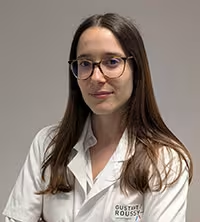
With just under 3,000 new cases per year in France, testicular cancer is a rare tumor, though it remains the most common cancer among young men. Thanks to advances in treatment, this cancer is now curable in more than nine out of ten cases. Early detection of the disease, aided by testicular self-examination, remains a key priority, however, in order to minimize the side effects of treatment. To mark Men’s Health Month, Dr. Macarena Rey-Cardenas, a medical oncologist on the genitourinary committee at Gustave Roussy, provides an update.
Published on

What is the stage of my cancer?
Knowing the stage of your testicular cancer is crucial, as it directly influences the course of your treatment. Depending on the extent of your tumor, your oncologist will classify your cancer into one of three stages. Stage I means the disease is confined to a single testicle. Stage II means it has spread to the lymph nodes in the abdomen. Stage III refers to when the disease has metastasized to other parts of the body, such as the lungs or the liver. Your oncologist will make a diagnosis based on the results of your tests as well as the levels of several tumor markers specific to testicular cancer, which can be measured in your blood, such as alpha-fetoprotein (AFP), human chorionic gonadotropin (hCG), and lactate dehydrogenase (LDH).
What treatments will I receive?
In most cases, treatment for this tumor begins with surgery. The affected testicle will be removed during a procedure called an orchiectomy, through a surgical incision made in the groin. This procedure is performed on an outpatient basis. A testicular prosthesis, made of silicone or soft gel, may be inserted during or after the procedure, depending on the patient’s preference. This prosthesis, which is purely cosmetic, can help preserve body image. Next, if the disease is advanced—with or without distant metastases—platinum-based chemotherapy is prescribed. In some cases, chemotherapy is not sufficient to eliminate all metastases. The patient therefore undergoes another surgical procedure to perform a lymph node dissection or surgery to remove residual tumor, for example in the lungs.
Chemotherapy may also be prescribed in the absence of secondary lesions, following surgery, to reduce the risk of recurrence. Your oncologist will then discuss with you the benefits as well as the possible side effects of this approach. Finally, radiation therapy may be an option for certain tumor subtypes. Once the cancer is in remission, regular follow-up is initiated, including an annual testicular ultrasound to monitor the healthy testicle, as well as TAP CT scans and tumor marker tests, the frequency of which will gradually decrease over time as the end of treatment recedes.
Is testicular cancer aggressive?
Testicular cancer is one of the most curable cancers, with a cure rate exceeding 90% across all stages. It is one of the few cancers that can be cured even when it has metastasized. This exceptional responsiveness to treatment is due to the nature of the cells that form the tumor: germ cells. These reproductive cells have a high potential for differentiation and retain a very immature cellular program. This immaturity makes them particularly sensitive to chemotherapy.
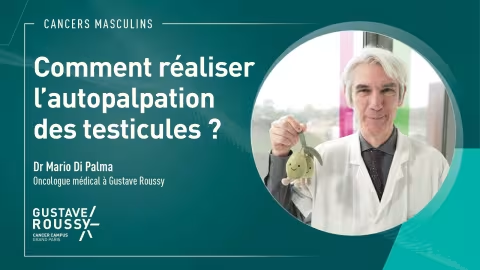
Nevertheless, early diagnosis remains a major challenge: the earlier the tumor is detected, the less intensive the treatment will be, with fewer side effects. For this reason, it is essential that men aged 15 to 40 make it a habit to perform a testicular self-exam once a month and consult their primary care physician as soon as they detect any abnormality.
Will my cancer affect my sex life?
Testicular cancer generally has no impact on patients’ sexuality. In the vast majority of cases, the other testicle is healthy, which ensures sufficient testosterone production for erections and a normal sex drive. However, if sexual dysfunction occurs, the patient may be referred to a urologist and/or an andrologist.
What about my fertility?
Again, if the other testicle is healthy, sperm production continues normally in most cases. Many men remain fertile after a unilateral orchiectomy. However, some forms of testicular cancer are associated with reduced fertility, even before surgery. Chemotherapy can also temporarily or permanently impair sperm production. It is therefore recommended to have a semen analysis and to consider sperm preservation before any surgery or additional treatment. Sperm preservation is a quick procedure and is covered by Social Security.
This video requires a cookie from the website: youtube.com
Are there any ongoing clinical trials?
Research into testicular cancer continues with a focus on therapeutic de-escalation, aiming to reduce the burden of current treatments while maintaining the same level of effectiveness. At Gustave Roussy, the STARTER study recently began to evaluate whether adapted physical activity can reduce the side effects of chemotherapy in testicular cancer.
Last news
-
5 questions with Dr François-Xavier Danlos about therapeutic cancer vaccines
Therapeutic cancer vaccines are making significant progress in clinical development. The ESMO Congress, which begins on 23 October, will provide an opportunity to learn about new data on a therapeutic vaccine against melanoma. However, there are major differences between vaccines traditionally used to prevent disease and therapeutic cancer vaccines. Dr François-Xavier Danlos, a medical oncologist in Gustave Roussy’s Drug Development Department and a specialist in immunotherapy development, explains.
-
ADCs: Two Landmark Publications in Cancer Cell and Nature Medicine Showcase Gustave Roussy's Expertise
In less than two months, researchers and clinicians from Gustave Roussy have contributed to two major publications on Antibody-Drug Conjugates (ADCs) in Cancer Cell and Nature Medicine. Together, these papers provide both a comprehensive overview of current knowledge and a strategic vision to accelerate the development of the next generation of these innovative therapies.
-
Drug shortages: Gustave Roussy becomes the only Cancer Centre in France authorised to produce Special Hospital Preparations
The Clinical Pharmacy Department at Gustave Roussy has been authorised by the French Ministry of Health to manufacture Special Hospital Preparations (SHPs). Granted for a period of seven years, this accreditation enables the Institute’s hospital pharmacy to produce certain medicines in coordination with the French National Agency for the Safety of Medicines and Health Products (ANSM) and the Ministry of Health. Gustave Roussy is the only French Comprehensive Cancer Centre (CLCC) authorised to manufacture Special Hospital Preparations, alongside ten university hospitals.
-
Personalising Breast Cancer Treatments: 5 Questions with Dr Barbara Pistilli
Advances in treatment and patient care mean that five-year net survival for breast cancer now reaches 88%1 in France. However, with around 60,000 new cases diagnosed each year in France alone, breast cancer remains a major public health challenge. One reason is the side effects associated with treatment. In response to this issue, Dr Barbara Pistilli, Head of the Breast Cancer Committee at Gustave Roussy, advocates an approach centred on personalised care, ensuring that each woman receives a treatment intensity tailored to her tumour and individual journey, without compromising her chances of recovery.