Welcome to the new Gustave Roussy website
A new website designed to offer you a simpler, clearer, and more intuitive experience. Patients, caregivers, healthcare professionals, and donors: find information, news, and services more easily.
Turquoise September: Gustave Roussy is working to prevent gynecological cancers
September is also Gynecologic Cancers Awareness and Prevention Month.
Published on

September also marks Gynecologic Cancers Awareness and Prevention Month. This is an opportunity to encourage all women to learn about screening, warning signs, treatment options for these cancers, and the promise of research.
Cancers of the cervix, ovaries, fallopian tubes, and endometrium are the most common types of cancers affecting the female reproductive system. Cancers of the vulva and vagina, which are rarer, account for less than 5% of gynecological cancers. Nearly 15,000 new cases of these gynecological cancers are diagnosed in France each year.

Different Types of Gynecologic Cancers
Ovarian cancer: It is the 8th most common cancer in France, with 5,200 new cases annually. Epithelial ovarian cancer (90% of cases) most commonly affects women after menopause, as the average age at diagnosis is 62. It can remain asymptomatic for a long time, which explains why the majority of these cancers are detected at an advanced stage. Non-epithelial tumors, or rare malignant ovarian tumors, tend to affect younger women and are generally detected at an early stage. An inherited genetic abnormality, such as a mutation in the BRCA1 or BRCA2 genes, is a significant risk factor.
Cervical cancer: Every year, 3,000 women in France are diagnosed with cervical cancer. In 70 to 90 percent of cases, cervical cancer is linked to a viral infection caused by the human papillomavirus (HPV), a highly contagious virus found on mucous membranes and tissues that is sexually transmitted. There are about 100 different strains, including an oncogenic variety. In most cases, the infection clears up on its own. Lesions generally do not cause any symptoms. When symptoms do appear, the cancer is often diagnosed at a late stage and is more difficult to treat. Condoms do not provide complete protection against it.
Endometrial cancer: With nearly 8,000 new cases per year, endometrial cancer is the most common gynecological cancer after breast cancer in France. This disease primarily affects women after menopause. Its main symptom is vaginal bleeding after menopause or unusual bleeding in women who have not yet reached menopause.
Prevention of Cervical Cancer
To prevent cervical cancer, regular Pap smears performed by a gynecologist are offered and covered by health insurance for all women aged 25 to 65. This screening involves looking for abnormal cells and detecting any precancerous lesions in the cervix before they develop into cancer, thereby improving the chances of recovery.
Each year in France, 6,400 new cases of cancer are attributable to human papillomavirus (HPV) infections. However, HPV vaccination is an effective measure that complements screening to reduce the risk of cervical cancer. It is recommended for girls and boys between the ages of 11 and 14. Catch-up vaccination is possible between the ages of 15 and 19.
There is no effective screening test or organized screening program for ovarian cancer. Nevertheless, regular gynecological checkups and a medical consultation in the event of atypical symptoms and/or pain are recommended. Certain specific signs, such as abnormal bleeding, abdominal discomfort, pelvic pain, and/or abdominal swelling, should prompt a visit to the doctor.
Multidisciplinary Care for Gynecologic Cancers at Gustave Roussy
Gustave Roussy provides diagnosis (in cases of suspicious lesions detected during screening) and treatment of precancerous and cancerous lesions through a multidisciplinary approach. The Gynecology Committee has also developed expertise in preserving fertility for women with gynecologic cancer. To address sexual health issues related to the disease and its treatments, Gustave Roussy has established a sexual health clinic dedicated to patients, providing a space for listening and discussion.
Treatments, which are discussed during multidisciplinary gynecologic team meetings (MDTs), may include the following:
- Surgery: Surgery for ovarian cancer—where the quality of the procedure is the most important prognostic factor—is one of the specialties of the Gustave Roussy Surgery Department. In cervical cancer surgery, 90% of patients who undergo surgery are treated using minimally invasive techniques (laparoscopy), which allow for a better recovery. Since 2015, most of these procedures have been performed with the assistance of a surgical robot.
- Chemotherapy: It is the standard of care for advanced endometrial cancer and as an adjunct to surgery for aggressive ovarian cancers.
- Brachytherapy and/or external beam radiation therapy may be indicated for the treatment of endometrial cancer (before or after surgery) and advanced forms of cervical cancer, with or without chemotherapy, to deliver a high dose of radiation directly to the target area.
- Hormone therapy may be used to treat endometrial cancers that express estrogen and progesterone receptors.
- Targeted therapies (anti-angiogenic agents and PARP inhibitors) can now be used as initial treatment or for recurrent cases of certain ovarian cancers.
Hopes for Research and Clinical Trials
To detect gynecological cancers earlier and find new, effective treatments for recurrent disease, the high-level expertise of research teams is essential. The Gustave Roussy gynecologic cancer research laboratory, led by Dr. Alexandra Leary, has been working for several years on flagship programs with a three-pronged approach:
- Identifying biomarkers of treatment efficacy in tumor samples and targeting DNA repair defects;
- Understanding the mechanisms of resistance to currently available treatments;
- Identifying effective immunotherapies for gynecologic cancers.
Numerous therapeutic advances have been made, particularly through the combination of promising immunotherapies for several gynecologic cancers.
► Learn more
Several Phase I/II clinical trials have been launched at Gustave Roussy for the treatment of various gynecologic cancers.
► View the list of clinical trials in gynecology.
Key figures:
- 80% of women and men will be infected with the human papillomavirus (HPV) during their lifetime; this is the most common sexually transmitted infection, and in 10% of cases, the infection persists (source: HAS).
- 28% of adolescents (in the target population) were vaccinated against HPV in France in 2020 (source: National Academy of Medicine)
- 90% of cervical cancers are prevented through screening
- 40% of women between the ages of 45 and 65 do not have regular Pap smears
Last news
-
Gustave Roussy at the ESMO 2026 Congress
The European Society for Medical Oncology (ESMO) is holding its annual congress from 23 to 27 October in Madrid, Spain. This major international event provides oncologists and researchers from around the world with an opportunity to present the latest findings from clinical studies aimed at improving cancer care and deepening our understanding of the disease. Once again, this year, physicians and researchers from Gustave Roussy have contributed to several dozen studies that will be presented during the five-day congress.
-
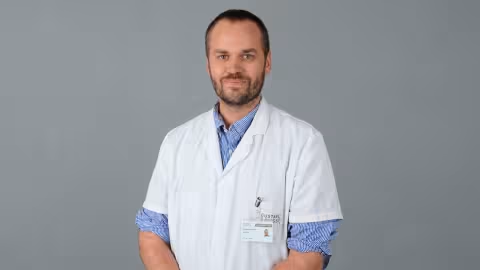
5 questions with Dr François-Xavier Danlos about therapeutic cancer vaccines
Therapeutic cancer vaccines are making significant progress in clinical development. The ESMO Congress, which begins on 23 October, will provide an opportunity to learn about new data on a therapeutic vaccine against melanoma. However, there are major differences between vaccines traditionally used to prevent disease and therapeutic cancer vaccines. Dr François-Xavier Danlos, a medical oncologist in Gustave Roussy’s Drug Development Department and a specialist in immunotherapy development, explains.
-
ADCs: Two Landmark Publications in Cancer Cell and Nature Medicine Showcase Gustave Roussy's Expertise
In less than two months, researchers and clinicians from Gustave Roussy have contributed to two major publications on Antibody-Drug Conjugates (ADCs) in Cancer Cell and Nature Medicine. Together, these papers provide both a comprehensive overview of current knowledge and a strategic vision to accelerate the development of the next generation of these innovative therapies.
-
Drug shortages: Gustave Roussy becomes the only Cancer Centre in France authorised to produce Special Hospital Preparations
The Clinical Pharmacy Department at Gustave Roussy has been authorised by the French Ministry of Health to manufacture Special Hospital Preparations (SHPs). Granted for a period of seven years, this accreditation enables the Institute’s hospital pharmacy to produce certain medicines in coordination with the French National Agency for the Safety of Medicines and Health Products (ANSM) and the Ministry of Health. Gustave Roussy is the only French Comprehensive Cancer Centre (CLCC) authorised to manufacture Special Hospital Preparations, alongside ten university hospitals.