

Welcome to the new Gustave Roussy website
A new website designed to offer you a simpler, clearer, and more intuitive experience. Patients, caregivers, healthcare professionals, and donors: find information, news, and services more easily.
Department of Anesthesia, Surgery, and Interventional Procedures (DACI)
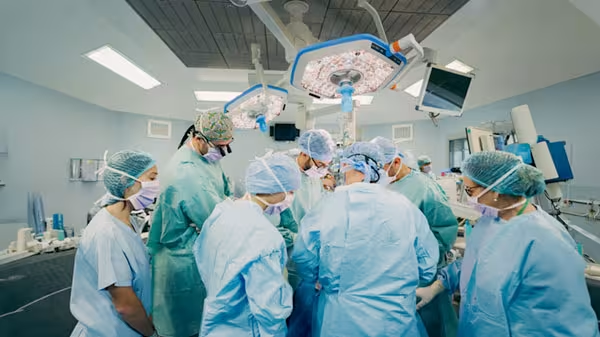
The Department of Anesthesia, Surgery, and Interventional Radiology (DACI) at Gustave Roussy treats cancers in adults, children, and adolescents that require surgical or interventional radiology procedures. Thanks to cutting-edge techniques and the expertise of its multidisciplinary teams, the department treats all types of cancers—from the most common to the rarest—through personalized and complex care pathways.
Department
Chair: Dr. Maximiliano Gelli
Contact
: Tel.: +33 (0)1 42 11 65 36, 44 39, or 44 38
Our Mission
The DACI’s mission is to provide leading-edge surgical and interventional care through the use and development of the most innovative techniques, in order to ensure:
- Coordinated and personalized care for each patient
- A reduction in long-term effects through minimally invasive procedures in oncology
- A high rate of organ preservation through personalized treatments combining medical and interventional approaches
- Continuous improvement in patient comfort and pain management
- The advancement of clinical research and innovation in interventional disciplines
- The transfer of knowledge to future healthcare professionals
Key Information
-
6 specialized services
-
Care for Adults, Children, and Adolescents
-
Common and rare tumors at all stages of the disease
-
Innovative and Minimally Invasive Techniques
-
National and International Research Activities
The department's services:
-
Head and Neck Oncology
care for head and neck cancers.
-
Oncologic and Reconstructive Plastic Surgery
Specialized care for breast cancer and reconstruction following cancer treatment.
-
Gynecologic Oncology Surgery
Surgical Treatment of Gynecologic Cancers
-
Oncological Visceral Surgery
Care for Digestive and Abdominal Cancers
-
Interventional Radiology
Minimally invasive treatments guided by medical imaging
-
Anesthesia
Support for patients before, during, and after surgery.
Cutting-edge techniques for the benefit of patients
The DACI teams are experts in all aspects of patient care and cancer treatment, ranging from local ablation techniques, intra-arterial and endoscopic treatments, to minimally invasive surgery (laparoscopic and robotic) and complex surgical procedures.
Here are a few examples of innovations performed at Gustave Roussy:
- Robot-assisted surgery
- Sentinel lymph node biopsy
- Immediate or delayed breast reconstruction
- Treatment of rare gastrointestinal cancers
- Interventional radiology
- CHIP (intraperitoneal hyperthermic chemotherapy)
- PIPAC (intraperitoneal aerosol chemotherapy)
- Sarcoma surgery
- Surgery for Endocrine and Neuroendocrine Tumors
What is interventional radiology?
Interventional radiology encompasses medical procedures performed under image guidance (CT scan, ultrasound, X-ray). It allows for the targeted treatment of certain tumors while minimizing the impact on healthy tissue.
Research and Innovation
The DACI actively contributes to the development of new treatments and surgical approaches.
The main areas of research include:
- Rare tumors
- Therapies combining surgery with other treatments
- Robotic surgery
- The evaluation of new interventional techniques
This scientific work is conducted as part of national and international collaborations.
Training and Education
Doctors in the department help train the healthcare professionals of tomorrow.
In particular, they are involved in:
- At Gustave Roussy Education
- At the Paris-Saclay Faculty of Medicine
- In specialized oncology training programs
Medical teams
Dr. Maximiliano Gelli
Department Chair
Prof. Lambros Tselikas
Associate Department Chair
Unit Directors
Dr. Stéphane Temam
Head and Neck Oncology
Dr. Isabelle Sourouille
Oncologic Visceral Surgery
Dr. Nicolas Leymarie
Oncologic and Reconstructive Plastic Surgery
Prof. Sébastien Gouy
Gynecologic Oncology Surgery
Dr. Frédéric Deschamps
Therapeutic Imaging
Dr. Philippe Sitbon
Anesthesiology
Initial Care
Head and Neck Surgery and Oncology treats conditions affecting the ENT system as well as head and neck cancers. Patients receive multidisciplinary care involving surgeons, anesthesiologists, oncologists, and other specialized professionals to ensure the best possible course of treatment.
The General Surgery Department treats patients with gastrointestinal cancer and sarcomas.
Patients receive a preoperative evaluation, surgery tailored to their condition, and coordinated postoperative care.
Surgical Management of Breast Cancer
Patients newly diagnosed with breast cancer receive prompt and coordinated care as part of a multidisciplinary care pathway. After the diagnosis is confirmed and the case is discussed at a multidisciplinary team (MDT) meeting, a surgical consultation is scheduled to determine the most appropriate treatment strategy. Surgical management may consist of breast-conserving surgery or a mastectomy, combined with lymph node dissection if necessary.
Plastic and Reconstructive Surgery
As part of breast cancer care, plastic and reconstructive surgery complements oncological surgery. It allows us to offer patients immediate or delayed breast reconstruction following a mastectomy, as well as breast contouring techniques during breast-conserving surgeries. The goal is to restore physical integrity, preserve body image, and improve patients’ quality of life. This care is provided in close collaboration with the breast surgery and oncology teams to tailor reconstruction options to each clinical situation.
This specialty provides care for gynecologic cancers (ovarian, endometrial, cervical, and vulvar). Patients receive coordinated care that combines diagnosis, surgery, and specialized follow-up.
Interventional radiology performs minimally invasive diagnostic and therapeutic procedures guided by imaging. These techniques offer alternatives or complementary options to conventional surgical treatments.
The anesthesia team conducts preoperative consultations, assesses surgical risks, and provides intraoperative care and postoperative monitoring to ensure patient safety and comfort.
Hospitalization
Within the department, the hospitalization process is designed to provide each patient with the appropriate level of care at the right time, based on the type of procedure planned, its complexity, and the patient’s health status. Approximately 50% of procedures are performed on an outpatient basis, including complex procedures, when safety conditions permit.
Nearly one in two procedures is now performed on an outpatient basis, meaning the patient is admitted and discharged on the same day. This option may even be offered for certain complex procedures, provided all safety requirements are met and the patient’s medical condition permits it. Whenever possible, the patient’s admission is scheduled for the day of the procedure, allowing the patient to continue preparing at home, in their familiar surroundings. Pre-procedure hospitalization is thus reserved for the most complex cases or those requiring special monitoring.
Whenever possible, admission is arranged on the same day as the procedure. This approach allows the patient to continue preparing at home, in their familiar surroundings, while reserving pre-procedure hospitalization for the most complex cases or those requiring special monitoring. After the procedure, patients are cared for based on the complexity of the procedure and their medical needs: either in the acute care unit, when close monitoring is necessary, or as an inpatient in one of the department’s units.
After the procedure, the patient is referred to the facility best suited to their needs. Depending on the complexity of the procedure and the level of monitoring required, postoperative care may take place in the acute care unit or as a conventional inpatient stay in one of the department’s units.
Throughout their stay, medical, nursing, and paramedical teams support the patient to ensure safe care, pain management, recovery after surgery, and preparation for discharge home.
The inpatient units within the Department are:
Morbihan Head and Neck Surgery
Rhône Head and Neck Oncology
Occitanie Conventional Inpatient Unit
Ardennes Short-Stay Unit