Alexandre Detappe receives a selective European grant to enhance immunotherapy
The ERC (European Research Council) Proof of Concept grant awarded to Alexandre Detappe (Gustave Roussy/Institut Strauss/Université Paris-Saclay/Inserm) will fund the Nano-BITE project, which aims to improve the ability of the immune system to fight solid tumors through nanomedicine. The goal is to develop a new generation of immunotherapies that are more targeted, more effective and better tolerated.
Published on
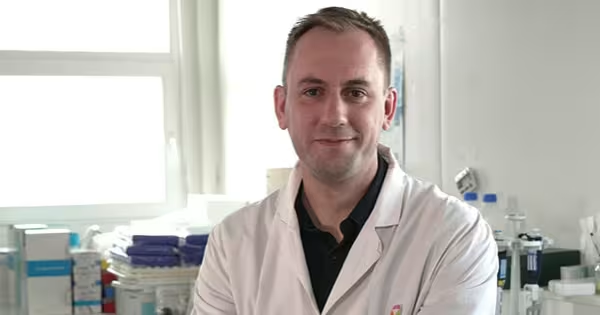
The ERC (European Research Council) Proof of Concept grant awarded to Alexandre Detappe (Gustave Roussy/Institut Strauss/Université Paris-Saclay/Inserm) will fund the Nano-BITE project, which aims to improve the ability of the immune system to fight solid tumors through nanomedicine. The goal is to develop a new generation of immunotherapies that are more targeted, more effective and better tolerated. Alexandre Detappe’s project is among the 182 projects selected across Europe (including 18 in France) to receive ERC Proof of Concept funding, a highly selective and competitive scheme. This recognition highlights the excellence and strong innovation potential of his work.
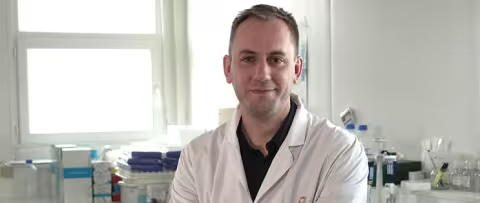
Alexandre Detappe, Head of the Nanomedicine Team at Gustave Roussy (Inserm U1363, Université Paris-Saclay) and Nanomedicine laboratory at Institut Strauss, and holder of the Gustave Roussy Foundation Chair of Excellence in Nanotherapy, has been awarded an ERC Proof of Concept grant for his Nano-BITE project.
Awarded by the European Research Council (ERC), this funding is reserved for researchers who have previously received an ERC grant (ERC Starting Grant). Its purpose is to support the maturation and valorization of promising scientific results in order to facilitate their transfer into practical applications. With funding of €150,000 over 18 months, the grant will enable the next stage in the development of an innovative immunotherapy approach based on nanomedicine.
Overcoming the barriers to immunotherapy for solid tumors
Immunotherapy has profoundly transformed the treatment of many cancers by mobilizing the immune system against tumor cells. Despite these advances, its effectiveness remains limited in many solid tumors.
Two major obstacles remain. First, it is often difficult to attract sufficient immune cells to the tumor site. Second, these cells struggle to remain durably active within a particularly hostile tumor microenvironment. These limitations reduce treatment effectiveness and may require repeated administrations, increasing the risk of side effects.
Nano-BITE: using nanomedicine to direct and sustain the immune response
To address these challenges, the Nano-BITE project is developing nanoparticles capable of acting directly within the tumor microenvironment. The objective is to promote interactions between immune cells and cancer cells while maintaining a durable antitumor response.
This approach could make it possible to concentrate therapeutic activity at the tumor site while limiting effects on healthy tissues.
“With Nano-BITE, we aim to harness the potential of nanomedicine to make immunotherapy more precise and more effective against solid tumors. This prestigious funding will enable us to take a decisive step toward validating this innovative approach,” explains Alexandre Detappe.
Over the next 18 months, the ERC-funded work will provide the first preclinical validations of this technology and prepare its next stages of development. Ultimately, this strategy could pave the way for new treatments for patients with solid tumors, drawing in particular on the expertise of Gustave Roussy’s Department of Therapeutic Innovation and Early Phase Trials (DITEP).
ERC Proof of Concept Grant #101335332
Last news
-
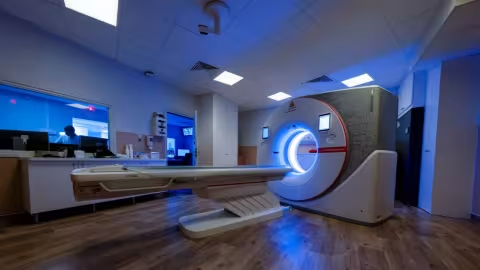
Two photon-counting CT scanners now equip Gustave Roussy's imaging department
Since September 2026, Gustave Roussy's Department of Medical Imaging has been equipped with a second photon-counting CT scanner, delivering higher image resolution while reducing the doses of X-rays and contrast agent administered to patients. This technology recently enabled the Institute to perform an iodine-free pulmonary CT angiogram, a world first.
-
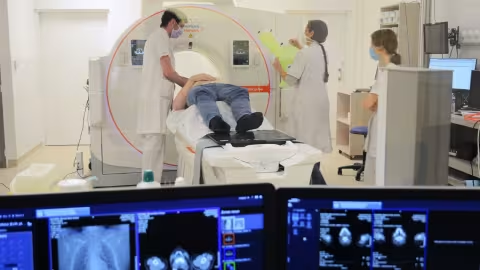
Prevention and screening: getting ahead of lung cancer
To mark Thoracic Cancer Awareness Month and Tobacco-Free Month, two campaigns focusing on lung cancer, Gustave Roussy highlights its initiatives to advance prevention and screening among people at increased risk. Since its creation in 2021, the Institute’s Interception Lung programme has welcomed more than 900 participants, supporting them to stop smoking and offering personalised screening for the disease.
-
Gustave Roussy Meets His Audience
As part of its awareness-raising and fundraising efforts, Gustave Roussy is currently conducting a door-to-door outreach campaign in several towns in Val-de-Marne (Fresnes, Vitry-sur-Seine, Nogent-sur-Marne, Bry-sur-Marne, Le Kremlin-Bicêtre) from Monday through Saturday, 1:30 p.m. to 8:00 p.m.

-
Mens November: Take care of your jewelry its precious!
November is the month dedicated to raising awareness and promoting prevention of male cancers, which include prostate, testicular, and penile cancers. The goal is to raise public awareness of these diseases—which account for approximately 63,000 new cases in France each year—and to encourage men to perform testicular self-exams, a simple step that can help detect a lump, the nature of which must then be determined through further medical examinations. Gustave Roussy has extensive expertise in the treatment of male cancers, particularly through its Genitourinary Oncology Committee, which is deeply involved in research on these diseases.