Welcome to the new Gustave Roussy website
A new website designed to offer you a simpler, clearer, and more intuitive experience. Patients, caregivers, healthcare professionals, and donors: find information, news, and services more easily.
Prevention and screening: getting ahead of lung cancer
To mark Thoracic Cancer Awareness Month and Tobacco-Free Month, two campaigns focusing on lung cancer, Gustave Roussy highlights its initiatives to advance prevention and screening among people at increased risk. Since its creation in 2021, the Institute’s Interception Lung programme has welcomed more than 900 participants, supporting them to stop smoking and offering personalised screening for the disease.
Published on
Lung cancer is one of the most common cancers in France. According to the French National Cancer Institute[1], 52,777 new cases were diagnosed in 2023, an average of one every ten minutes. Across both sexes, lung cancer is the leading cause of cancer death in France and worldwide, accounting for approximately one in five cancer deaths.
Yet a large proportion of these cancers could be prevented, as they are mainly linked to a modifiable risk factor: smoking. The French National Cancer Institute estimates that 80% of lung cancers are attributable to tobacco use.
In France, approximately one in two lung cancers is also diagnosed at the metastatic stage. This often-late diagnosis contributes to the disease’s persistently poor prognosis, despite major therapeutic advances over the past decade. This underlines the importance of earlier detection, particularly through low-dose chest CT screening.
To mark Thoracic Cancer Awareness Month and Tobacco-Free Month, two initiatives aimed at raising public awareness of lung cancer and the importance of stopping smoking, Dr Pamela Abdayem, medical oncologist and lead for the precision lung cancer prevention pathway within the Interception programme, discusses the measures being implemented to improve lung cancer prevention and expand screening nationwide.
Lung cancer rates rising among women
Between 2019 and 2023, lung cancer incidence increased by 3.6% per year among women, according to figures from the French National Cancer Institute, while it fell among men by 0.3% per year. This is partly because women in France began smoking later than men.
Interception Lung: a pathway dedicated to lung cancer prevention and screening since 2021
An integral part of Gustave Roussy’s personalised prevention programme, the Interception Lung pathway has welcomed more than 900 people at increased risk of lung cancer since its launch five years ago. It is intended for heavy smokers aged 50 or over who have smoked for at least 20 pack-years, equivalent to one pack of cigarettes a day for 20 years. They may still smoke or may have stopped within the previous 15 years.
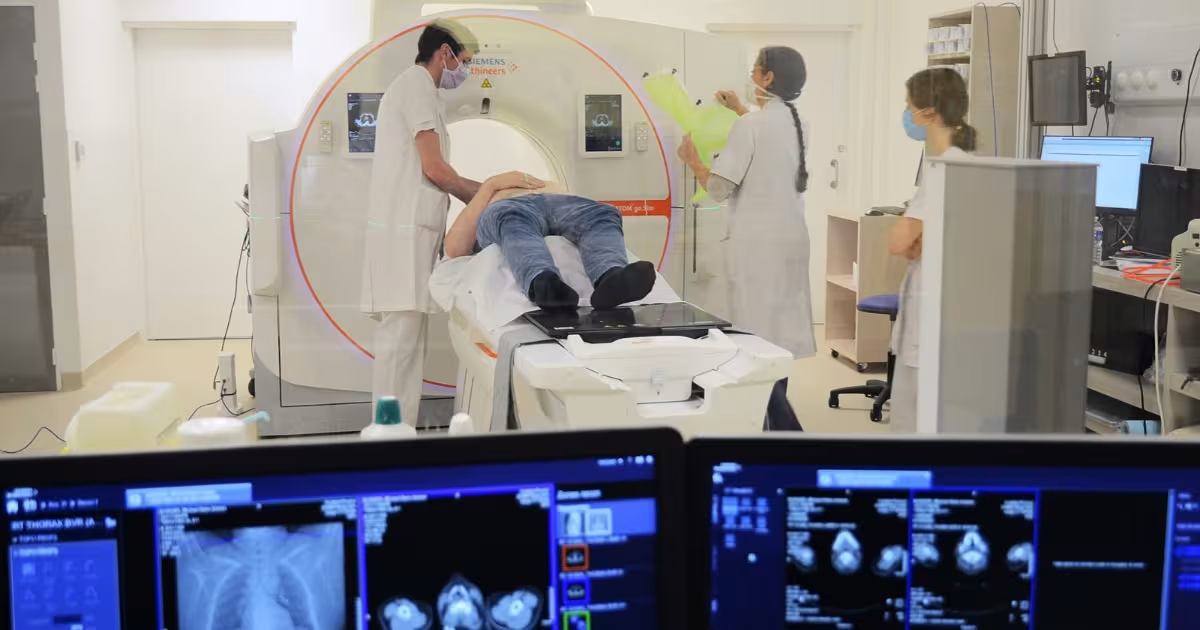
This prevention and screening day includes a range of workshops and appointments: an individual consultation with a thoracic oncologist, a low-dose chest CT scan with same-day results, the opportunity to take part in clinical studies including the IMPULSION study, group smoking cessation workshops and adapted physical activity sessions.
Participants leave with a personalised prevention plan, which is also shared with their GP. After the screening day, active smokers are offered smoking cessation consultations in the community, and subsequent chest CT scans are scheduled at Gustave Roussy. Participants also receive digital follow-up through the MyInterception app.
Earlier diagnosis for better chances of cure
One of the aims of the Interception Lung pathway is to detect any lung lesion as early as possible, so that it can be managed promptly and the chances of cure increased if it proves to be cancerous.
Two major clinical trials, NLST[2] and NELSON[3], showed that lung cancer screening using low-dose chest CT could prevent approximately one in five lung cancer deaths.
The results from the first four years of Interception Lung were presented in 2026 at the World Conference on Lung Cancer, organised by the International Association for the Study of Lung Cancer, by Dr Pamela Abdayem. In total, 522 people at high risk were followed between 2021 and 2025. Of the cancers detected, 77% were found at a very early stage, with tumours measuring 2 cm or less. This result illustrates the programme’s central ambition: to change the course of lung cancer.
Specific cohorts to personalise prevention
At the ESMO 2026 Congress, Dr Pamela Abdayem presented two studies focusing on lung cancer prevention in specific populations:
-
The first study, conducted with the EpiRad research team and Dr Brice Fresneau, involved adults who had survived childhood cancer and were being followed in the FCCSS (French Childhood Cancer Survivor Study) cohort. The results suggest that childhood cancer survivors are 2.7 times more likely than the general population in France to develop lung cancer in adulthood. These “second cancers” occur at a younger age, around 50 compared with over 65 for lung cancer in the general population, and are associated with a history of high-dose radiotherapy to the lungs during childhood as well as smoking. These findings support a more personalised approach to lung cancer screening for this high-risk population.
- The second study was conducted in partnership with the Choisy-le-Roi Community Mental Health Centre, part of the Fondation Vallée–Paul Guiraud Hospital Group. It involved people with severe chronic psychiatric conditions who were at increased risk of lung cancer because of high tobacco consumption. Here too, the aim was to assess a prevention pathway tailored to this population.
The national IMPULSION programme
In May 2026, the French National Cancer Institute launched a pilot programme called IMPULSION. It aims to assess the feasibility of a nationwide lung cancer screening programme for people at risk. A total of 20,000 participants will be recruited by the end of 2027.
IMPULSION combines low-dose chest CT with smoking cessation support. It is intended for people aged 50 to 74 who have smoked for at least 20 pack-years. Gustave Roussy is participating in the pilot programme as an investigating centre.
Identifying new biomarkers
Smoking remains the main risk factor for lung cancer, but it cannot on its own predict who will develop the disease. With the same level of exposure, some people will never develop cancer, while others will. This is where biomarkers are valuable: they can provide a more accurate assessment of each person’s individual risk, help tailor the frequency of screening and, ultimately, measure the effectiveness of preventive medication before cancer even develops. Gustave Roussy is conducting several studies in this field.
What is a biomarker?
A biomarker is a biological characteristic that can be measured objectively, for example in blood, urine, stools or tissue. It provides information about a normal or pathological process in the body, or about the response to treatment. It may be a protein, gene or molecule, or even the composition of the gut microbiome. In lung cancer prevention, biomarkers can help identify people at greatest risk, detect the disease earlier, or monitor the effect of a preventive intervention.
The LEAH study
LEAH is a clinical trial sponsored by Gustave Roussy that aims to identify new biomarkers for the early detection of cancers, including lung cancer. This observational study does not test any medicines. It compares the ability of different blood, urine, and saliva tests to detect cancers that may develop within three years of testing. Approximately 6,000 people at increased risk of cancer will be recruited. A group of people at low risk will serve as a comparator.
Most participants in the Interception Lung pathway may enrol in LEAH if they wish. On the day they enter the study, blood and saliva samples are taken, as well as urine samples from some participants. These samples are stored in a biobank. If a participant subsequently develops cancer, further samples will be collected. Comparing samples taken before and after the onset of the disease will help validate the most promising biomarkers.
“LEAH aims to improve and optimise the early detection of cancer using blood, saliva and urine tests. These tests could be more accurate, more sensitive, faster, less burdensome and less costly than the screening tests currently in use,” explains Dr Pamela Abdayem.
The PREVALUNG EU project
The European PREVALUNG EU project, coordinated by Gustave Roussy and conducted in partnership with several hospitals and research centres, involved people with a long history of smoking who have tobacco-related atherosclerotic cardiovascular disease. This population is at particularly high risk of lung cancer.
Researchers in Professor Laurence Zitvogel’s team developed a protein-based biological signature that could predict an increased risk of lung cancer. It is based on a set of characteristics that can be measured in the blood.
The aim is to develop a risk prediction tool capable of identifying those who most need screening and close follow-up, as well as other risk-reduction interventions in addition to smoking cessation. This protein-based biological signature is currently undergoing prospective validation as part of the PREVALUNG Bioception study.
[1] Institut national du cancer. (2026). Panorama des cancers en France : Édition 2026. Institut national du cancer.
[2] The National Lung Screening Trial Research Team (2011), Reduced Lung-Cancer Mortality with Low-Dose Computed Tomographic Screening, The New England Journal of Medicine, 365, 395-409. DOI: 10.1056/NEJMoa1102873
[3] de Koning, H. J., et al. (2020). Reduced lung-cancer mortality with volume CT screening in a randomized trial. The New England Journal of Medicine, 382(6), 503–513. DOI : 10.1056/NEJMoa1911793
Last news
-
Gustave Roussy Meets His Audience
As part of its awareness-raising and fundraising efforts, Gustave Roussy is currently conducting a door-to-door outreach campaign in several towns in Val-de-Marne (Fresnes, Vitry-sur-Seine, Nogent-sur-Marne, Bry-sur-Marne, Le Kremlin-Bicêtre) from Monday through Saturday, 1:30 p.m. to 8:00 p.m.

-
Mens November: Take care of your jewelry its precious!
November is the month dedicated to raising awareness and promoting prevention of male cancers, which include prostate, testicular, and penile cancers. The goal is to raise public awareness of these diseases—which account for approximately 63,000 new cases in France each year—and to encourage men to perform testicular self-exams, a simple step that can help detect a lump, the nature of which must then be determined through further medical examinations. Gustave Roussy has extensive expertise in the treatment of male cancers, particularly through its Genitourinary Oncology Committee, which is deeply involved in research on these diseases.

-
Nuclear medicine: DART, a pioneering platform for the development of alpha therapy
Developed through a partnership between Gustave Roussy and the Paris-Saclay Cancer Cluster, the DART project aims to provide industry partners with a centre of excellence spanning preclinical, clinical and translational research to support the development of alpha therapy. This innovative nuclear medicine approach can destroy cancer cells more powerfully than standard approaches while reducing damage to surrounding healthy cells.
-
Gustave Roussy at the ESMO 2026 Congress
The European Society for Medical Oncology (ESMO) is holding its annual congress from 23 to 27 October in Madrid, Spain. This major international event provides oncologists and researchers from around the world with an opportunity to present the latest findings from clinical studies aimed at improving cancer care and deepening our understanding of the disease. Once again, this year, physicians and researchers from Gustave Roussy have contributed to several dozen studies that will be presented during the five-day congress.