
Research Focus: Four Other Advances to Watch
This quarter, we also learned that the FOLFIRINOX chemotherapy protocol should be favoured over the current standard in locally advanced unresectable pancreatic cancers, that radionuclide therapy in hard-to-treat prostate cancers improves patients’ quality of life in addition to being effective, that two mutations could be targeted to develop new drugs for a subtype of lung cancer mainly affecting young people, and that a gut bacterium could play a key role in the response to CAR-T cell therapies.
Published on
Changed on

This quarter, we also learned that the FOLFIRINOX chemotherapy protocol should be favoured over the current standard in locally advanced unresectable pancreatic cancers, that radionuclide therapy in hard-to-treat prostate cancers improves patients’ quality of life in addition to being effective, that two mutations could be targeted to develop new drugs for a subtype of lung cancer mainly affecting young people, and that a gut bacterium could play a key role in the response to CAR-T cell therapies.
16 May 2025 - PRODIGE 29-UCGI 26 (NEOPAN): A Phase III Randomized Trial Comparing Chemotherapy with FOLFIRINOX or Gemcitabine in Locally Advanced Pancreatic Carcinoma
More than 30% of pancreatic cancer patients are diagnosed with locally advanced, unresectable disease. Therapeutic options remain limited in this setting, with a grim prognosis and median overall survival barely exceeding one year. While FOLIRINOX, a combination of three cytotoxic agents, has become the reference treatment for metastatic forms, gemcitabine remains the standard of care in localised, inoperable cases due to a lack of robust comparative data.
The randomised trial PRODIGE 29-UCGI 26 (NEOPAN), with Professor Michel Ducreux as first author, compared FOLFIRINOX to gemcitabine in 171 patients with locally advanced pancreatic adenocarcinoma and good performance status. After a median follow-up of nearly five years, results show a significant progression-free survival benefit with FOLFIRINOX: 9.7 months versus 7.7 months with gemcitabine. FOLFIRINOX was generally well tolerated, with no unexpected toxicity signals.
These findings confirm FOLFIRINOX as a relevant therapeutic option for patients with locally advanced, unresectable pancreatic cancer, offering better tumour control without major impairment to quality of life. Pending careful patient selection, the study may support broader use of FOLFIRINOX in this indication.
26 May 2025 - Health-related quality of life, pain, and symptomatic skeletal events with [¹⁷⁷Lu]Lu-PSMA-617 in patients with progressive metastatic castration-resistant prostate cancer (PSMAfore): an open-label, randomised, phase 3 trial
In men with metastatic prostate cancer that no longer responds to hormonal treatments, the disease often progresses rapidly, with a significant impact on quality of life, pain, and bone complications. The international phase III clinical trial PSMAfore, coordinated by Professor Karim Fizazi, compared an innovative treatment, [¹⁷⁷Lu]Lu-PSMA-617, with a simple change of hormone therapy.
[¹⁷⁷Lu]Lu-PSMA-617 is a radioligand used in radionuclide therapy (the therapeutic arm of nuclear medicine) which targets the prostate-specific membrane antigen (PSMA).
The results, published in The Lancet Oncology, show that [¹⁷⁷Lu]Lu-PSMA-617 preserves quality of life for longer, reduces pain, and delays the onset of serious bone problems such as fractures or the need for radiotherapy to relieve pain. The risk of deterioration in patient-reported quality of life is reduced by 39%, the risk of worsening pain by 28%, and the risk of symptomatic skeletal events by 59%. These benefits are even more significant given that bone metastases affect up to 90% of patients at this stage of the disease.
These findings support the value of [¹⁷⁷Lu]Lu-PSMA-617 as a first-choice therapeutic option after the failure of an initial hormonal treatment, showing that it is possible to combine efficacy against the disease with the preservation of patient well-being.
29 May 2025 - Expression of Membrane Targets for Therapeutics in RET-Positive Non–Small Cell Lung Cancer
RET gene fusion-positive non-small cell lung cancers are often diagnosed in younger, non-smoking patients who initially respond well to RET inhibitors. However, treatment options remain scarce when the disease progresses after targeted therapies. A new international study published in JAMA Oncology sheds light on exploitable surface vulnerabilities in RET+ tumour cells.
Analysing nearly 200 patients, the researchers assessed expression of membrane proteins on tumour cells. The results show frequent expression of MET and TROP2 in RET+ tumours, with MET significantly more expressed than in RET wild-type tumours, an observation confirmed in an independent cohort. HER3 and EGFR showed moderate expression, and HER2 was rarely present.
These expression patterns suggest multiple co-existing surface targets, with dynamic variations post-treatment, underlining the value of fresh biopsies at progression.
These discoveries pave the way for the development of new drugs, such as antibody-drug conjugates or bispecific antibodies, designed to directly target these proteins and eliminate cancer cells. The results now need to be validated in dedicated clinical trials.
11 June 2025 - Gut microbiota modulation through Akkermansia spp. supplementation increases CAR-T cell potency
In people with B-cell lymphoma, a type of blood cancer affecting the lymphocytes of the immune system, treatment with CAR-T cells is used when there is no response to standard chemotherapy.
This treatment involves modifying the patient's own immune cells to enable them to recognise and destroy cancer cells. However, in nearly 40% of cases, this strategy is not sufficiently effective, and patients do not respond durably to the treatment.
A study conducted at Gustave Roussy and published in Cancer Discovery shows that one factor could play a key role in the effectiveness of the treatment: the composition of the gut microbiota, and in particular the presence of a bacterium in the intestinal microbiota, Akkermansia muciniphila. The researchers observed that patients carrying this bacterium responded much more often to CAR-T therapy and saw their disease better controlled over time. In an experimental model, administering a strain of Akkermansia enhanced the effectiveness of CAR-T cell treatment by helping immune cells to better establish themselves in the bone marrow, where they become more active.
These results suggest that acting on the gut microbiota, for example with targeted probiotics, could improve the effectiveness of certain cancer immunotherapies.
Last news
-
Two photon-counting CT scanners now equip Gustave Roussy's imaging department
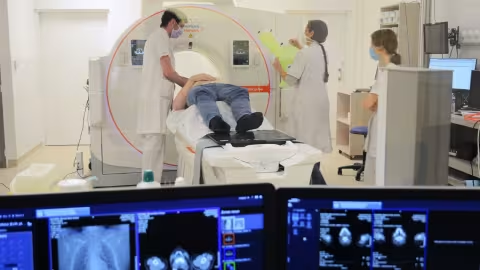
Since September 2026, Gustave Roussy's Department of Medical Imaging has been equipped with a second photon-counting CT scanner, delivering higher image resolution while reducing the doses of X-rays and contrast agent administered to patients. This technology recently enabled the Institute to perform an iodine-free pulmonary CT angiogram, a world first.

-
Prevention and screening: getting ahead of lung cancer
To mark Thoracic Cancer Awareness Month and Tobacco-Free Month, two campaigns focusing on lung cancer, Gustave Roussy highlights its initiatives to advance prevention and screening among people at increased risk. Since its creation in 2021, the Institute’s Interception Lung programme has welcomed more than 900 participants, supporting them to stop smoking and offering personalised screening for the disease.
-
Gustave Roussy Meets His Audience
As part of its awareness-raising and fundraising efforts, Gustave Roussy is currently conducting a door-to-door outreach campaign in several towns in Val-de-Marne (Fresnes, Vitry-sur-Seine, Nogent-sur-Marne, Bry-sur-Marne, Le Kremlin-Bicêtre) from Monday through Saturday, 1:30 p.m. to 8:00 p.m.

-
Mens November: Take care of your jewelry its precious!
November is the month dedicated to raising awareness and promoting prevention of male cancers, which include prostate, testicular, and penile cancers. The goal is to raise public awareness of these diseases—which account for approximately 63,000 new cases in France each year—and to encourage men to perform testicular self-exams, a simple step that can help detect a lump, the nature of which must then be determined through further medical examinations. Gustave Roussy has extensive expertise in the treatment of male cancers, particularly through its Genitourinary Oncology Committee, which is deeply involved in research on these diseases.