Transatlantic Exchange: Joint Interview with Dr. Toni Choueiri (Dana-Farber) and Prof. Karim Fizazi (Gustave Roussy)
On 19 March, the 4th edition of the Transatlantic Exchanges took place in Paris—a scientific day co-organised by Gustave Roussy and the Dana-Farber Cancer Institute with support from the Servier Institute. Dr. Toni Choueiri (Dana-Farber) and Prof. Karim Fizazi (Gustave Roussy), co-chairs of the event, reflect on the key themes of this edition, dedicated to radiopharmaceutical therapies.
Published on
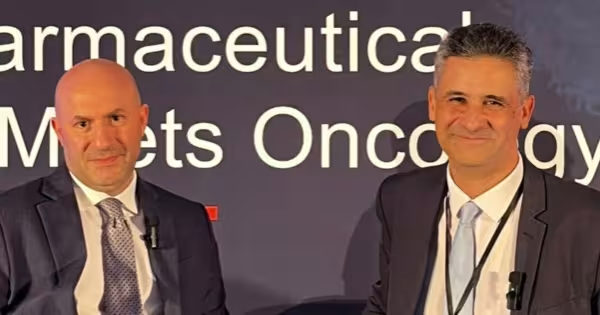
On 19 March, the 4th edition of the Transatlantic Exchanges took place in Paris—a scientific day co-organised by Gustave Roussy and the Dana-Farber Cancer Institute with support from the Servier Institute. Dr. Toni Choueiri (Dana-Farber) and Prof. Karim Fizazi (Gustave Roussy), co-chairs of the event, reflect on the key themes of this edition, dedicated to radiopharmaceutical therapies.
Why did you choose radiopharmaceutical therapies as this year’s theme?
Dr. Toni Choueiri: This field is progressing rapidly, with many treatments currently under development. Yet, the clinical steps leading to a new radiopharmaceutical are still not fully understood by many physicians and researchers. This meeting between our two institutions is, therefore, a unique opportunity to gain a deeper understanding of this issue.
Prof. Karim Fizazi: Both Gustave Roussy and Dana-Farber are heavily invested in this field. The event provided an opportunity to present promising research on PSMA targeting, notably used in the treatment of prostate cancer. It is a therapeutic approach that is set to keep evolving.
Dr. Toni Choueiri: Absolutely. And interesting prospects are emerging in other cancers, such as breast cancer. We are also seeing the growing use of antibody-drug conjugates, which might eventually be combined with radioisotopes. For that, close collaboration with physicists and chemists is essential.
How does the partnership between Gustave Roussy and Dana-Farber take shape throughout the year?
Prof. Karim Fizazi: Beyond this annual event, we conduct scientific exchanges all year long. We send young talents from Gustave Roussy—doctors, pharmacists, researchers—to Boston to strengthen their expertise. Some are currently working in Toni’s lab. This program serves as a genuine springboard, and we hope it will soon become reciprocal.
Dr. Toni Choueiri: I hope so too. We have already received many applications from people keen to come to Paris.
On what subject will the next edition of the Transatlantic Exchanges focus on?
Dr. Toni Choueiri: Following this fourth edition, we will regroup to plan the fifth meeting, which will take place next year in Boston.
Prof. Karim Fizazi: A few years ago, therapeutic options in oncology were limited to chemotherapy and radiotherapy. Today, they have expanded to targeted therapies, immunotherapy, CAR-T cells... There are still many topics to explore.
Why are events like this so important to the scientific community?
Dr. Toni Choueiri: These meetings are essential. Even though the ocean separates us, we share the same core values: care, research, teaching, and innovation. The Transatlantic Exchanges strengthen our ties.
Prof. Karim Fizazi: Each edition provides the opportunity to address a key issue in oncology—this year, radiopharmaceuticals, previously AI, immunotherapy or liquid biopsy. These exchanges foster new ideas and improve patient care. It is a valuable collaboration between France and the United States.
Last news
-
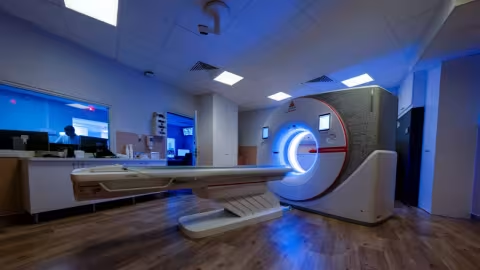
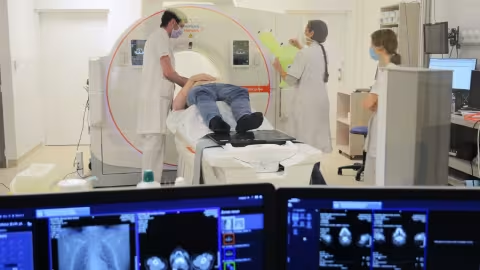
Two photon-counting CT scanners now equip Gustave Roussy's imaging department
Since September 2026, Gustave Roussy's Department of Medical Imaging has been equipped with a second photon-counting CT scanner, delivering higher image resolution while reducing the doses of X-rays and contrast agent administered to patients. This technology recently enabled the Institute to perform an iodine-free pulmonary CT angiogram, a world first.
-
Prevention and screening: getting ahead of lung cancer
To mark Thoracic Cancer Awareness Month and Tobacco-Free Month, two campaigns focusing on lung cancer, Gustave Roussy highlights its initiatives to advance prevention and screening among people at increased risk. Since its creation in 2021, the Institute’s Interception Lung programme has welcomed more than 900 participants, supporting them to stop smoking and offering personalised screening for the disease.
-
Gustave Roussy Meets His Audience
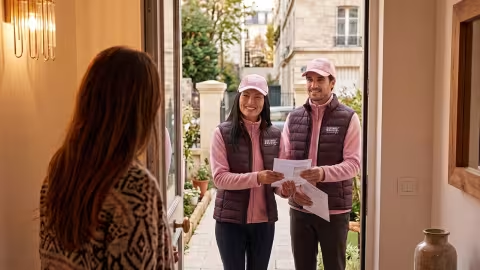
As part of its awareness-raising and fundraising efforts, Gustave Roussy is currently conducting a door-to-door outreach campaign in several towns in Val-de-Marne (Fresnes, Vitry-sur-Seine, Nogent-sur-Marne, Bry-sur-Marne, Le Kremlin-Bicêtre) from Monday through Saturday, 1:30 p.m. to 8:00 p.m.
-
Mens November: Take care of your jewelry its precious!
November is the month dedicated to raising awareness and promoting prevention of male cancers, which include prostate, testicular, and penile cancers. The goal is to raise public awareness of these diseases—which account for approximately 63,000 new cases in France each year—and to encourage men to perform testicular self-exams, a simple step that can help detect a lump, the nature of which must then be determined through further medical examinations. Gustave Roussy has extensive expertise in the treatment of male cancers, particularly through its Genitourinary Oncology Committee, which is deeply involved in research on these diseases.