The FOSTER-CabOs project has received funding for a clinical trial concerning osteosarcoma
The ARC Foundation, which has joined forces with four European cancer charities under the ATTRACT grant, awards funding to the FOSTER-CabOS project. The grant obtained through this call for projects will fund a European Phase III clinical trial to evaluate cabozantinib, a tyrosine kinase inhibitor, to treat osteosarcoma, a rare type cancer.
Published on
Changed on
The ARC Foundation, which has joined forces with four European cancer charities under the ATTRACT grant, awards funding to the FOSTER-CabOS project. The grant obtained through this call for projects will fund a European Phase III clinical trial to evaluate cabozantinib, a tyrosine kinase inhibitor, to treat osteosarcoma, a rare type cancer.
Related to the ATTRACT call for projects, the Foster (Fight OsteoSarcoma Through European Research) consortium has received funding to complete a European phase III clinical trial concerning osteosarcoma, a rare type of cancer that can affect teenagers, young adults and older people. This news is encouraging for patients and their relatives. For 40 years, no new treatment has received approval to fight this type of bone cancer. The FOSTER-CabOs clinical trial is coordinated at the European level by the doctor Nathalie Gaspar, oncopediatrician at Gustave Roussy. It aims to add a new 12 months maintenance therapy with cabozantinib after the end of the first line standard therapy protocol. The trial is randomized against placebo to evaluate the effectiveness of cabozantinib. This new therapy aims to improve the survival without events of patients. The acute toxicity of this oral treatment is different from chemotherapy. The benefit/risk balance of the drug will be assessed by observing side effects, as well as the potential impact of this maintenance treatment on quality of life.
Cabozantinib is a tyrosine kinase inhibitor with multiple targets. These types of inhibitors attack cancer cells that over-express molecules involved in tumor growth and the development of metastasis. They aim to prevent a relapse among patients that have already received a standard treatment for osteosarcoma.
The analysis realized in this European trial will allow to decide if the maintenance therapy with cabozantinib must be included in a future standard treatment for patients with osteosarcoma.
In practice
The randomized trial will compare different patients groups, through a process called stratification, based on usual prognostic factors (e.g. metastatic status when the diagnosis is performed, a bad histological response to chemotherapy …).
Ancillary biological studies (biopsies, blood samples) at diagnosis and during treatment will help identify other biomarkers of efficacy, improve the biological comprehension and adapt the treatment to the disease better.
In practice, patients with osteosarcoma, eligible for the trial and willing to participate, will be invited to give their consent to :
- Participate in the randomized trial at the end of the standard treatment, and receive for 12 months after the end of the treatment either cabozantinib, or a placebo, attributed randomly.
- Participate in auxiliary biological studies.
This protocol follows the Accelerate-Fair (Fostering Age Inclusive Research), allowing all patients to participate, whatever their age is, and if they do not have a counter-indication to cabozantinib.
Last news
-
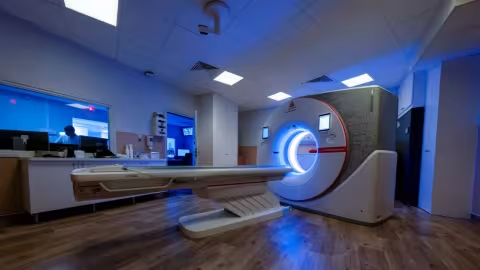
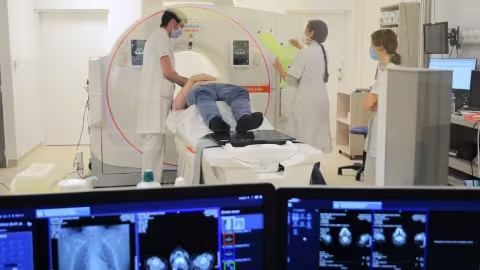
Two photon-counting CT scanners now equip Gustave Roussy's imaging department
Since September 2026, Gustave Roussy's Department of Medical Imaging has been equipped with a second photon-counting CT scanner, delivering higher image resolution while reducing the doses of X-rays and contrast agent administered to patients. This technology recently enabled the Institute to perform an iodine-free pulmonary CT angiogram, a world first.
-
Prevention and screening: getting ahead of lung cancer
To mark Thoracic Cancer Awareness Month and Tobacco-Free Month, two campaigns focusing on lung cancer, Gustave Roussy highlights its initiatives to advance prevention and screening among people at increased risk. Since its creation in 2021, the Institute’s Interception Lung programme has welcomed more than 900 participants, supporting them to stop smoking and offering personalised screening for the disease.
-
Gustave Roussy Meets His Audience
As part of its awareness-raising and fundraising efforts, Gustave Roussy is currently conducting a door-to-door outreach campaign in several towns in Val-de-Marne (Fresnes, Vitry-sur-Seine, Nogent-sur-Marne, Bry-sur-Marne, Le Kremlin-Bicêtre) from Monday through Saturday, 1:30 p.m. to 8:00 p.m.

-
Mens November: Take care of your jewelry its precious!
November is the month dedicated to raising awareness and promoting prevention of male cancers, which include prostate, testicular, and penile cancers. The goal is to raise public awareness of these diseases—which account for approximately 63,000 new cases in France each year—and to encourage men to perform testicular self-exams, a simple step that can help detect a lump, the nature of which must then be determined through further medical examinations. Gustave Roussy has extensive expertise in the treatment of male cancers, particularly through its Genitourinary Oncology Committee, which is deeply involved in research on these diseases.