
Cervical Cancer: Get Vaccinated, Get Screened, and Act Quickly
Cervical cancer affects approximately 3,000 women in France each year, even though more than nine out of 10 cases could be prevented through vaccination and regular screening. At Gustave Roussy, the InstaDiag Gynéco pathway now enables rapid diagnosis in cases of suspected cervical cancer.
Published on

The month of June is dedicated to prevention and awareness of cervical cancer, the fourth most common cancer among women worldwide. In France, more than 3,000 new cases are diagnosed each year and nearly 1,000 deaths are recorded, according to figures from the National Cancer Institute [1].
Get Vaccinated
Cervical cancer is largely preventable: in 90% of cases, it is linked to infection with the human papillomavirus (HPV), a very common sexually transmitted virus for which a vaccine is available. It is estimated that 80% of women and men will be exposed to HPV during their lifetime. HPV is also implicated in cancers of the anus, penis, vagina, vulva, and oropharynx (throat, tonsils, and base of the tongue).
In France, the vaccine is available to girls and boys aged 11 to 14 (two doses), particularly as part of school-based vaccination campaigns in seventh grade. Catch-up vaccination is also available for those aged 15 to 19 (three doses), and, following a recommendation from the Haute Autorité de Santé issued in May 2025, it has now been extended to individuals up to age 26.
In Australia, where vaccination of young people is widespread, the rate of precancerous cervical lesions has dropped from 13.6% to 3.9% [2] over 10 years. In France, vaccination coverage remains insufficient: in 2024, only 48% of 16-year-old girls and 24.5% of 16-year-old boys had completed the full vaccination series, far short of the threshold required for herd immunity. The National Cancer Institute’s 10-Year Cancer Control Strategy for 2021–2030 sets a vaccination coverage target of 80% by 2030 [3].
Getting Screened
Screening helps identify chronic infection with a high-risk (oncogenic) HPV strain and detect and treat precancerous lesions before they progress to cervical cancer. However, this disease remains the 11th leading cause of cancer-related death among women in France, with more than 1,000 deaths per year. Hence the importance of the national screening program launched in 2018, for women whether vaccinated or not. This screening program is based on:
- Ages 25 to 29: two Pap smears (cytological exams) one year apart to check for abnormal cells. If both results are normal, another screening is performed three years later.
- Ages 30 to 65: A PCR test is performed directly on the Pap smear to detect the presence of a so-called high-risk oncogenic HPV virus (HPV-HR test). If the test is positive, the Pap smear is then examined for abnormal cells. This PCR test should be performed every five years, beginning either three years after the last normal Pap test or at age 30 if no screening has yet been performed. It is the chronic presence of the virus (several consecutive positive test results) that is a potential risk factor for cellular transformation.
In France, gynecological checkups are not mandatory (except during pregnancy), but are recommended starting when a woman becomes sexually active, with a primary care physician, midwife, or gynecologist. Apart from regular checkups (which only 60% of women undergo), certain symptoms should prompt an immediate visit to a healthcare provider:
- Abnormal vaginal bleeding;
- Pain during intercourse;
- Unusual discharge;
- Pelvic or lower back pain.
Act Fast
To reduce stress and speed up diagnosis following a concerning gynecological exam, Gustave Roussy launched the InstaDiag Gynéco care pathway in 2024.
This program is intended for women presenting with:
- A suspicious abnormality of the cervix, vulva, or ovary,
- Postmenopausal bleeding with endometrial thickening,
- Abdominal effusion suggestive of a disease of the peritoneum.
The necessary tests (imaging, laboratory tests, and biopsies) are scheduled over a period of one week (cervix, vulva, endometrium) to two weeks (ovary, fallopian tube, peritoneum), with a multidisciplinary team. In the event of cancer, treatment at Gustave Roussy begins immediately.
This care pathway is available to all patients, either directly or through their doctor:
By phone: 01 42 11 26 24
By email: gynecologie@gustaveroussy.fr
Via the online appointment platform
[1] Overview of Cancers in France – 2024 Edition – September 20, 2024 – National Cancer Institute.
[2] Human Papillomavirus (HPV)—General Information (PDF document)—January 2021—National HPV Reference Center (CNR).
[3] Ten-Year Strategy to Combat Cancer 2021–2030: Progress for All, Hope for Tomorrow - National Cancer Institute.
Last news
-
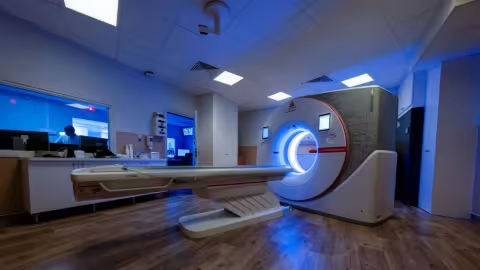
Two photon-counting CT scanners now equip Gustave Roussy's imaging department
Since September 2026, Gustave Roussy's Department of Medical Imaging has been equipped with a second photon-counting CT scanner, delivering higher image resolution while reducing the doses of X-rays and contrast agent administered to patients. This technology recently enabled the Institute to perform an iodine-free pulmonary CT angiogram, a world first.
-
Prevention and screening: getting ahead of lung cancer
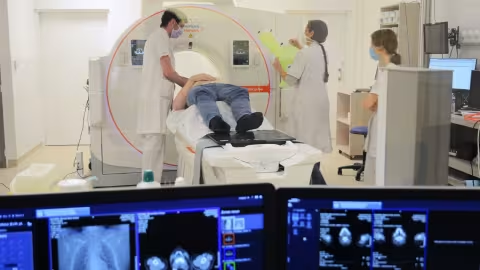
To mark Thoracic Cancer Awareness Month and Tobacco-Free Month, two campaigns focusing on lung cancer, Gustave Roussy highlights its initiatives to advance prevention and screening among people at increased risk. Since its creation in 2021, the Institute’s Interception Lung programme has welcomed more than 900 participants, supporting them to stop smoking and offering personalised screening for the disease.
-
Gustave Roussy Meets His Audience
As part of its awareness-raising and fundraising efforts, Gustave Roussy is currently conducting a door-to-door outreach campaign in several towns in Val-de-Marne (Fresnes, Vitry-sur-Seine, Nogent-sur-Marne, Bry-sur-Marne, Le Kremlin-Bicêtre) from Monday through Saturday, 1:30 p.m. to 8:00 p.m.

-
Mens November: Take care of your jewelry its precious!
November is the month dedicated to raising awareness and promoting prevention of male cancers, which include prostate, testicular, and penile cancers. The goal is to raise public awareness of these diseases—which account for approximately 63,000 new cases in France each year—and to encourage men to perform testicular self-exams, a simple step that can help detect a lump, the nature of which must then be determined through further medical examinations. Gustave Roussy has extensive expertise in the treatment of male cancers, particularly through its Genitourinary Oncology Committee, which is deeply involved in research on these diseases.