
Insomnia: a major public health issue
National Sleep Day, which falls on March 17th, is an opportunity to highlight that nearly 60% of cancer patients suffer from insomnia during and after treatment. Non-pharmacological solutions exist for treating this disorder.
Published on

National Sleep Day, which falls on March 17th, is an opportunity to highlight that nearly 60% of cancer patients suffer from insomnia during and after treatment. Non-pharmacological solutions exist for treating this disorder.

A common symptom in oncology, insomnia can be associated with anxiety or memory problems and an increased risk of depression. Cognitive-behavioral therapy (CBT) is an effective non-pharmacological intervention for treating insomnia. However, it remains difficult for patients to access due to a lack of trained healthcare professionals in the area, the distance patients have to travel to access resources, and the impact of cancer-related symptoms and treatments on mobility.
To address these barriers, digital solutions and online care devices can help patients to access better care.
Online care program
The Sleep-4-all-2.0 study, led by Gustave Roussy with the participation of the Montpellier Cancer Institute and the Léon Berard Center, and funded by the National Cancer Institute, targets insomnia in oncology. It offers patients suffering from insomnia during or after treatment the opportunity to participate in the Insomnet program, which is based on cognitive-behavioral therapy. This online solution was scientifically constructed and validated by a team from Quebec.
To help patients suffering from insomnia to follow this program over time and to appropriate the techniques proposed, the Sleep-4-All-2.0 study provides reinforced support by a psychologist trained in the cognitive-behavioral approach, including the planning of systematic telephone interviews before, during, and at the end of this 6- to 12-week program. Its main objective is to explore for which patients, at what time, and in what form professional support is crucial to resolve insomnia. To date, 318 patients have already been included in the study
The results of this study will contribute to improving knowledge of how to support patients in facing these types of online therapeutic devices to better manage insomnia in oncology.
Last news
-
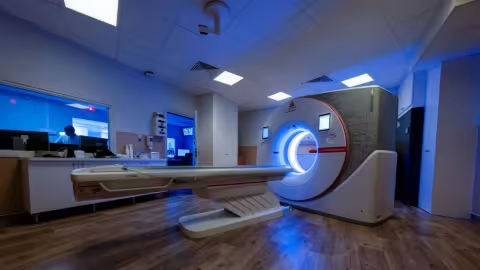
Two photon-counting CT scanners now equip Gustave Roussy's imaging department
Since September 2026, Gustave Roussy's Department of Medical Imaging has been equipped with a second photon-counting CT scanner, delivering higher image resolution while reducing the doses of X-rays and contrast agent administered to patients. This technology recently enabled the Institute to perform an iodine-free pulmonary CT angiogram, a world first.
-
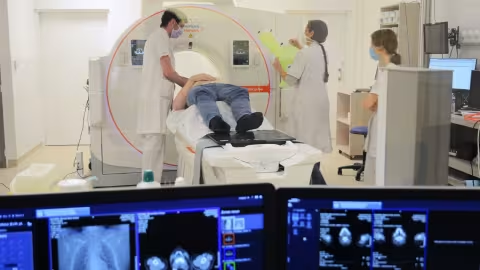
Prevention and screening: getting ahead of lung cancer
To mark Thoracic Cancer Awareness Month and Tobacco-Free Month, two campaigns focusing on lung cancer, Gustave Roussy highlights its initiatives to advance prevention and screening among people at increased risk. Since its creation in 2021, the Institute’s Interception Lung programme has welcomed more than 900 participants, supporting them to stop smoking and offering personalised screening for the disease.
-
Gustave Roussy Meets His Audience
As part of its awareness-raising and fundraising efforts, Gustave Roussy is currently conducting a door-to-door outreach campaign in several towns in Val-de-Marne (Fresnes, Vitry-sur-Seine, Nogent-sur-Marne, Bry-sur-Marne, Le Kremlin-Bicêtre) from Monday through Saturday, 1:30 p.m. to 8:00 p.m.

-
Mens November: Take care of your jewelry its precious!
November is the month dedicated to raising awareness and promoting prevention of male cancers, which include prostate, testicular, and penile cancers. The goal is to raise public awareness of these diseases—which account for approximately 63,000 new cases in France each year—and to encourage men to perform testicular self-exams, a simple step that can help detect a lump, the nature of which must then be determined through further medical examinations. Gustave Roussy has extensive expertise in the treatment of male cancers, particularly through its Genitourinary Oncology Committee, which is deeply involved in research on these diseases.