Understanding and Preventing the Rise of Cancer in 20- to 40-Year-Olds: A Challenge for an Entire Generation
The number of cancers diagnosed in people under 50 is increasing worldwide, affecting a growing number of young adults in the midst of their working lives. In response to this worrying trend, researchers and clinicians are collaborating to understand the causes, enhance prevention, and refine screening strategies. The aim: to turn this health alert into a driver of action and hope for generations to come.
Published on

The number of cancers diagnosed in people under 50 is increasing worldwide, affecting a growing number of young adults in the midst of their working lives. In response to this worrying trend, researchers and clinicians are collaborating to understand the causes, enhance prevention, and refine screening strategies. The aim: to turn this health alert into a driver of action and hope for generations to come.

Once regarded as a disease of old age, cancer is now increasingly affecting young adults, with the incidence of these early-onset tumours rising globally, according to an article published on 3 September 2025 in ESMO Open and co-authored by physician-researchers at Gustave Roussy.
20- to 40-Year-Olds on the Front Line
Long considered a low-risk age group, 20- to 40-year-olds are being diagnosed with cancer more and more often. Biologically, young adults are in a unique life stage: they have completed puberty but have not yet experienced the effects of ageing (reduced hormone production, weakening of the immune system, onset of chronic diseases). These patients are often in the process of building their professional, family and social lives. Diagnosis is frequently delayed: young adults, believing themselves to be healthy, tend to downplay their symptoms, and screening programmes—apart from cervical screening—rarely target those under 40.
In 2022, there were more than 1.2 million new cases and 350,000 deaths worldwide among this age group. These cancers often affect the digestive system (colorectal, stomach, liver, pancreas), as well as the breast, thyroid, kidneys, testicles, and even, in some cases, the lungs of young non-smokers.
The trend is particularly pronounced among women, whose incidence rates now exceed those of men of the same age, largely due to breast and thyroid cancers. By 2050, projections indicate a 13% increase in both cases and deaths linked to early-onset cancers.
The exact causes of this rise remain to be clarified. Researchers suggest several possible contributing factors: increasing rates of obesity, pollution, endocrine disruptors, diet, sedentary lifestyles, and early exposure to certain treatments and environmental agents.
To address this significant global public health challenge, Gustave Roussy has launched the POWER for YA programme, a dedicated research initiative focused on cancers in individuals aged 20 to 40. Its goal is to intensify research, rethink prevention, and raise awareness among younger generations.
Source
F. André, E. Rassy, B. Achutti-Duso, A. Boilève, C. Smolenschi, S. Delaloge, F. Barlesi,
The rising tides of cancers among young adults
ESMO Open, Volume 10, Issue 9, 2025, 105553, ISSN 2059-7029,
https://doi.org/10.1016/j.esmoop.2025.105553
https://www.sciencedirect.com/science/article/pii/S205970292501422X
Last news
-
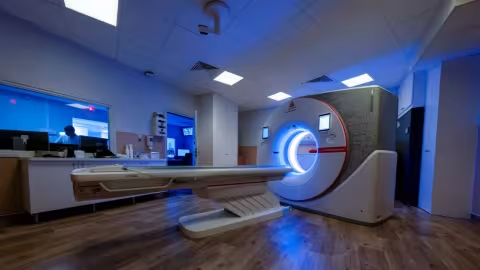
Two photon-counting CT scanners now equip Gustave Roussy's imaging department
Since September 2026, Gustave Roussy's Department of Medical Imaging has been equipped with a second photon-counting CT scanner, delivering higher image resolution while reducing the doses of X-rays and contrast agent administered to patients. This technology recently enabled the Institute to perform an iodine-free pulmonary CT angiogram, a world first.
-
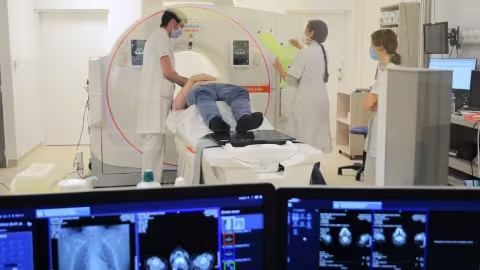
Prevention and screening: getting ahead of lung cancer
To mark Thoracic Cancer Awareness Month and Tobacco-Free Month, two campaigns focusing on lung cancer, Gustave Roussy highlights its initiatives to advance prevention and screening among people at increased risk. Since its creation in 2021, the Institute’s Interception Lung programme has welcomed more than 900 participants, supporting them to stop smoking and offering personalised screening for the disease.
-
Gustave Roussy Meets His Audience
As part of its awareness-raising and fundraising efforts, Gustave Roussy is currently conducting a door-to-door outreach campaign in several towns in Val-de-Marne (Fresnes, Vitry-sur-Seine, Nogent-sur-Marne, Bry-sur-Marne, Le Kremlin-Bicêtre) from Monday through Saturday, 1:30 p.m. to 8:00 p.m.

-
Mens November: Take care of your jewelry its precious!
November is the month dedicated to raising awareness and promoting prevention of male cancers, which include prostate, testicular, and penile cancers. The goal is to raise public awareness of these diseases—which account for approximately 63,000 new cases in France each year—and to encourage men to perform testicular self-exams, a simple step that can help detect a lump, the nature of which must then be determined through further medical examinations. Gustave Roussy has extensive expertise in the treatment of male cancers, particularly through its Genitourinary Oncology Committee, which is deeply involved in research on these diseases.