Welcome to the new Gustave Roussy website
A new website designed to offer you a simpler, clearer, and more intuitive experience. Patients, caregivers, healthcare professionals, and donors: find information, news, and services more easily.
Sarcoma surgery at Gustave Roussy
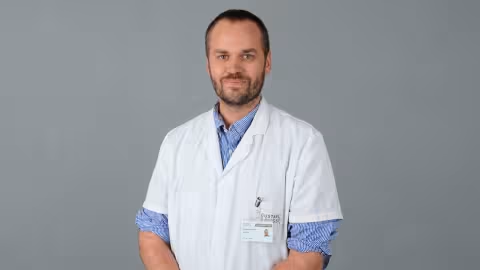
3 questions to Dr Charles Honoré, head of sarcoma surgery at Gustave Roussy
Published on
Changed on
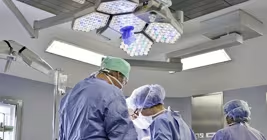
3 questions to Dr Charles Honoré, head of sarcoma surgery at Gustave Roussy
What are the features of sarcoma surgery?
These rare malignant tumours develop from connective and support tissues. Each year they affect more than 4,000 people in France. Their locations are extremely varied and more than 50 different sub-types exist, capable of appearing at any age, including in children. In general, this disease is poorly understood though it requires very specific management, notably surgical, in which practitioner expertise is essential.
Gustave Roussy is one of three expert coordinating centres at the national level for sarcomas. What does this mean?
We are the institution which treats the most patients. We have a team of specialists, all experts in this field. In the case of certain tumour locations, we maintain a close collaboration with our partners at the Bicêtre CHU and at the Marie-Lannelongue du Plessis-Robinson medico-surgical Centre. Moreover, we provide consultative assistance to all our colleagues in order to assure patients of the best possible management, wherever they may be.
What are the prospects regarding your activities?
Our surgical projects pursue three main lines: research, both clinical and fundamental, with several projects involving rare complex tumours; training which, in the field of sarcomas, is still in its infancy in France; and patient care, with notably the development of a “day centre” as well as early rehabilitation programmes and mini-invasive robotic surgery for certain selected indications.
Last news
-
Mens November: Take care of your jewelry its precious!
November is the month dedicated to raising awareness and promoting prevention of male cancers, which include prostate, testicular, and penile cancers. The goal is to raise public awareness of these diseases—which account for approximately 63,000 new cases in France each year—and to encourage men to perform testicular self-exams, a simple step that can help detect a lump, the nature of which must then be determined through further medical examinations. Gustave Roussy has extensive expertise in the treatment of male cancers, particularly through its Genitourinary Oncology Committee, which is deeply involved in research on these diseases.

-
Nuclear medicine: DART, a pioneering platform for the development of alpha therapy
Developed through a partnership between Gustave Roussy and the Paris-Saclay Cancer Cluster, the DART project aims to provide industry partners with a centre of excellence spanning preclinical, clinical and translational research to support the development of alpha therapy. This innovative nuclear medicine approach can destroy cancer cells more powerfully than standard approaches while reducing damage to surrounding healthy cells.
-
Gustave Roussy at the ESMO 2026 Congress
The European Society for Medical Oncology (ESMO) is holding its annual congress from 23 to 27 October in Madrid, Spain. This major international event provides oncologists and researchers from around the world with an opportunity to present the latest findings from clinical studies aimed at improving cancer care and deepening our understanding of the disease. Once again, this year, physicians and researchers from Gustave Roussy have contributed to several dozen studies that will be presented during the five-day congress.
-
5 questions with Dr François-Xavier Danlos about therapeutic cancer vaccines
Therapeutic cancer vaccines are making significant progress in clinical development. The ESMO Congress, which begins on 23 October, will provide an opportunity to learn about new data on a therapeutic vaccine against melanoma. However, there are major differences between vaccines traditionally used to prevent disease and therapeutic cancer vaccines. Dr François-Xavier Danlos, a medical oncologist in Gustave Roussy’s Drug Development Department and a specialist in immunotherapy development, explains.