Welcome to the new Gustave Roussy website
A new website designed to offer you a simpler, clearer, and more intuitive experience. Patients, caregivers, healthcare professionals, and donors: find information, news, and services more easily.
Throat cancer and HPV: better understanding for better protection
On World Human Papillomavirus (HPV) Awareness Day, Gustave Roussy is drawing attention to oropharyngeal cancers – throat cancers affecting the tonsils, soft palate, base of the tongue, and the back of the throat. In many cases, the cause is the human papillomavirus (HPV), a virus transmitted mainly through sexual contact that affects both men and women.
Published on
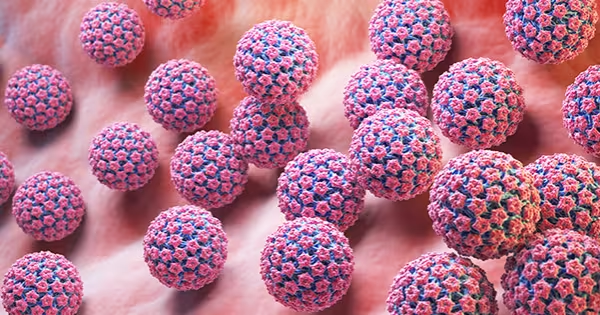
On World Human Papillomavirus (HPV) Awareness Day, Gustave Roussy is drawing attention to oropharyngeal cancers – throat cancers affecting the tonsils, soft palate, base of the tongue, and the back of the throat. In many cases, the cause is the human papillomavirus (HPV), a virus transmitted mainly through sexual contact that affects both men and women.
An extremely common virus
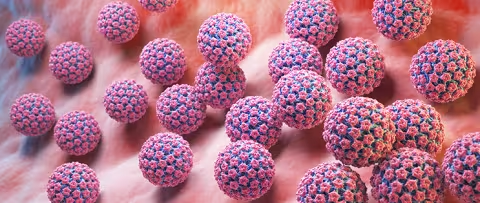
Human papillomaviruses, known as HPV, are extremely common viruses with more than 200 subtypes. They can be transmitted through skin-to-skin contact, infecting the skin, or through sexual contact, infecting the mucous membranes of the anal, genital, and oral regions. It is estimated that around 70% to 80% of sexually active men and women will be exposed to HPV at some point in their lives. Most of these infections are harmless, but some forms are oncogenic. This means that infection may be followed, several years later, by the development of cancer.
Nearly 100% of cervical cancers are attributable to HPV infection. These viruses are also responsible for cancers in the ear, nose, and throat (ENT) region, mainly affecting the throat, as well as cancers of the vagina, vulva, anus, and penis.
Also transmitted orally
Oral HPV infection can be contracted through oral–genital sexual contact. The virus is transmitted from an infected area to uninfected oral mucosa, for example, through microscopic tears invisible to the naked eye. It is a common infection: studies have shown that at a given time, around 10% of men and 4% of women have an oropharyngeal HPV infection.
Most oral or genital infections are transient and are cleared by the immune system. Only a minority persist and may, in some cases, progress to a cancerous lesion – a process that takes several years.
Specific types of cancer
In France, around 1,200 HPV-related oropharyngeal cancers are diagnosed each year. More broadly, HPV infections are responsible for approximately 6,300 cancers annually, across all anatomical sites combined. HPV-associated ENT cancers predominantly affect men, who account for around three out of four cases[1].
HPV-induced ENT cancers differ from those caused by tobacco and alcohol, the two main risk factors for these types of tumours. HPV-related cancers characteristically develop primarily in the oropharynx – that is, the throat – more specifically on the tonsils and the base of the tongue. The affected population is generally younger and has little or no history of smoking.
HPV-induced tumours, however, respond better to treatment, resulting in an improved prognosis for patients.
An effective preventive vaccine
There is a safe and effective vaccine to protect against HPV infections. In France, the vaccine in use protects against nine different types of HPV, including those most frequently responsible for cancer. Vaccination can therefore prevent up to 90% of HPV infections that may lead to cancer.
To optimise its effectiveness, vaccination should take place before the onset of sexual activity in girls and boys, that is, before any possible exposure to papillomaviruses. However, catch-up vaccination is available up to the age of 26.
In France, HPV vaccination is recommended:
- For all girls and boys aged 11 to 14, with two doses administered five months apart. Vaccination is offered free of charge in secondary schools to pupils in Years 8 and 9, subject to parental consent.
- As a catch-up programme for all girls and boys aged 15 to 26 inclusive, in which case three doses are required.
To arrange vaccination, you can seek advice from your GP, pharmacist, midwife, nurse, or a municipal or departmental vaccination service.
An HPV Group at Gustave Roussy
In 2022, Gustave Roussy established an “HPV Group” to promote multidisciplinary care and research into HPV-induced cancers. The group brings together gynaecologists, proctologists, dermatologists, ENT specialists, oncologists, surgeons, virologists, pathologists, public health physicians, and researchers, with the ambition of developing a clinical and translational research programme focused on all HPV-induced cancers.
Its objective is both to improve access to therapeutic innovation and to foster multidisciplinary care and research at the time of diagnosis and treatment, as well as in prevention and screening.
[1] Badoual C. et al. Les cancers des voies aérodigestives supérieures induits par une infection par Papillomavirus humain : spécificités épidémiologiques, diagnostiques, pronostiques et thérapeutiques. Bull Acad Natl Med. 2022. doi:10.1016/j.banm.2022.10.019
Last news
-
Nuclear medicine: DART, a pioneering platform for the development of alpha therapy
Developed through a partnership between Gustave Roussy and the Paris-Saclay Cancer Cluster, the DART project aims to provide industry partners with a centre of excellence spanning preclinical, clinical and translational research to support the development of alpha therapy. This innovative nuclear medicine approach can destroy cancer cells more powerfully than standard approaches while reducing damage to surrounding healthy cells.
-
Gustave Roussy at the ESMO 2026 Congress
The European Society for Medical Oncology (ESMO) is holding its annual congress from 23 to 27 October in Madrid, Spain. This major international event provides oncologists and researchers from around the world with an opportunity to present the latest findings from clinical studies aimed at improving cancer care and deepening our understanding of the disease. Once again, this year, physicians and researchers from Gustave Roussy have contributed to several dozen studies that will be presented during the five-day congress.
-
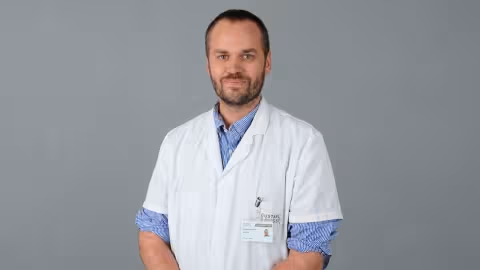
5 questions with Dr François-Xavier Danlos about therapeutic cancer vaccines
Therapeutic cancer vaccines are making significant progress in clinical development. The ESMO Congress, which begins on 23 October, will provide an opportunity to learn about new data on a therapeutic vaccine against melanoma. However, there are major differences between vaccines traditionally used to prevent disease and therapeutic cancer vaccines. Dr François-Xavier Danlos, a medical oncologist in Gustave Roussy’s Drug Development Department and a specialist in immunotherapy development, explains.
-
ADCs: Two Landmark Publications in Cancer Cell and Nature Medicine Showcase Gustave Roussy's Expertise
In less than two months, researchers and clinicians from Gustave Roussy have contributed to two major publications on Antibody-Drug Conjugates (ADCs) in Cancer Cell and Nature Medicine. Together, these papers provide both a comprehensive overview of current knowledge and a strategic vision to accelerate the development of the next generation of these innovative therapies.