
Cancers Affecting Women
Every year in France, nearly 190,000 women are diagnosed with cancer
Published on
Changed on

Every year in France, nearly 190,000 women are diagnosed with cancer, according to figures from the National Cancer Institute (Inca). Among these thousands of detected tumors, some are unique in that they affect exclusively or almost exclusively women, requiring specialized care and dedicated healthcare professionals.
Gustave Roussy, the leading cancer center in France and Europe, is recognized for its expertise in the prevention, screening, and treatment of women’s cancers.
Breast Cancer
Overview and Key Statistics
Breast cancer results from the abnormal growth of certain breast cells, which multiply and form a mass, also known as a tumor. Most breast cancers develop in the cells lining the milk ducts, which carry milk from the glands to the nipple. This is known as ductal carcinoma. Lobular carcinoma, on the other hand, originates in the cells of the lobules, which are the milk-producing glands. Other, rarer types of breast cancer exist, such as inflammatory breast cancer, Paget’s disease of the breast, and triple-negative breast cancer.
In 2023, more than 60,000 new cases of breast cancer were diagnosed in France, making this the most common type of tumor among women and, therefore, the most prevalent form of cancer affecting women. It is responsible for another 12,000 deaths per year in France. It should be noted that although it develops in women in more than 99% of cases, men can also be affected by breast cancer.
According to figures from the national health insurance system, breast cancer accounts for 33% of all cancers in women, and more than 80% of cases are diagnosed after age 50, with an average age at diagnosis of 64.
Nearly 90% of women diagnosed with breast cancer in France recover. However, some women with more aggressive forms of the disease have a lower chance of remission. Thus, 15% of breast cancers in France are triple-negative, meaning that the tumors lack hormone receptors (progesterone and estrogen) and the HER2 protein, making these cancers ineligible for treatment with hormone therapy or HER2 inhibitors.
Prevention and Diagnosis
The Interception program at Gustave Roussy aims to identify individuals at increased risk of cancer as early as possible in order to offer them personalized prevention and provide better care through a community-hospital collaboration.
In particular, a tailored care pathway is offered to individuals at increased risk of breast cancer, including women with a genetic predisposition (BRCA1, BRCA2, or PALB2 mutations), those who received radiation therapy to the chest before the age of 25, those with a significant family history of breast cancer, or those identified as being at increased risk based on a composite score.
At the same time, in 2024, Gustave Roussy celebrated the 20th anniversary of its “One-Day Breast Diagnosis” program, which is available to women with a breast abnormality detected during a radiological or clinical examination and suspected of having a malignant lesion. The tests required to reach a diagnosis are consolidated at a single location and completed in a single day.
Care
After a diagnosis is made, the breast pathology team at Gustave Roussy takes over to provide comprehensive care for breast cancer treatment: surgery, reconstructive surgery, chemotherapy, radiation therapy, targeted therapies, immunotherapies, post-treatment follow-up, and supportive care. The committee may also refer patients to clinical trials being conducted at Gustave Roussy.
Gynecologic Cancers

Overview and Key Statistics
Gynecologic cancers refer to all cancers that develop in a woman’s reproductive organs. They include:
- Endometrial cancers (cancers of the uterine body) — 8,224 new cases (1) per year in France.
- Ovarian, fallopian tube, and peritoneal cancers—5,913 new cases per year in France.
- Cervical cancers—2,920 new cases per year in France.
- Vulvar cancers – 838 new cases per year in France.
- Vaginal cancers—162 new cases per year in France.
- Rare gynecological or ovarian malignant tumors.
- Gynecologic sarcomas (uterine or other).
- Trophoblastic diseases.
All of these conditions are treated at Gustave Roussy by the gynecological committee.
Prevention and Diagnosis
Prevention of gynecologic cancers primarily involves raising awareness about vaccination against human papillomavirus (HPV). This virus is responsible for 99.7% of uterine cancers, 75% of vaginal cancers, and 69% of vulvar cancers. Although an effective and well-tolerated vaccine exists against the most serious infections—that is, those that cause precancerous lesions and cancers—vaccination coverage in France remains insufficient, at around 40% of women. Every year, 30,000 precancerous lesions and 8,000 cancers linked to human papillomavirus infections could be prevented in France if the vaccination rate among the population—boys and girls alike—exceeded 80%.
Regarding the diagnosis of gynecological cancers, Gustave Roussy offers the InstaDiag Gynéco program, designed to diagnose and provide rapid, tailored care to patients with suspicious results from an outpatient screening test. All appointments necessary for diagnosis, involving a multidisciplinary team, are scheduled within one week (for cervical, vulvar, and endometrial cancers) to two weeks (for peritoneal carcinomatosis).
Treatment
Once a diagnosis is made, treatment for gynecologic cancer may involve surgery, chemotherapy, radiation therapy, and brachytherapy. Immunotherapy is also offered to patients with cervical cancer, and has become the standard of care for this condition.
The Gynecology Committee at Gustave Roussy has developed expertise in fertility preservation as well as in the management of gynecologic cancers during pregnancy. The Institute is also one of the national centers of expertise accredited by the National Cancer Institute for the treatment of rare gynecological or ovarian malignant tumors (TMRG/TMRO). These must be distinguished from common tumor types and, as a result, require specific treatments. Finally, Gustave Roussy is a member of the RePPS and NetSarc networks, which specialize in the diagnosis and management of sarcomas.
(1) - All figures are taken from: “National Estimates of Cancer Incidence and Mortality in Metropolitan France between 1990 and 2018” – Volume 1: Solid Tumors. Santé publique France, July 2019.
Last news
-
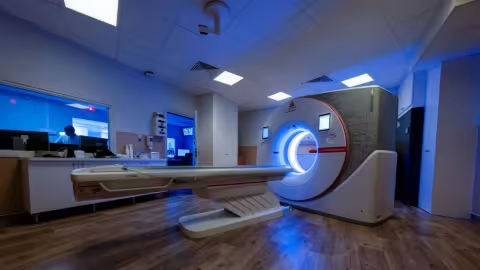
Two photon-counting CT scanners now equip Gustave Roussy's imaging department
Since September 2026, Gustave Roussy's Department of Medical Imaging has been equipped with a second photon-counting CT scanner, delivering higher image resolution while reducing the doses of X-rays and contrast agent administered to patients. This technology recently enabled the Institute to perform an iodine-free pulmonary CT angiogram, a world first.
-
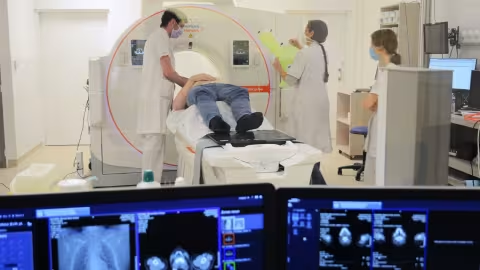
Prevention and screening: getting ahead of lung cancer
To mark Thoracic Cancer Awareness Month and Tobacco-Free Month, two campaigns focusing on lung cancer, Gustave Roussy highlights its initiatives to advance prevention and screening among people at increased risk. Since its creation in 2021, the Institute’s Interception Lung programme has welcomed more than 900 participants, supporting them to stop smoking and offering personalised screening for the disease.
-
Gustave Roussy Meets His Audience
As part of its awareness-raising and fundraising efforts, Gustave Roussy is currently conducting a door-to-door outreach campaign in several towns in Val-de-Marne (Fresnes, Vitry-sur-Seine, Nogent-sur-Marne, Bry-sur-Marne, Le Kremlin-Bicêtre) from Monday through Saturday, 1:30 p.m. to 8:00 p.m.

-
Mens November: Take care of your jewelry its precious!
November is the month dedicated to raising awareness and promoting prevention of male cancers, which include prostate, testicular, and penile cancers. The goal is to raise public awareness of these diseases—which account for approximately 63,000 new cases in France each year—and to encourage men to perform testicular self-exams, a simple step that can help detect a lump, the nature of which must then be determined through further medical examinations. Gustave Roussy has extensive expertise in the treatment of male cancers, particularly through its Genitourinary Oncology Committee, which is deeply involved in research on these diseases.