
Welcome to the new Gustave Roussy website
A new website designed to offer you a simpler, clearer, and more intuitive experience. Patients, caregivers, healthcare professionals, and donors: find information, news, and services more easily.
Cancers in Men
Men are the group most affected by cancer. Each year, approximately 240,000 men are diagnosed with cancer, and 90,000 die from it. These figures make cancer the leading cause of premature death among men.
Published on
Changed on

Certain cancers affect men more frequently, such as lung cancer (67% of newly diagnosed cases) and colorectal cancer (54% of newly diagnosed cases). Others develop exclusively in men. These include prostate, testicular, and penile cancers. These are known as male cancers, which account for 63,000 new cases each year in France.
Gustave Roussy, the leading cancer center in France and Europe, serves as a center of excellence for the treatment and research of male cancers, notably through its Genitourinary Committee, led by Prof. Karim Fizazi.
Prostate Cancer
Overview and Key Statistics
Prostate cancer is the most common cancer in men. It develops in the prostate, a gland located below the bladder.
Each year in France, nearly 60,000 new cases of prostate cancer are diagnosed, according to data from the national health insurance system. The median age at diagnosis is 69 years. Prostate cancer is very rare before age 50.
In most cases, the prognosis is favorable. Approximately 93% of men diagnosed between 2010 and 2015 were still alive five years after diagnosis, again according to figures from the National Health Insurance system.
There are different types of prostate cancer; the most common form is adenocarcinoma, which develops in cells that produce mucus and fluids. Other, rarer forms include small-cell carcinoma, which is more aggressive, and urothelial carcinoma. There are also sarcomas and neuroendocrine carcinomas, which are even rarer but often more aggressive. Each of these forms has specific characteristics that influence the choice of treatment and the patient’s prognosis.
Prevention and Diagnosis
Symptoms of prostate cancer usually appear late in the disease and typically include urinary problems. Other possible signs include blood in the urine or semen, pain in the lower back or pelvis, and sometimes erectile dysfunction. These symptoms are not specific to cancer, which can make diagnosis more difficult.
Diagnosis relies primarily on elevated PSA levels in the blood—a sign of an abnormality in the prostate that is not necessarily cancerous—and a digital rectal exam, which can detect any lumps on the prostate. A definitive diagnosis is made after a biopsy and/or an MRI.
Prevention relies on raising awareness of risk factors (age, family history) and maintaining a healthy lifestyle. As part of its Interception program, which is designed for people at increased risk of cancer, Gustave Roussy offers a special day for men at increased risk of prostate cancer. These men carry BRCA mutations. The HARVEY program, which combines information, individual consultations, and prevention workshops led by experts in genetics, nutrition, and physical activity, is designed specifically for them.
Care
At Gustave Roussy, a one-day therapeutic intake is offered to patients coming for their first appointment following a diagnosis of localized prostate cancer. The goal is to establish a tailored treatment strategy within the day, developed in consultation with the patients.
Several treatment options may be proposed. It is therefore important to take the time to understand the different treatments and their side effects. This is one of the goals of the initial consultation.
Testicular Cancer
Overview and Key Statistics
Testicular cancer is the most common form of cancer among young men aged 15 to 35 and accounts for 1 to 2% of all cancers in men. Each year, there are 2,300 new cases in France. The 5-year survival rate is over 95%, thanks to advances in treatment, particularly surgery and chemotherapy.
This type of tumor most often develops from germ cells, which produce sperm. There are two types of germ cell tumors: seminomas, which are less aggressive and tend to occur later in life, and non-seminomas, which tend to grow more rapidly and affect younger men.
Testicular cancer develops when a genetic mutation occurs in a germ cell, leading to the uncontrolled proliferation of abnormal cells. These cells can form a mass in the testicle, which can then spread to other parts of the body.
Prevention and Diagnosis
Prevention of testicular cancer relies on regular self-examination. Men, particularly those aged 15 to 35, are encouraged to perform a testicular self-exam once a month to detect any abnormalities, such as a lump or painless swelling.
Family history and cryptorchidism (undescended testicle)—even when surgery has been performed—are risk factors for testicular cancer.
The diagnosis of testicular cancer begins with the identification of an abnormality during a self-exam or a medical visit. A doctor then performs a physical exam and may order a testicular ultrasound to assess the nature of the lump. Blood tests to measure tumor markers are also commonly used. If cancer is suspected, surgery is then performed to confirm the diagnosis and determine the type and stage of the cancer.
Testicular Cancer Treatments
The management (diagnosis and treatment) of testicular cancer requires the collaborative effort of several physicians from various disciplines—including oncologists, surgeons, radiation oncologists, radiologists, and pathologists—working in conjunction with primary care physicians. Treatment plans are discussed during multidisciplinary team meetings (MDTs). In some cases, the patient’s presence at a meeting may be required.
Treatment for testicular cancer requires the surgical removal of the testicle, a procedure called orchiectomy. Other complementary treatments may be necessary depending on the case: chemotherapy, radiation therapy, or even additional surgical procedures in the event of metastases (particularly lymph node dissection if the lymph nodes are also affected).
Before treatment begins, it is necessary to collect a semen sample from the patient in case his fertility is affected by treatment side effects.
Penile Cancer
Overview and Key Statistics
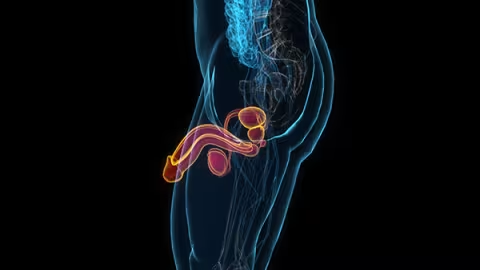
Penile cancer is a rare disease, accounting for less than 1% of cancers in men. It generally develops from cells in the skin of the penis or the underlying tissues. It can occur in various areas, including the foreskin (in uncircumcised men), the glans, or the shaft of the penis. Most cases of penile cancer are squamous cell carcinomas, which form in squamous cells—the flat cells that make up the surface of the skin.
There are several subtypes of squamous cell carcinoma, including verrucous carcinoma, which grows slowly and is less likely to metastasize, and basaloid carcinoma, which is more aggressive. Other types of cancer can also develop on the penis, although they are rarer, such as melanoma and sarcoma, which originate in connective tissues such as the muscles or blood vessels of the penis.
Penile cancer is rare, with approximately 1 to 2 new cases per 100,000 men per year in France. This represents about 400 to 500 new cases diagnosed each year. It primarily affects older men, with the average age at diagnosis being around 60 years. The 5-year survival rate for penile cancer varies depending on the stage at the time of diagnosis. On average, it is around 60 to 70 percent, but this rate can exceed 80 percent if the cancer is detected early and treated promptly.
Prevention and Diagnosis
Prevention of penile cancer relies on several key measures, the most important of which is thorough personal hygiene, which reduces the risk of developing chronic infections that can lead to precancerous lesions. Vaccination against human papillomavirus (HPV), particularly in young boys before they become sexually active, is another effective preventive measure, given the link between certain strains of HPV and penile cancer.
Early diagnosis is essential for effective treatment. It relies on the observation of symptoms such as lesions, ulcers, thickening, or bleeding on the penis. If cancer is suspected, additional tests, such as a biopsy, can confirm the diagnosis and determine the exact nature of the tumor, thereby facilitating appropriate treatment.
Treatment
In the early stages, conservative treatments may be considered, such as laser surgery or cryotherapy, which aim to remove the tumor while preserving as much healthy tissue as possible. For more advanced cancers, more extensive surgery, such as partial or total penectomy, may be necessary. Depending on the extent of the cancer, a lymph node dissection may be performed to remove affected lymph nodes. In addition, radiation therapy and chemotherapy may be used, either to reduce the size of the tumor before surgery or to treat metastases.
A multidisciplinary approach, involving urologists, oncologists, and radiation oncologists, is essential to ensure the best possible prognosis and minimize the functional and psychological impact on the patient.
Clinical trials are currently underway to evaluate the role of immunotherapy in patients with advanced forms of the disease, as well as to test a therapeutic vaccine and targeted therapies.
Last news
-
5 questions with Dr François-Xavier Danlos about therapeutic cancer vaccines
Therapeutic cancer vaccines are making significant progress in clinical development. The ESMO Congress, which begins on 23 October, will provide an opportunity to learn about new data on a therapeutic vaccine against melanoma. However, there are major differences between vaccines traditionally used to prevent disease and therapeutic cancer vaccines. Dr François-Xavier Danlos, a medical oncologist in Gustave Roussy’s Drug Development Department and a specialist in immunotherapy development, explains.
-
ADCs: Two Landmark Publications in Cancer Cell and Nature Medicine Showcase Gustave Roussy's Expertise
In less than two months, researchers and clinicians from Gustave Roussy have contributed to two major publications on Antibody-Drug Conjugates (ADCs) in Cancer Cell and Nature Medicine. Together, these papers provide both a comprehensive overview of current knowledge and a strategic vision to accelerate the development of the next generation of these innovative therapies.

-
Drug shortages: Gustave Roussy becomes the only Cancer Centre in France authorised to produce Special Hospital Preparations
The Clinical Pharmacy Department at Gustave Roussy has been authorised by the French Ministry of Health to manufacture Special Hospital Preparations (SHPs). Granted for a period of seven years, this accreditation enables the Institute’s hospital pharmacy to produce certain medicines in coordination with the French National Agency for the Safety of Medicines and Health Products (ANSM) and the Ministry of Health. Gustave Roussy is the only French Comprehensive Cancer Centre (CLCC) authorised to manufacture Special Hospital Preparations, alongside ten university hospitals.
-
Personalising Breast Cancer Treatments: 5 Questions with Dr Barbara Pistilli
Advances in treatment and patient care mean that five-year net survival for breast cancer now reaches 88%1 in France. However, with around 60,000 new cases diagnosed each year in France alone, breast cancer remains a major public health challenge. One reason is the side effects associated with treatment. In response to this issue, Dr Barbara Pistilli, Head of the Breast Cancer Committee at Gustave Roussy, advocates an approach centred on personalised care, ensuring that each woman receives a treatment intensity tailored to her tumour and individual journey, without compromising her chances of recovery.