
Welcome to the new Gustave Roussy website
A new website designed to offer you a simpler, clearer, and more intuitive experience. Patients, caregivers, healthcare professionals, and donors: find information, news, and services more easily.
Current research
The team Biology of pediatric leukemia is part of the UMR 1170 Molecular dynamics of hematopoietic transformation.
The team is part of the childhood leukemia network CONECT-AML, the Paris Kid Cancer, the Institut Carnot OPALE, the Fédération d’Hématologie de l’Université Paris Saclay and coordinates the national PEDIAC program.
Pediatric cancers affect about 1 in 600 children and represent the second leading cause of death in children in France. The clinical characteristics of pediatric cancers suggest that they have a different molecular basis compared to similar cancers in adults. While recurrent genetic alterations have been identified in the past years, functional analyses are now required to identify how a normal cell become leukemic, why some alterations are specific for childhood and what are the mechanisms driving the leukemic cells that can be targeted for novel therapeutic perspectives.
Hematological malignancies represent 45% of pediatric cancers. The hematopoietic system is generally described as a hierarchy presenting, at its top, hematopoietic stem cells (HSC) that possess a unique capacity to transition from quiescence to long-term self-renewal potential in addition to the capacity to generate various proliferative progenitors that can ultimately differentiate toward the mature hematopoietic lineages. Acute myeloid leukemia (AML) is characterized by an accumulation of abnormal hematopoietic progenitors blocked in differentiation. They present recurrent genetic alterations including fusion oncogenes.
The main axes of our studies are to:
- 1-Study the crosstalk between stress response pathways and metabolic plasticity in normal and malignant hematopoiesis.
The goal is to decipher stress response of healthy and leukemic stem cells to uncover new metabolic vulnerabilities to target leukemic cells while sparing normal cells. - 2-Characterize the cellular and molecular trajectories during leukemia development.
The goal is to identify what are the mechanisms behind leukemia, how a normal cell becomes leukemia and why some alterations are specifically diagnosed during childhood. - 3-Identify functional dependencies and perform preclinical analyses.
The goal is to functionally identify mechanisms that represent specific vulnerabilities of leukemic cells and to test the efficacy of novel targeting strategies in preclinical settings using precise models of the disease.
Crosstalk between stress response pathways and metabolic plasticity in normal and malignant hematopoiesis
(PI: Marie-Laure Arcangeli)
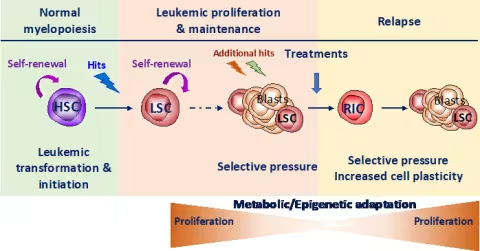
Our group is focused on the study of the crosstalk between stress response pathways, metabolic and epigenetic plasticity in normal and malignant hematopoiesis. HSC are often the cell of origin of the leukemia. Remission is frequently followed by relapse, mainly from resistant leukemic stem cells (LSC) that have adapted to treatment-induced stress by co-opting HSC functional properties. Therefore, there is a need to elucidate concurrently how both HSC and LSC adapt to stress (balance between quiescence and self-renewal) that relies largely on epigenetic and metabolic programs. Therefore, we aim to decipher stress response of healthy (HSC) and leukemic (LSC) stem cells to uncover new metabolic vulnerabilities to target LSC while sparing HSC.
Observations indicate that, once activated, HSC switch on stress response pathways and adapt to stress in particular by modulating metabolic pathways that leads to the modification of proteins encoded by epigenetic genes. Stress induces dramatic changes in transcriptional program in HSC with a switch in a signature from stem cell toward progenitor and a modification of the transcriptional pattern of epigenetic regulators (e.g. DNMT3a, TET2/3, IDH1/2 and ASXL1, Henry et al Stem cell Transl Med 2023). The control of oxidative stress response allows partial but essential protection of HSC fundamental properties (Henry et al Stem cell Transl Med 2023 et Henry et al Haematologica 2020, Exp Hematol 2020). Finally, we show that the stress response protein REDD1 participates to HSC protection by balancing ROS levels (Barroca et al Leukemia 2022).
In parallel, REDD1 overexpression is associated to bad prognosis and treatment resistance in AML. There are increasing evidence suggesting that REDD1 could be the intermediary between upstream stress response pathways and downstream metabolic rewiring leading to epigenetic remodeling.
Thus, we first propose, in gene candidate approach, to study relationships between REDD1, the antioxidant program, metabolism upon stress in human and mouse HSC and myeloid leukemia cells (using either shRNA technologies, human cell lines, PDX models and Redd1-/- deficient mice). Moreover, we will decipher REDD1 function in treatment resistance. This part is funded by INCA PLBIO (2024-2026) and performed in collaboration with JE Sarry (CRCT/IRCM, Toulouse/Montpellier).
More generally, we will combine high throughput approaches on human AML cell lines and mouse primary cells (combined RNA Sequencing and screening with CRSIPR library targeting metabolism and/or epigenetics) to decipher which stress response pathways are switched on and which epigenetic and metabolic pathway are remodeled. Indeed, we aim to uncover metabolic vulnerabilities in LSC that restore or provide sensitization to common treatments.
Cellular and molecular trajectories during leukemia development
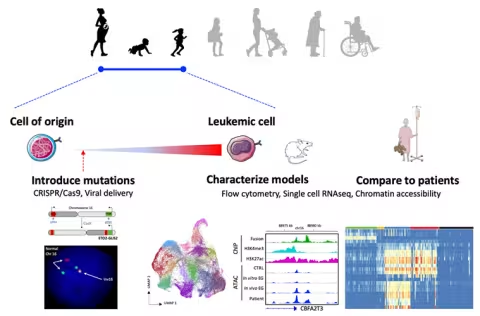
We characterize the genetic and epigenetic alterations found in leukemia and develop models to understand the functional contribution of each alteration as well as the stage of development of the cell of origin to leukemia initiation.
We have focused our work on pediatric acute megakaryoblastic leukemia (AMKL) and erythroleukemia (AEL) both generally associated with poor response to treatments and unfavorable prognosis.
Pediatric acute megakaryoblastic leukemia
We identified several recurrent fusion mutations and oncogenes involving regulators of gene expression (e.g. OTT-MAL and ETO2-GLIS2) (Mercher et al, PNAS 2001; Thiollier et al, JEM 2012). ETO2-GLIS2 is associated with the worst prognosis of pediatric de novo AMKL. We have shown that ETO2-GLIS2 binds DNA through both its ETO2 and GLIS2 parts, including at regulatory regions called "enhancers". It controls the expression of major transcription factors resulting in high ERG (essential for a stem cell-associated transcriptional program, including growth factor receptor KIT) and low GATA1 (a master regulator of erythro/megakaryocyte differentiation). In collaboration with C. Lobry and J. Chaumeil, we uncovered that the fusion controls the chromatin organization at the KIT/PDGFRA locus important for leukemia cell survival and proliferation (Benbarche et al. Science Adv 2022). Recently, we have observed that the fusion induces antagonistic effect on regulators of cell survival. Indeed, ETO2-GLIS2 induces activation of caspase 3 and cell death in naive cells while ETO2-GLIS2 leukemic cells present high expression of BCL2 (Aid et al. Leukemia 2023).
Acute erythroid leukemia (AEL)
We have developed with the group of Dr. J. Schwaller (Basel, Switzerland) a large collaborative work with teams from Gustave Roussy (Dr. S. DeBotton and Dr. J.B. Micol), French clinical centers (Dr. E. Delabesse: Toulouse, Dr. D. Birnbaum: Marseille, Dr. L. Garcon: Amiens), European centers (Dr. P. Vyas: England, Dr. E. Anguita: Spain, Dr. C. Dierks: Germany, Dr. A. Rambaldi: Italy, Dr. P. Valent: Austria) and international centers (Dr. M. Caroll: USA, Dr. J. Maciejewski: USA, Dr. S. Kazuya: Japan, Dr. C. Carmichael: Australia) to study human adult AEL. We identified genetic and transcriptional alterations and classified AEL patients into several molecular subgroups. Importantly, alterations of factors involved in GATA1 transcriptional complexes such as ERG, ETO2 or SKI, is found in at least 18% of the patients and functionally contribute to erythroid progenitor transformation in vitro and in mice (Fagnan et al Blood 2020).
Modeling leukemia initiation
We have developed a mouse model of doxycycline-inducible ETO2-GLIS2 expression (coll. with J. Schwaller, Basel, Switzerland) that 1-led to leukemia development upon induction of ETO2-GLIS2 expression, 2-showed that fetal cells are more permissive to transformation by the fusion than adult cells and 33-the phenotype of leukemia is associated with differential activity of several transcription factors, including GATA1 and CEBPA (Lopez et al. Cancer Discovery 2019).
We are now developing expression models of the ETO2-GLIS2 fusion starting from normal human cells through two approaches. First, we use induced pluripotent stem cells for their property to recapitulates early steps of human embryonic hematopoiesis. In a first model, we have shown that the fusion alters megakaryocyte differentiation, increases progenitor self-renewal, and recapitulates the transcriptional deregulations observed in patients but does not induce in vivo leukemia (Bertuccio et al Hemasphere 2020). To improve the model, we are currently performing precise engineering of normal iPSC using CRISPR/Cas9 to recreate the precise chromosomal alteration found in patient cells. We are also collaborating with the team of Dr. F. Pflumio (CEA, Fontenay-aux-roses) for the use of primary human cells at different stages of development. These models are studied using cellular and molecular technics, including single cell transcriptomes (scRNAseq), chromatin accessibility (ATAC-seq), mass spectrometry for protein interactions, multi-parameter flow cytometry (Aurora/Cytek).
Functional dependencies & preclinical analyses
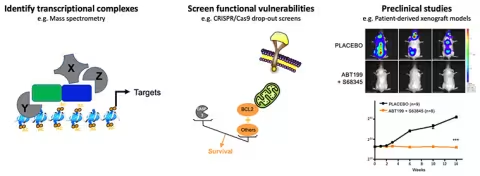
The characterization of transcriptional complexes altered by the fusion oncogenes or the identification of direct transcriptional targets allows to nominate candidates to be targeted by novel strategies in preclinical assays.
We have shown that the transcriptional program imposed by ETO2-GLIS2 depends on the functional interaction between ETO2-GLIS2 and ETO2 via the NHR2 domain. Indeed, ectopic expression of a peptide interfering with the NHR2 domain inhibits the expression of enhancer-associated genes, restores the expression balance of ERG and GATA1 factors, and abrogates the proliferation of ETO2-GLIS2 leukemia cells in in vivo models. These proof-of-principle data establish that a functional interference with the activity of transcriptional complexes involving ETO2-GLIS2 can inhibit proliferation/survival of leukemia cells (Thirant et al. Cancer Cell 2017, Lopez et al. Trends in Cancer 2017). In addition, as a follow-up of the work on erythroleukemia highlighting the role of ETO2 in transformation, ongoing studies are identifying some of the mechanisms controlling the positive role of ETO2 on transcriptional activation, including an important cofactor that can be target by small molecule inhibitor.
Emerging from the link between ETO2-GLIS2 and cell death regulation, a functional redundancy between BCL2 and MCL1, revealed in collaboration with P. Auberger (C3M, Nice), renders ETO2-GLIS2 cells virtually insensitive to inhibition by BCL2 or MCL1 inhibitors alone but highly sensitive to the combined inhibition, including in PDX models in vivo (Aid et al. Leukemia 2023). Following this work, we are collaborating with experts in pharmacology (Dr. F.X. Legrand, Université Paris Saclay) in order to overcome the current toxicities associated with combining these molecules.
As part of a collaboration led by E. Brunet (Imagine Institute), we are contributing to develop models of anaplastic large cell lymphoma (ALCL) with the NPM-ALK fusion. This work identified ROR2, as a novel surface marker uniquely expressed at the surface of NPM-ALK ALCL cells both in models and in patients (Babin et al iScience 2018 & Molecular Cancer 2022, Patent). This work provided a target for the development of a novel immunotherapy strategy in ALCL that acquire resistance to current therapies.
Publications
Recent publications
- Fagnan A, Aid Z, Baille M, Drakul A, Robert E, Lopez CK, Thirant C, Lecluse Y, Rivière J, Ignacimouttou C, Salmoiraghi S, Anguita E, Naimo A, Marzac C, Pflumio F, Malinge S, Wichmann C, Huang Y, Lobry C, Chaumeil J, Soler E, Bourquin JP, Nerlov C, Bernard OA, Schwaller J, Mercher T. The ETO2 transcriptional co-factor maintains acute leukemia by driving a MYB/EP300-dependent stemness program.
Hemasphere. 2024. in press - Henry E, Picou F, Barroca V, Dechamps N, Sobrino S, Six E, Gobeaux C, Auberger P, Hérault O, Pflumio F, Arcangeli ML. The Antioxidant TEMPOL Protects Human Hematopoietic Stem Cells From Culture-Mediated Loss of Functions.
Stem Cells Transl Med. 2023. 2023 Oct 5;12(10):676-688. PMID: 37616262 - Aid Z, Robert E, Lopez CK, Bourgoin M, Boudia F, Le Mene M, Riviere J, Baille M, Benbarche S, Renou L, Fagnan A, Thirant C, Federici L, Touchard L, Lecluse Y, Jetten A, Geoerger B, Lapillonne H, Solary E, Gaudry M, Meshinchi S, Pflumio F, Auberger P, Lobry C, Petit A, Jacquel A, Mercher T. High caspase 3 and vulnerability to dual BCL2 family inhibition define ETO2::GLIS2 pediatric leukemia.
Leukemia. 2023 Mar;37(3):571-579. doi: 10.1038/s41375-022-01800-0. PMID: 36585521 - Barroca V., Henry E., Dechamps N., Renou L., Chaintreuil P., Kulkarni R., Devanand S., Jacquel A., Robert G., Auberger P., Pflumio F. and Arcangeli ML. REDD1 Is a Gatekeeper of Murine Hematopoietic Stem Cell Functions during Stress Responses.
Leukemia 2022. Aug;36(8):2140-2143. PMID: 35641638 - Arkoun B, Robert E, Boudia F, Mazzi S, Dufour V, Siret A, Mammasse Y, Aid Z, Vieira M, Imanci A, Aglave M, Cambot M, Petermann R, Souquere S, Rameau P, Catelain C, Diot R, Tachdjian G, Hermine O, Droin N, Debili N, Plo I, Malinge S, Soler E, Raslova H, Mercher T*, Vainchenker W*. Stepwise GATA1 and SMC3 mutations alter megakaryocyte differentiation in a Down syndrome leukemia model.
*Co-last & corresponding
J Clin Invest. 2022 May 19:e156290. PMID: 35587378. - Babin L, Darchen A, Robert E, Aid Z, Borry R, Soudais C, Piganeau M,vDe Cian A4, Giovannangeli C, Bawa O, Rigaud C, Scoazec JY, Couronne L, Veleanu L, Cieslak A, Asnafi V, Sibon D, Lamant L, Meggetto F, Mercher T*, Brunet E*. De novo generation of the NPM-ALK fusion recapitulates the pleiotropic phenotypes of ALK+ ALCL pathogenesis and reveals the ROR2 receptor as target for tumor cells. *Co-corresponding
Molecular Cancer. 2022 Mar 4;21(1):65. PMID: 35246138 - Benbarche S, Lopez CK, Salataj E, Aid Z, Thirant C, Laiguillon MC, Lecourt S, Belloucif Y, Vaganay C, Antonini M, Hu J, Pardieu B, Petit A, Puissant A, Chaumeil J, Mercher T*, Lobry C*. Screening of ETO2-GLIS2–induced Super Enhancers identifies targetable cooperative dependencies in acute megakaryoblastic leukemia. *Co-last & corresponding
Science Advances. 2022 Feb 11;8(6):eabg9455. PMID: 35138899 - Henry E., Barroca V., Lopez CK., Aurrand-Lions M., Lewandowski D., Mercher T. and Arcangeli ML. JAM-C/Jam-C Expression Is Primarily Expressed in Mouse Hematopoietic Stem Cells.
Hemasphere 2021. Jun 12;5(7):e594. PMID: 34131634 - Fagnan A, Otzen Bagger F, Piqué-Borràs MR, Ignacimouttou C, Caulier A, Lopez CK, Robert E, Uzan B, Gelsi-Boyer V, Aid Z, Thirant C, Moll U, Tauchmann S, Kurtovic-Kozaric A, Maciejewski J, Dierks C, Spinelli O, Salmoiraghi S, Pabst T, Shimoda K, Deleuze V, Lapillonne H, Sweeney C, De Mas V, Leite B, Kadri Z, Malinge S, de Botton S, Micol JB, Kile B, Carmichael CL, Iacobucci I, Mullighan C, Caroll M, Valent P, Bernard OA, Delabesse E, Vyas P, Birnbaum D, Anguita E, Garçon L, Soler E, Schwaller J, Mercher T. Human erythroleukemia genetics and transcriptomes identify master transcription factors as functional disease drivers.
Blood. 2020;136(6):698-714. PMID: 32350520
Comment:
Strouboulis J. Erythroleukemia: all roads lead to GATA1?. Blood. 2020;136(6):648-649. doi:10.1182/blood.2020006107 - Henry E., Souissi-Sahraoui I., Deynoux M., Lefèvre A., Barroca V., Campalans A., Ménard V., Calvo J., Pflumio F. and Arcangeli ML. Human Hematopoietic Stem/Progenitor Cells Display Reactive Oxygen Species-Dependent Long-Term Hematopoietic Defects after Exposure to Low Doses of Ionizing Radiations.
Haematologica 2020. Aug;105(8):2044-2055. PMID: 31780635
Editorial:
Yamashita M & Suda T Low-dose of ionizing radiations leave scars on human hematopoietic stem and progenitor cells: the role of reactive oxygen species. Haematologica 2021 106(1):320-322.PMID: 33386716 - Bertuccio SN*, Boudia F*, Cambot M 2,4 *, Lopez CK, Lordier L, Donada A, Robert E, Thirant C, Aid Z, Serravalle S, Astolfi A, Indio V, Locatelli F, Pession A, Vainchenker W, Masetti R, Raslova H, Mercher T. The pediatric acute leukemia fusion oncogene ETO2-GLIS2 increases self-renewal and alters differentiation in a human induced pluripotent stem cells-derived model.
Hemasphere. 2020 Jan 22;4(1):e319. PubMed PMID: 32072139 - Lopez CK, Noguera E, Stavropoulou V, Robert E, Aid Z, Ballerini P, Bilhou-Nabera C, Lapillonne C, Boudia F, Thirant C, Fagnan A, Arcangeli ML, Kinston SJ, Diop M, Job B, Lecluse Y, Brunet E, Babin L, Villeval JL, Delabesse E, Peters AHFM, Vainchenker W, Gaudry M, Masetti R, Locatelli F, Malinge S, Nerlov C, Droin N, Lobry C, Godin I, Bernard OA, Göttgens B, Petit A, Pflumio F, Schwaller J, Mercher T. Ontogenic changes in hematopoietic hierarchy determine pediatric specificity and disease phenotype in fusion oncogene-driven myeloid leukemia
Cancer Discovery. 2019 Oct 29. PubMed PMID: 31662298.
Comment:
Cancer Discovery. 2017. Cruz Hernandez D & Vyas P. Oncogenic Drivers and Development. Cancer Discov. 2019;9(12):1653-1655. doi:10.1158/2159-8290.CD-19-1082 - Thirant C, Ignacimouttou C, Lopez CK, Diop MB, Le Mouël L, Thiollier C, Siret A, Dessen P, Aid Z, Rivière J, Rameau P, Lefebvre C, Khaled M, Leverger G, Ballerini P, Petit A, Raslova H, Carmichael CL, Kile BT, Soler E, Crispino JD, Wichmann C, Pflumio F, Schwaller J, Vainchenker W, Lobry C, Droin N, Bernard OA, Malinge S, Mercher T. ETO2-GLIS2 hijacks transcriptional complexes to drive cellular identity and self-renewal in pediatric acute megakaryoblastic leukemia.
Cancer Cell. 2017. Mar 13;31(3):452-465.
Comments:
Cancer Cell. 2017. ETO2-GLIS2: A Chimeric Transcription Factor Drives Leukemogenesis through a Neomorphic Transcription Network. Wheat JC, Steidl U.
Cancer Discovery. 2017. ETO2–GLIS2 Drives the Transcriptional Program Underlying AMKL. DOI: 10.1158/2159-8290 - Thiollier C, Lopez CK, Gerby B, Ignacimouttou C, Poglio S, Duffourd Y, Guégan J, Rivera-Munoz P, Bluteau O, Mabialah V, Diop M, Wen Q, Petit A, Bauchet AL, Reinhardt D, Bornhauser B, Gautheret D, Lecluse Y, Landman-Parker J, Radford I, Vainchenker W, Dastugue N, de Botton S, Dessen P, Bourquin JP, Crispino JD, Ballerini P, Bernard OA, Pflumio F, Mercher T. Characterization of novel genomic alterations and therapeutic approaches using acute megakaryoblastic leukemia xenograft models.
J Exp Med. 2012 Oct 22;209(11):2017-31. doi: 10.1084/jem.20121343. - Cornejo MG, Mabialah V, Sykes SM, Khandan T, Lo Celso C, Lopez C, Rivera-Muñoz P, Rameau P, Tothova Z, Aster JC, Depinho RA, Scadden DT, Gilliland DG, Mercher T. Crosstalk between Notch and AKT signaling during murine megakaryocyte lineage specification.
Blood. 2011 Jun 7. [Epub ahead of print] PubMed PMID: 21653327. - Mercher T, Raffel GD, Moore SA, Cornejo MG, Baudry-Bluteau D, Cagnard N, Jesneck JL, Pikman Y, Cullen DE, Williams IR, Akashi K, Shigematsu H, Bourquin JP, Giovannini M, Vainchenker W, Levine RL, Lee BH, Bernard OA, Gilliland DG. OTT-MAL activates RBPJ transcription and induces acute megakaryoblastic leukemia in a knock-in mouse model.
J Clin Invest. 2009 Apr;119(4):852-64. doi: 10.1172/JCI35901. - Cornejo MG, Kharas MG, Werneck MB, Le Bras S, Moore SA, Ball B, Beylot-Barry M, Rodig SJ, Aster JC, Lee BH, Cantor H, Merlio JP, Gilliland DG, Mercher T. Constitutive JAK3 activation induces lymphoproliferative syndromes in murine bone marrow transplant models.
Blood. 2009 Mar 19;113(12):2746-54. - Mercher T, Cornejo MG, Sears C, Kindler T, Moore SA, Maillard I, Pear WS, Aster JC, Gilliland DG. Notch signaling specifies megakaryocyte development from hematopoietic stem cells.
Cell Stem Cell. 2008 Sep 11;3(3):314-26. - Mercher, T., Coniat, M.B., Monni, R., Mauchauffe, M., Khac, F.N., Gressin, L., Mugneret, F., Leblanc, T., Dastugue, N., Berger, R. and Bernard, O.A. (2001) Involvement of a human gene related to the Drosophila spen gene in the recurrent t(1;22) translocation of acute megakaryocytic leukemia.
Proc Natl Acad Sci USA, 98, 5776-5779.
Patent
Title: Methods for the treatment of anaplastic large cell lymphoma
Reference: BIO21072 BRUNET / MC/BTL
Date of submission: April 9th 2021
Status: co-inventor
Lab members
Team
Team leader
- Thomas MERCHER, DR2, INSERM
- Marie-Laure ARCANGELI, CRCN, INSERM
Members
- Muriel GAUDRY, CRCE, INSERM
- Hélène CAVE, PU-PH, Université Paris-Cité
- Marion STRULLU, MCU-PH, Université Paris-Cité
- Chloé ARFEUILLE, PH, Université Paris-Cité
- Charlotte RIGAUD, PH, Gustave Roussy
- Julie RIVIÈRE, IR, INSERM
- Zakia AID, Engineer
- Elie ROBERT, Bioinformatic engineer
- Kimberly TO, Engineer
- Mélanie VAR, Project Manager
- Christophe METEREAU, Technician, Gustave Roussy
- Laura ANSELMI, Post-doc
- Marie BAILLE, PhD student, Université Paris-Cité
- Alexia REGNAULT DE PREMESNIL, PhD student, Université Paris-Cité
- Alexandre ALTAIR, Master student
PhD student and post-doctoral positions are regularly available in the team.
Scientific prizes obtained by previous students from our lab
- Clarisse Thiollier: Soeurs Fradiss Award 2015 (Fondation de France)
- Cécile Lopez: Thesis Award 2016 (Cancéropôle Ile-de-France) and Soeurs Fradiss Award 2021 (Fondation de France)
- Alexandre Fagnan: Bettencourt Young Researcher Award 2021 (Bettencourt Foundation)
- Fabien Boudia: Best oral presentation award (CHO 2022)
- Marie Baille: Best oral presentation award (Gustave Roussy Research days 2023)
Alumni
- Maroussia Halter
- Fabien Boudia
- Maria José Navarro Porras
- Alexandre Fagnan
- Cécile Lopez
- Vivianne Baral
- Melchior Le Mene
- Lucie Leclair
- Sébastien Malinge
- Laetitia Federici
- Nicola Salvatore Bertuccio
- Anouchka Laurent
- Aïcha Soumah
- Cécile Thirant
- Cathy Ignacimouttou
- Lou LeMouël
- Paola Rivera-Munoz
- Clarisse Thiollier
- Vinciane Mabialah