
Welcome to the new Gustave Roussy website
A new website designed to offer you a simpler, clearer, and more intuitive experience. Patients, caregivers, healthcare professionals, and donors: find information, news, and services more easily.
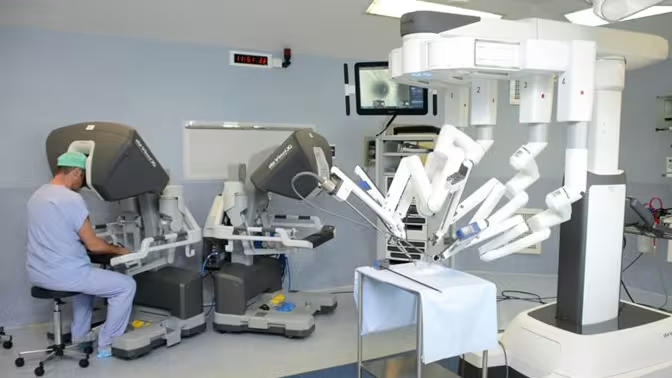
Da Vinci Xi: Robot-Assisted Surgery for the Benefit of Patients
A minimally invasive surgical technology that enhances the precision of surgical procedures in several oncology specialties.
Landmark
The Da Vinci Xi robot was installed at Gustave Roussy in November 2014. The facility was the first in France to acquire this model of surgical robot.
Technology Controlled by the Surgeon
The Da Vinci Xi is a robot-assisted surgical system. It does not perform any procedures autonomously: from a console, the surgeon controls each movement of the instruments in real time.
The system combines high-definition three-dimensional imaging with articulated instruments that offer great freedom of movement. It can thus facilitate precise maneuvers and access to certain complex anatomical areas, while utilizing the small incisions typical of minimally invasive surgery.
Key Takeaways
The term “surgical robot” does not mean that the equipment operates on its own. Medical decisions, the surgical strategy, and all surgical maneuvers remain under the responsibility and control of the surgical team.
Potential benefits for patients
When indicated, robot-assisted surgery can help minimize the trauma associated with the procedure. However, the benefits depend on the type of surgery, the location of the tumor, the patient’s clinical condition, and the team’s expertise.
Small incisions can help minimize cosmetic side effects and surgical trauma.
Depending on the procedure, this approach may be associated with reduced postoperative pain, a shorter hospital stay, and a faster return to daily activities.
The stabilized 3D view and the instruments’ maneuverability support precise manipulation in anatomical spaces that are sometimes difficult to access.
Robot-assisted surgery is offered only when the medical team determines that it is appropriate given the patient's condition.
A tool for use across multiple specialties
At Gustave Roussy, robot-assisted surgery is used in several areas of oncology:
- breast cancer;
- ENT and head and neck cancers;
- thyroid surgery;
- gynecologic cancers;
- gastrointestinal and liver cancers.
Robotic surgery is not used routinely. The medical team determines whether it is indicated based on the characteristics of the disease and the expected benefit to the patient.
Augmented vision to guide movement
The Da Vinci Xi features a high-definition imaging system. Depending on the needs of the procedure, the image can be supplemented by a fluorescence imaging system or by intraoperative ultrasound projected onto the control screen. These technologies provide the surgeon with additional information during the operation.
Innovation and Expertise
The value of the robotic system lies in the combination of advanced technology, appropriate medical indications, and the expertise of the surgical, anesthesiology, and paramedical teams.
Practical Information for Patients
If surgery is being considered, the medical team presents the various options appropriate for the patient’s situation. The surgeon explains the proposed procedure, its expected benefits, limitations, and risks, as well as the preparation and follow-up procedures.