Welcome to the new Gustave Roussy website
A new website designed to offer you a simpler, clearer, and more intuitive experience. Patients, caregivers, healthcare professionals, and donors: find information, news, and services more easily.
A novel triple therapy shows promising signs of efficacy in localised lung cancer
On
Villejuif, 23 April 2026
A novel triple therapy shows promising signs of efficacy in localised lung cancer
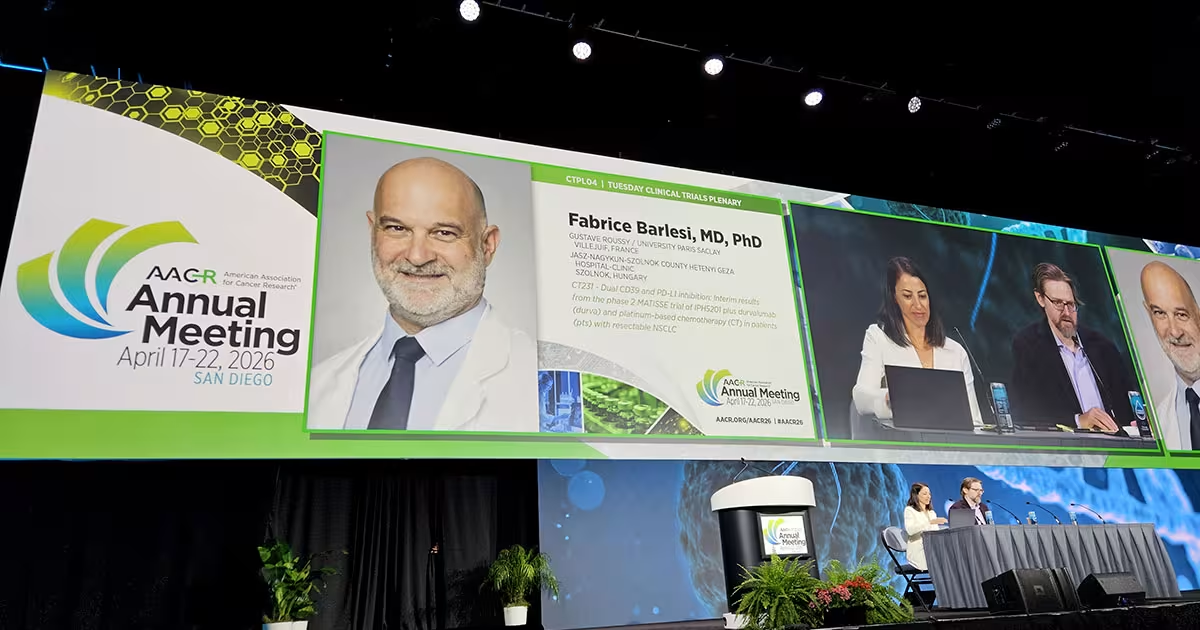
The MATISSE study, presented by Professor Fabrice Barlesi, CEO of Gustave Roussy, during a plenary session on clinical trials at the AACR congress, evaluated the addition of a new molecule to the therapeutically validated combination already used for certain patients with non-small cell lung cancer. This novel triple therapy has demonstrated initial promising clinical effects.
Non-small cell lung cancers account for 85 to 90% of the more than 52,000 new cases of lung cancer diagnosed each year in France[1]. This condition remains the 3rd most common cancer in women and the 2nd in men, as well as the leading cause of cancer-related death in men. Identifying new treatment options remains a major public health challenge.
The arrival of immunotherapy over the past decade has transformed the prognosis of this disease. Designed to stimulate the immune system so that it attacks cancer cells more effectively, this approach produces very long-lasting responses, even in metastatic disease.
A standard based on immunotherapy and chemotherapy
In patients with non-small cell lung cancer diagnosed at an early, operable stage, the combination of immunotherapy and chemotherapy is now the established clinical standard alongside surgery. Both treatments are administered together before the procedure to reduce tumour size, after which immunotherapy alone is continued following the operation to consolidate the therapeutic response and reduce the risk of recurrence. This so-called perioperative regimen surrounds the surgical procedure on both sides.
This approach is associated with a significant rate of complete pathological response — that is, the total absence of living cancer cells detected in the tumour following surgical removal. This is a closely monitored criterion in oncology, as it is associated with a better long-term prognosis. The AEGEAN[2] Phase III clinical trial involving over 800 randomised patients was published in 2023 and reported that 17.2% of patients achieved a complete pathological response with the immunotherapy/chemotherapy combination, compared with 4.3% with chemotherapy alone, among patients with operable non-small cell lung cancer.
Addition of an innovative molecule
Nevertheless, a significant proportion of patients show resistance to immunotherapy, which limits its effectiveness. To address this issue, the MATISSE phase II single-arm study, sponsored by Innate Pharma, evaluated the benefit of adding a new molecule to the immunotherapy/chemotherapy combination. IPH5201, co-developed by Innate Pharma and AstraZeneca, is a monoclonal antibody that targets the CD39 enzyme. This enzyme is expressed by cells in the tumour microenvironment in several cancer types, including non-small cell lung cancer.
CD39 plays an essential role in balancing the immune system and preventing it from going into overdrive, but it can also be co-opted by tumours to evade immune detection. It has a notably "immunosuppressive" role — that is, it modifies the tumour environment by reducing inflammation. By neutralising CD39 enzyme activity, IPH5201 aims to reactivate the tumour's inflammatory environment in order to enhance the effects of immunotherapy treatments.
In a previous phase I clinical trial, IPH5201 administered alone or in combination with durvalumab (anti-PD-L1) was well tolerated. The MATISSE trial enrolled 40 patients with early-stage, operable non-small cell lung cancer. They received a triple therapy comprising chemotherapy, immunotherapy (durvalumab), and IPH5201 before surgery. Immunotherapy and IPH5201 were continued following the operation.
Initial promising clinical results
The primary objective of the MATISSE study was to assess the safety and efficacy of this triple therapy. The results show that it presents a favourable safety profile, with no new adverse effects compared with the reference therapeutic combination. Overall, the mean complete pathological response rate was 27.5%.
A more detailed analysis of the results reveals that patients whose tumour expresses the PD-L1 protein — a biomarker for immunotherapy — show higher response rates to this triple therapy. 35.7% of PD-L1-positive patients with a marker expression level of 1% or above (n=28) achieved a complete pathological response. Where PD-L1 expression was 50% or above (n=14), one in two patients responded.
Beyond these clinical results, the MATISSE study also enabled the exploration of biomarkers that may better predict response to the triple therapy. Analyses conducted during the trial show that IPH5201 induces complete and sustained saturation of the CD39 enzyme in patients' blood, confirming that the drug is acting on its intended target. A promising trend was also observed: patients who achieved treatment responses had, at baseline, higher densities of CD39+ cells and CD8+ lymphocytes in their tumour. These immune cells could therefore serve as an early signal for identifying patients most likely to benefit from this new therapeutic approach.
"The results of the MATISSE study are encouraging. They suggest there could be value in adding IPH5201 to the current therapeutic standard for early-stage, operable non-small cell lung cancers. This triple therapy showed promising rates of complete pathological response among patients at the time of surgery. In a small sub-population of patients whose tumours strongly express the PD-L1 marker, this rate even reaches 50%. These initial data must now be confirmed in a larger number of patients through randomised comparative clinical trials," concludes Professor Fabrice Barlesi.
Source
Abstract online on AACR website : https://www.abstractsonline.com/pp8/#!/21436/presentation/11994
cp-etude-matisse-tripletherapy-lung-en-230426.pdf
[1] https://www.cancer.fr/personnes-malades/les-cancers/poumon/comprendre-la-maladie/l-essentiel
[2] Heymach, J. V., et al. (2023). Perioperative durvalumab for resectable non–small-cell lung cancer. New England Journal of Medicine, 389(18), 1672–1684. https://doi.org/10.1056/NEJMoa2304875
Press contact
If you are a journalist and have a question, please contact:
Claire Parisel or Léona Pinto
Tel. +33 1 42 11 50 59
Tel. +33 1 42 11 63 59
Mob. +33 6 17 66 00 26
Email
The Media Team cannot respond to patient inquiries.
Last press releases
-
Gold september: two new research programmes launched to tackle childhood cancers
Two of Gustave Roussy’s four new medical and scientific programmes are dedicated to childhood cancers. The first, DECRIPT, aims to improve understanding of the role played by genetics in the development of certain childhood cancers, as well as second cancers that may occur in adulthood. The second, INSPIRE, will draw on the knowledge and techniques already developed at the Institute to create organoids, with the aim of deciphering the mechanisms underlying metastasis and resistance to treatment.

-
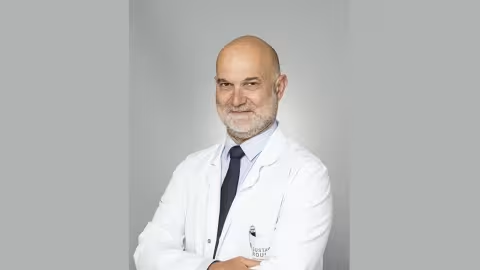
Prof. Fabrice Barlesi reappointed at the head of Gustave Roussy, the leading cancer center in France and Europe
By order of Ms. Stéphanie Rist, Minister of Health, Families, Autonomy and Persons with Disabilities, dated 27 July 2026, Professor Fabrice Barlesi has been reappointed as Director General of Gustave Roussy, effective 1 August 2026. At the helm of the Institute for five more years, Prof. Barlesi will continue the transformations undertaken during his first term. This renewal reflects the confidence placed in the project led by the institution to accelerate progress in the fight against cancer, foster and support the development of innovations set to change the future of oncology, and strengthen the influence of one of the world's leading cancer centers.
-
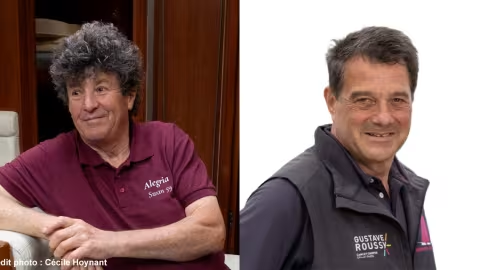
Route du Rhum 2026 Jean Le Cam and Christophe Rateau to sail for Gustave Roussy
For the Route du Rhum - Destination Guadeloupe 2026, Jean Le Cam and Christophe Rateau will sail under the colors of Gustave Roussy, the leading cancer center in France and Europe. Competing respectively in the Vintage and Class40 categories, the two skippers will carry the Institute's mission to the general public, supporting cancer research and raising awareness of prevention, innovation and patient care.
-
Owkin and Gustave Roussy partner to bring K Pro into real-world clinical practice
Owkin and Gustave Roussy, Europe's leading cancer center, today announced a partnership to test K Pro directly within the hospital's real-world clinical and research workflows.