Welcome to the new Gustave Roussy website
A new website designed to offer you a simpler, clearer, and more intuitive experience. Patients, caregivers, healthcare professionals, and donors: find information, news, and services more easily.
U1367 - Microbiota and Mucosal Immunity in the Context of Cancer Immunotherapy (MIMOSA)
- Thematic(s)
- Immuno-oncology, Microbiome & Cancer
- Director(s)
- Laurence Zitvogel
- Institutional connection
-
Gustave Roussy, Inserm, Paris-Saclay University
Summary
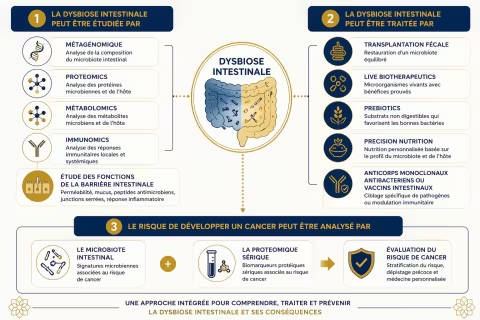
For more than 30 years, our laboratory has been studying the molecular and cellular determinants of anticancer immune surveillance. Gut dysbiosis, defined as an alteration in the taxonomic and metabolic composition of the microbiota, is a major determinant of immune resistance in cancer patients.
Our research focuses on the mechanisms of immune dysfunction associated with cancer-related ileal stress and gut dysbiosis. It has revealed the key role of bile acid metabolism and the gut–thymus axis in immunosuppressive processes. The laboratory conducts basic and translational research aimed at mitigating maladaptive immune responses of intestinal origin, in order to prevent the incidence of cancer and optimize the efficacy of immunogenic cell death induced by current treatments.
Through the ONCOBIOME Global Atlas network, the European PREVALUNG-EU consortium, and the prospective RHU-IMMUNOLIFE clinical trials, the laboratory has established itself as a leading center for microbiota-focused interventions. It has access to an extensive biobank of fecal DNA and blood samples, as well as in-depth clinical data, within a multidisciplinary network of investigators. Preclinical cancer models also enable the establishment of direct causal links between clinical observations and experimental findings.
Current research areas include nutritional sciences and the development of cancer prevention strategies based on the regulatory pathways linking gut dysbiosis and immunosuppression. The development of mucosal vaccines, antibodies targeting pathobionts and translocating bacteria, as well as precision nutrition aimed at limiting the harmful effects of dysbiosis, are now major priorities for the laboratory.
Camille Bigenwald’s Group
“Immune checkpoint inhibitor” immunotherapies have revolutionized the treatment of solid tumors. At the same time, another class of immunotherapies has emerged: CAR-T cells and bispecific antibodies, which redirect the specificity of T cells against tumor antigens and cause direct tumor destruction without relying on antigen-presenting cells. These treatments have dramatically improved the prognosis for patients with hematologic malignancies: lymphoma, leukemia, and multiple myeloma. In lymphomas in particular, CAR-T therapy is indicated as early as the first relapse, and despite excellent results, half of patients remain primarily refractory. Dr. Camille Bigenwald’s research group is seeking to understand the mechanisms of primary resistance to these new immunotherapies by examining the role of the tumor immune microenvironment, the microbiome, and metabolism, with the goal of developing new, more effective therapeutic combinations. The focus on lymphoma offers broad applicability to other tumors where these immunotherapies are emerging.
Research team
Contacts
- Phone
- Administrator: 01.42.11.50.05