
Elsa Bernard Awarded Prestigious ERC Starting Grant
Awarded annually to early-career European researchers, this grant provides funding for ambitious scientific projects with complete academic freedom. A highly prestigious mark of excellence, the ERC Starting Grant gives selected researchers national and international visibility and enables them to recruit top-tier collaborators.
Published on
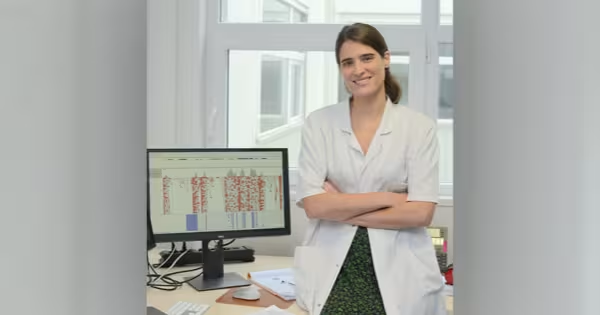
Awarded annually to early-career European researchers, this grant provides funding for ambitious scientific projects with complete academic freedom. A highly prestigious mark of excellence, the ERC Starting Grant gives selected researchers national and international visibility and enables them to recruit top-tier collaborators.
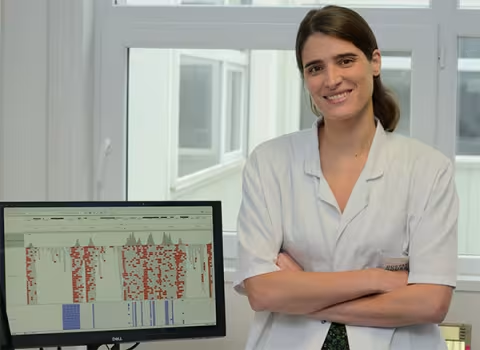
Elsa Bernard, head of the Computational Oncology Team at Gustave Roussy, was awarded the prestigious European Research Council (ERC) Starting Grant on 4 September. This highly competitive call targets researchers based in Europe, two to seven years after completing their PhD, who are leading bold scientific projects.
This grant will support Elsa Bernard’s research project, entitled CHIC, which aims to understand how certain mutations acquired in haematopoietic stem cells, the cells that give rise to all blood cells, influence the onset and progression of blood cancers as well as certain solid tumours.
Increased Risk for People with Cancer
With age, haematopoietic cells, which are mainly located in the bone marrow, accumulate numerous somatic mutations — errors in their DNA. As these mutated cells spread through the body, the phenomenon is known as clonal haematopoiesis. In most cases, this remains benign, but in some instances, it can progress to a malignant blood disorder. When this is observed in someone with no prior history of blood disease, clinicians refer to it as clonal haematopoiesis of indeterminate potential, or CHIP.
Age is not the only risk factor. People with cancer show a higher prevalence of CHIP than the general population, and chemotherapy or radiotherapy can promote its development.
Identifying CHIP status is crucial, as it increases the risk of developing rare but aggressive blood cancers (such as secondary myelodysplastic syndromes or acute myeloid leukaemia) as well as chronic inflammatory diseases. Studies also suggest an association between CHIP and a higher incidence of some solid cancers, such as lung cancer. These findings highlight the importance of CHIP status in the development of both cancerous and non-cancerous diseases.
However, how clonal haematopoiesis progresses to blood cancers, and the ways in which mutated stem cells may influence the development of new solid tumours, remain poorly understood. The CHIC project, led by Elsa Bernard seeks to unravel these mechanisms.
An Approach at the Crossroads of Mathematics and Biology
“By studying how mutated haematopoietic cells evolve over time and interact with other cell types, such as malignant tumour cells, our goal is to improve cancer prevention and management for the 25 % of individuals with clonal haematopoiesis,” explains Elsa Bernard.
She plans to develop a multidisciplinary approach combining mathematical modelling, artificial intelligence, biology, and precision oncology. The aim is to design tools for early diagnosis and risk stratification, enabling the detection of CHIP status in routine clinical practice, as well as to clarify how clonal haematopoiesis influences tumour evolution.
“This project has the potential to transform our understanding and management of CHIP in patients,” Elsa Bernard concludes.
Last news
-
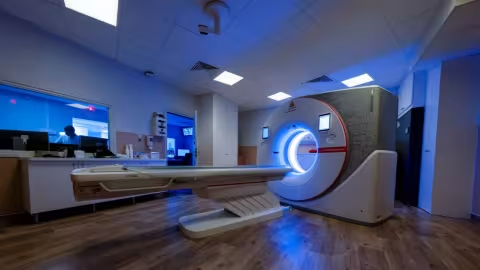
Two photon-counting CT scanners now equip Gustave Roussy's imaging department
Since September 2026, Gustave Roussy's Department of Medical Imaging has been equipped with a second photon-counting CT scanner, delivering higher image resolution while reducing the doses of X-rays and contrast agent administered to patients. This technology recently enabled the Institute to perform an iodine-free pulmonary CT angiogram, a world first.
-
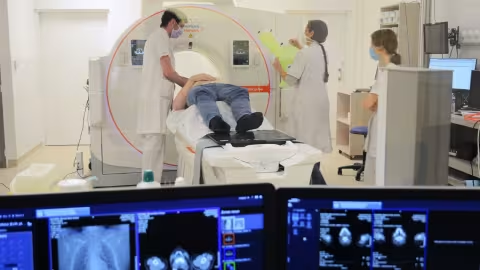
Prevention and screening: getting ahead of lung cancer
To mark Thoracic Cancer Awareness Month and Tobacco-Free Month, two campaigns focusing on lung cancer, Gustave Roussy highlights its initiatives to advance prevention and screening among people at increased risk. Since its creation in 2021, the Institute’s Interception Lung programme has welcomed more than 900 participants, supporting them to stop smoking and offering personalised screening for the disease.
-
Gustave Roussy Meets His Audience
As part of its awareness-raising and fundraising efforts, Gustave Roussy is currently conducting a door-to-door outreach campaign in several towns in Val-de-Marne (Fresnes, Vitry-sur-Seine, Nogent-sur-Marne, Bry-sur-Marne, Le Kremlin-Bicêtre) from Monday through Saturday, 1:30 p.m. to 8:00 p.m.

-
Mens November: Take care of your jewelry its precious!
November is the month dedicated to raising awareness and promoting prevention of male cancers, which include prostate, testicular, and penile cancers. The goal is to raise public awareness of these diseases—which account for approximately 63,000 new cases in France each year—and to encourage men to perform testicular self-exams, a simple step that can help detect a lump, the nature of which must then be determined through further medical examinations. Gustave Roussy has extensive expertise in the treatment of male cancers, particularly through its Genitourinary Oncology Committee, which is deeply involved in research on these diseases.