
ASCO 2026 – Oral abstract session
Villejuif, 1 June 2026
Pioneering tumour mapping to guide the choice of antibody-drug conjugate treatments
Professor Antoine Italiano, medical oncologist and head of the precision medicine programme at Gustave Roussy, presented at the ASCO congress the results of a study on the mapping of several proteins across hundreds of tumour samples. These proteins correspond to the targets of antibody-drug conjugates (ADCs), a new generation of treatments combining the precision of antibodies with the efficacy of chemotherapy. Through this approach, physicians aim to offer each patient the ADC best suited to their tumour profile, in keeping with a precision medicine strategy.
Abstract No. 3004 presented orally by Professor Antoine Italiano on Monday, 1st June at 9 h 12 UTC-5.
This presentation is one of 107 abstracts featured in the programme of this year's 2026 ASCO annual meeting in which Gustave Roussy's physician-researchers are taking part. The Institute is represented across a wide range of areas of expertise, reflecting both the quality of the research conducted there and its international recognition.
Antibody-drug conjugates (ADCs) are a new therapeutic class that has transformed the management of certain solid and haematological cancers over the past five years. They combine an antibody targeting a protein expressed on the surface of cancer cells with a chemotherapy agent. Once injected into the patient, the ADC binds to cancer cells expressing the target and is internalised by the tumour. The chemotherapy molecule is then released, destroying the malignant cells. This targeted approach is designed to increase treatment efficacy and reduce the side effects associated with chemotherapy.
Fourteen ADCs are currently authorised for the treatment of several cancer types in Europe, and nearly 400 are in clinical development. However, many patients still do not respond to these treatments or develop resistance over time, limiting their therapeutic benefit.
"We now have a large number of ADCs at our disposal, yet we still have a poor understanding of the level of expression of the targeted proteins within each patient's tumour. We also do not know whether a single cancer cell can simultaneously express several of these proteins, which would allow it to be targeted with different antibody-drug conjugates," notes Professor Antoine Italiano.
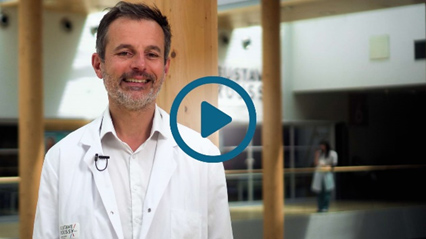
► Watch Professor Italiano's video explanation.
Tumour Mapping
The study unveiled at the ASCO congress, sponsored by Gustave Roussy, sheds light on these questions. In total, 250 tumour samples from the STING study were analysed, comprising predominantly lung cancers, but also tumours of the bladder, endometrium, and stomach.
These samples were then analysed using multiplexed immunofluorescence on histopathology slides, a technique that reveals the target protein through fluorescence emission. The aim was to determine, amongst the samples analysed, which of the eight proteins under study were predominantly expressed by cancer cells according to cancer type, as well as their distribution and co-expression within the tumour.
The results demonstrate considerable heterogeneity in protein expression profiles across cancer cells, both within a given patient and between patients. Certain combinations are moreover more frequent in some cancer types than in others. This heterogeneity has a direct clinical implication: for a given patient, some ADC combinations will be more relevant than others, depending on the level of expression of the proteins present on the surface of their tumour cells.
Possible ADC/Immunotherapy Combinations
Researchers also examined the tumour microenvironment, which can influence the tumour's response to treatment. By cross-referencing this information with the expression of targeted proteins, they identified, in certain patients, previously unreported associations. These findings appear to suggest that some tumours may be more sensitive to strategies combining antibody-drug conjugates with immunotherapy.
"This work suggests that it is possible, for each patient, to know precisely where within the tumour and in what proportion each target protein is expressed. Two patients with the same type of cancer may present radically different expression profiles and therefore benefit from different ADCs. That is the real strength of this approach: it gives us an extremely precise analysis of the tumour, allowing us to reason patient by patient, rather than cancer by cancer. This is the methodology that will need to be systematised in the future to prescribe ADCs in a truly informed manner," emphasises Professor Antoine Italiano.
A Commitment to ADC Development
This work is part of a broader research effort underway at Gustave Roussy to establish antibody-drug conjugates as the next pillar of precision medicine in oncology.
Within the Department of Medical Biology and Pathology, the Experimental and Translational Pathology platform (PETRA) already has the equipment necessary to enable ADC target profiling to guide patient treatment decisions. The Institute's Department of Drug Development and Innovation (DITEP) is developing a complementary approach in a pioneering study: using fresh biopsies, flow cytometry analysis will allow the level of expression of target proteins present in the patient's tumour to be determined on the day of sampling.
These advances are converging towards the European OASIS programme, led by Dr Barbara Pistilli and coordinated by Gustave Roussy. Its ambition is to design companion tests and a digital decision-support tool — the OASIS score — combining clinical, biological, and radiological data to predict the efficacy and toxicities of ADCs and thereby guide each patient towards the treatment best suited to their tumour.
Abstract n°3004
Analysis of spatial atlas of ADC targets in immunotherapy-treated NSCLC to link compartment-specific target expression with tumor immune contexture, clinical outcome, and on-treatment remodeling.
Oral abstract session presented by Professor Antoine Italiano.
Monday, 1st June 2026 | 9 h 12 UTC-5.

